



CINCINNATI — Before a jury hears evidence, before witnesses testify and, in many cases, before prosecutors have presented a case to a grand jury, a judge can make a decision in a matter of minutes that immediately changes the life of the person standing before them.
Should someone accused of a crime remain behind bars while the case moves forward, or should that person be allowed to return home?
In Hamilton County, those initial bond decisions have increasingly become a flashpoint — particularly when someone accused of a violent crime is released after posting what victims, police or members of the public may consider a low bond.
But an examination by WCPO 9 found a system far more complicated than the dollar amount that ultimately appears on a court docket — and significant disagreement over how judges should balance public safety with the rights of people who have been accused, but not convicted, of crimes.
WATCH: Who gets out of jail? A look inside Hamilton County bond decisions
A viewer's question: What happens after the arrest?
WCPO 9's examination of bond decisions grew in part out of questions from viewers who wanted the station to follow criminal cases beyond an arrest.
One viewer specifically asked WCPO to track what happened after suspects accused of gun crimes were taken into custody.
"What I'd like to see happen is the news following up with these arrests ... to see what the court system does with them," the viewer wrote. "Will the judges keep the citizens safe and hold the arrested accountable for their actions, and keep dangerous gun-stealing criminals off the streets? Or will it be another typical low bond and out the following day, showing the criminals and Cincinnati residents that there are no real consequences. The police are doing their part."
That question became particularly relevant following several arrests near Paycor Stadium on Sunday.
Hamilton County court records show Damon Briers and Demarius Pruitt were each charged with receiving stolen property involving firearms, carrying concealed weapons, inducing panic and obstructing official business.
Cincinnati police accused the men of bringing stolen guns to The Banks and running from officers.
Both appeared before Hamilton County Municipal Court Judge R. Bernard Mundy Monday morning.
Both received own-recognizance bonds.
An own-recognizance bond, commonly called an OR bond, allows a defendant to be released without posting cash or paying a percentage of a financial bond. The defendant promises to return for future court proceedings and must comply with any conditions imposed by the court.
That meant Briers and Pruitt were able to leave jail without paying money for their release.
A review of Briers' criminal history raised another question.
Briers had been convicted on a gun charge in February and sentenced to one year of community control. He was roughly six months into that supervision when Cincinnati police arrested him over the weekend, according to court records reviewed by WCPO.
WCPO reached out to Mundy multiple times seeking an explanation of his bond decisions. He declined to comment.
When WCPO asked the Hamilton County Prosecutor's Office if it requested any dollar-amount bonds for Briers and Pruitt, a spokesperson said the office does not comment on bond decisions as a matter of policy. Cincinnati police said the department does not typically comment on individual arrests but said it remains committed to keeping fans, residents and visitors safe.
Fourteen judges, significant discretion
Hamilton County Municipal Court has 14 judges — those judges handle misdemeanor cases, but they also play a crucial role at the beginning of felony cases.
People arrested on felony charges generally first appear in Municipal Court before their cases can move through the grand jury process and, if indicted, into Hamilton County Common Pleas Court.
At that first appearance, a judge may have to decide whether a person accused of anything from a lower-level felony to murder can leave jail while the case is pending.
Former Hamilton County Municipal Court Judge Fanon Rucker described an entry-setting bond as the initial decision establishing the conditions under which an accused person can return to the community rather than remain jailed while the case proceeds.
Ohio's bond system gives judges considerable discretion, but it also requires them to consider specific factors.
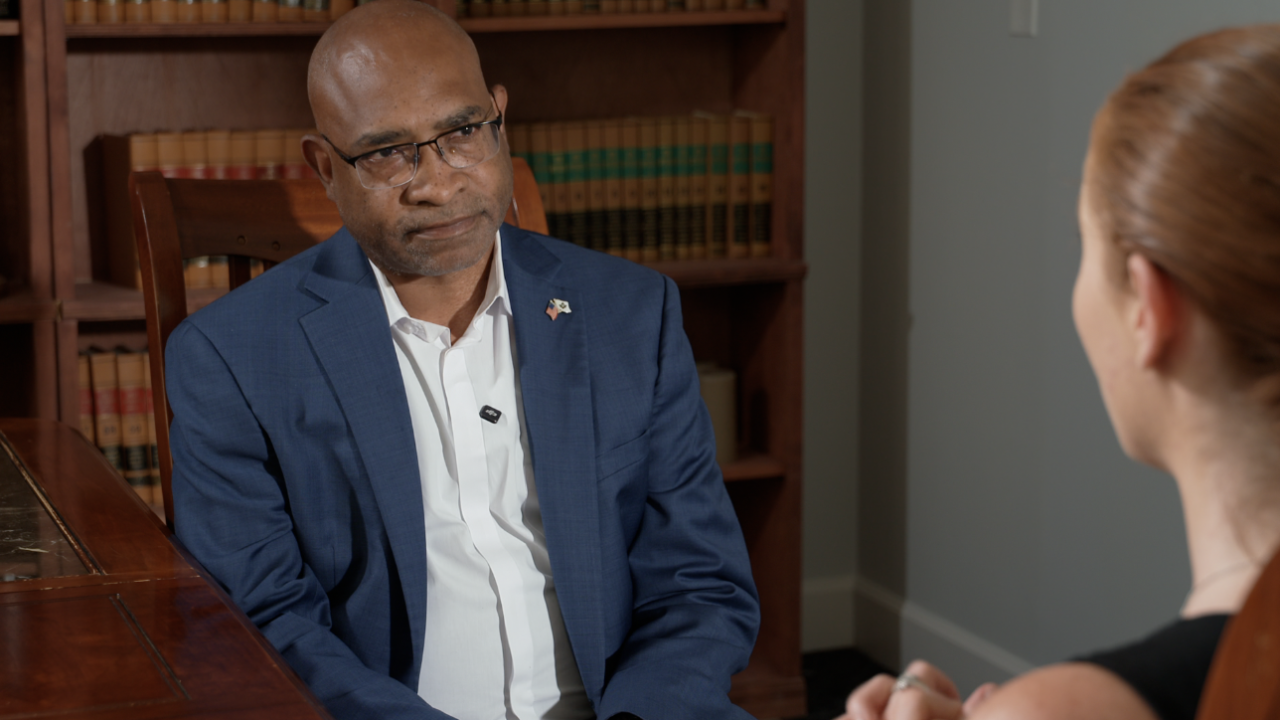
"You do have to take into very strong consideration the safety of the public," Rucker said. "You have to take into strong consideration a person's ability to post bond. You also do have to take into consideration that there is an innocent person, and they're innocent until the court declares otherwise."
That distinction is fundamental, Rucker said.
"People presume guilt; they don't presume innocence," Rucker said. "The courts presume innocence. The Constitution presumes innocence."
Judges can receive information about a defendant's employment, residency, prior criminal history, financial circumstances and connections outside the state. Rucker said those details can help explain why two people accused of similar crimes may receive dramatically different bonds.
"We (the public) see the tip of the iceberg of information when we hear a bond and we hear some of the allegations," Rucker said. "But we (the public) don't have at our fingertips the same information that the judge has."
Deputy Hamilton County Public Defender Sean Vicente made a similar point.
Defense attorneys, prosecutors and judges receive information about defendants' histories, previous arrests and convictions, ties outside the county, employment and family connections, he said.
"It's really hard to actually find two people that are, say, apple to apple," Vicente said. "It's almost always apple to orange."
A $50,000 bond after nine people were shot
Mundy previously faced public criticism over another bond decision this year.
On March 1, nine people were wounded when gunfire erupted inside Riverfront Live, a crowded music venue in Cincinnati's East End.
Police arrested Franeek Cobb and Derrick Long, both of whom had prior felony convictions that prohibited them from possessing firearms.
WATCH: 24-year-old Franeek Cobb appeared in Hamilton County court following his arrest
When Cobb initially appeared in Municipal Court on a single felonious assault charge, Mundy set a $50,000 cash bond.
Cobb's attorney said his client maintained he acted in self-defense. Prosecutors alleged Cobb spotted someone with whom he had a longstanding dispute and opened fire.
Cincinnati Mayor Aftab Pureval publicly called the bond decision "problematic" and "extremely concerning."
The case changed substantially after that initial hearing.
A Hamilton County grand jury later indicted Cobb on attempted murder, 18 counts of felonious assault and several gun-related charges. Prosecutors said Cobb shot Long at close range before Long returned fire in what prosecutors determined was self-defense. Eight bystanders were struck.
During Cobb's arraignment, Mundy said in court that his bond had to reflect the single felonious assault charge Cobb was facing at the time.
A deadly stabbing intensified the scrutiny
The criticism of Hamilton County's bond system has not been limited to one judge or one case.
Questions intensified earlier this year after 27-year-old Alyssa "Ally" Hill was fatally stabbed while working at a Skyline Chili in Norwood.
Rick Wright, 37, was later indicted on aggravated murder, murder and felonious assault charges. A Common Pleas judge ultimately set his bond at $1 million.
But WCPO's examination of Wright's history found he was wanted on a probation violation warrant when Hill was killed. The violation stemmed from a 2025 assault case, in which Wright allegedly violated his probation conditions for a second time.
WATCH: Questions mount over criminal past of man accused in deadly Norwood Skyline stabbing
In that earlier case, Hamilton County Municipal Court Judge Samantha Silverstein set Wright's bond at $5,000 at 10%, despite a criminal history that included drug and menacing convictions and a four-year prison sentence for a 2012 armed robbery conviction.
The case triggered intense criticism from Hill's family and Stephen Misleh, owner of the Norwood Skyline Chili.
Misleh questioned why Wright remained free despite his criminal history and called for judges and policymakers to publicly explain decisions involving repeat offenders. WCPO reached out to Silverstein about Wright's bond history and other assault cases she had overseen, but she declined to comment.
WCPO also found another defendant accused of assault had previously been released by Silverstein without having to post bail. Two weeks later, that defendant was accused of stabbing an 83-year-old man with a screwdriver while the victim walked his dog.
Another case, another round of criticism
The debate also surfaced after the June death of a bicyclist.
Tyler Black was charged in connection with a deadly hit-and-run. At Black's initial arraignment, Hamilton County Municipal Court Judge Donte Johnson set his bond at $40,000.
Black posted 10% and was released the following day.
The Cincinnati Fraternal Order of Police publicly criticized the decision, arguing the justice system had failed victims.
The police union has repeatedly raised concerns about what it considers low bonds or release decisions in cases involving violent crime.
In 2024, FOP President Ken Kober criticized judges after an 18-year-old and a 14-year-old accused in a violent downtown assault and robbery were released shortly after their arrests. The adult defendant was released on 10% of a $10,000 bond, while the juvenile was released with electronic monitoring.
WATCH: Cincinnati police union calls on judges to hold suspects accountable after attacks
"It's not every judge in the courthouse. There are many of them that do a fine job," Kober told WCPO at the time.
But he argued defendants charged with violent felonies were receiving "very very small bonds" and called for greater judicial accountability.
Kober's criticism has extended to Hamilton County Juvenile Court.
In June, he filed a grievance against Juvenile Court Judge Kari Bloom, alleging ethical misconduct and accusing juvenile judges of "putting the public in danger." The Office of Disciplinary Counsel later found the grievance failed to state a claim of ethical misconduct and dismissed it.
Johnson defended his decision on Black's bond in a detailed statement to WCPO, while offering his "deepest condolences to the victim's family and loved ones."
"The legal purpose of bond is twofold: to ensure a defendant's appearance in court and to protect the public," Johnson said. "If a defendant is found guilty, a time for punishment will come, but under our judicial system, that time is not at the arraignment stage."
Johnson said Black was facing two third-degree felonies when he first appeared in Courtroom A. Those specific charges, Johnson said, carried no presumption of prison time or mandatory incarceration. He also noted there were no allegations Black was under the influence of drugs or alcohol or that he intentionally tried to harm the bicyclist.
In setting the bond, Johnson said he considered the level of the charges, Black's lack of criminal history, his military service, his retention of an attorney and an Ohio Risk Assessment System, or ORAS, score of zero out of 10.
"Based on the evidence presented, I determined that Mr. Black was not a flight risk," Johnson said.
But Johnson also emphasized something that can get lost when an initial bond generates public attention: The decision made at a Municipal Court arraignment does not necessarily determine what a defendant's bond will be for the rest of the case.
After a grand jury returned an indictment containing higher-level charges against Black, he appeared for another arraignment before a Hamilton County Common Pleas magistrate. Johnson said the $40,000 bond remained unchanged.
Once the case was assigned to a Common Pleas judge, Johnson said that, to his knowledge, the Hamilton County Prosecutor's Office did not request another bond review.
The public defender's office said either side can seek a change.
"If we aren't happy with the judge's bond decision, we think it's too high, or if the prosecutor thinks it's too low ... that bond can be raised or lowered," Vicente said. "We do it all the time."
New charges or additional information can emerge after an initial arraignment. Once a felony case moves from Municipal Court to Common Pleas Court, the bond can be reconsidered there as well.
Johnson pointed to another case he handled during the same week as Black's as an example of how both the initial bond and subsequent decisions can differ depending on the circumstances.
Josue Lopez Gonzalez appeared before Johnson charged with second-degree felony aggravated vehicular homicide and third-degree felony failure to stop after an accident.
Johnson told WCPO that he considered Gonzalez a flight risk because Gonzalez was driving without a license, admitted to police that he left the scene because he was scared and was a native of Guatemala.
Johnson set a $100,000 secured bond on the second-degree felony and a $10,000 bond at 10% on the third-degree felony.
But that was not Gonzalez's final bond.
After a grand jury indicted Gonzalez and his case moved forward, a Common Pleas magistrate reduced his total bond to $50,000 at 10% with additional conditions, according to Johnson.
The Black and Gonzalez cases moved in different directions after leaving Johnson's courtroom: Black's bond remained unchanged, while Gonzalez's was reduced.
For certain serious offenses, prosecutors also have another option. They can seek to have a defendant held without bond through a separate hearing.

Vicente said that process requires a more rigorous review than an initial arraignment. Prosecutors must present evidence, defense attorneys can challenge witnesses and a court must weigh the evidence before ordering a defendant detained without bond.
Johnson also pushed back on criticism that the Black case demonstrated a broader unwillingness to impose higher bonds by pointing to the case of Kyle Raleigh.
Raleigh was indicted on second-degree felonious assault and two counts of fourth-degree felony aggravated assault following an attack on two elderly people at the Montgomery Inn Boathouse. His appearance at his Common Pleas arraignment was waived and he was granted an own-recognizance bond.
"I do not recall hearing any pushback regarding that decision from Ken Kober or the Fraternal Order of Police (FOP)," Johnson said.
Johnson closed his statement by accusing some critics of focusing selectively on individual cases.
"It is deeply unfortunate when individuals and publications selectively highlight cases without full context in an attempt to erode public trust in the judiciary for political gain," Johnson said.
He said his responsibility remains to follow the law and apply it "consistently, fairly, and impartially in every case."
WCPO reviewed 70 felonious assault cases
To examine how those principles play out in Hamilton County courtrooms, WCPO reviewed preliminary bond decisions in 70 recent felonious assault cases.
Felonious assault was selected because the charge involves allegations of serious physical harm or, depending on the circumstances, use of a deadly weapon.
The review found roughly one-third of those defendants could secure their release by paying $1,000 or less.
Five were given OR bonds and did not have to pay anything.
The review also showed differences among Municipal Court judges. While no two cases involve identical defendants, histories and allegations, some judges consistently imposed higher financial bonds while others more frequently selected lower bonds or nonfinancial release.
Chief Hamilton County Public Defender Angela Chang acknowledged those differences can reflect judicial philosophy.
"I do think that you'll see that judges have different philosophies and what they think is reasonable," Chang said. "Maybe somebody comes in Room A this week, and that's what the bond looks like. And then next week there's a judge with a different philosophy, and then the bond could look really different."
Rucker said Ohio's move away from standardized bail schedules has made individualized assessments increasingly important.
Under the old approach, particular offenses were commonly associated with particular bond amounts.
Now, Rucker said, "bond is supposed to be particular to the individual" — taking into account both the circumstances surrounding the alleged crime and the defendant's circumstances.
A former prosecutor says the system has shifted
Former longtime Hamilton County prosecutor Mark Piepmeier views the changes differently.
Piepmeier spent more than four decades in the prosecutor's office, much of that time handling homicide cases, before retiring in 2025.
He said he has watched the approach to bond change over that time.
Piepmeier said Hamilton County previously relied more heavily on bond schedules that generally tied certain offenses to particular starting amounts. As the system shifted toward more individualized decisions, he said judges gained greater latitude to weigh the circumstances of each defendant.
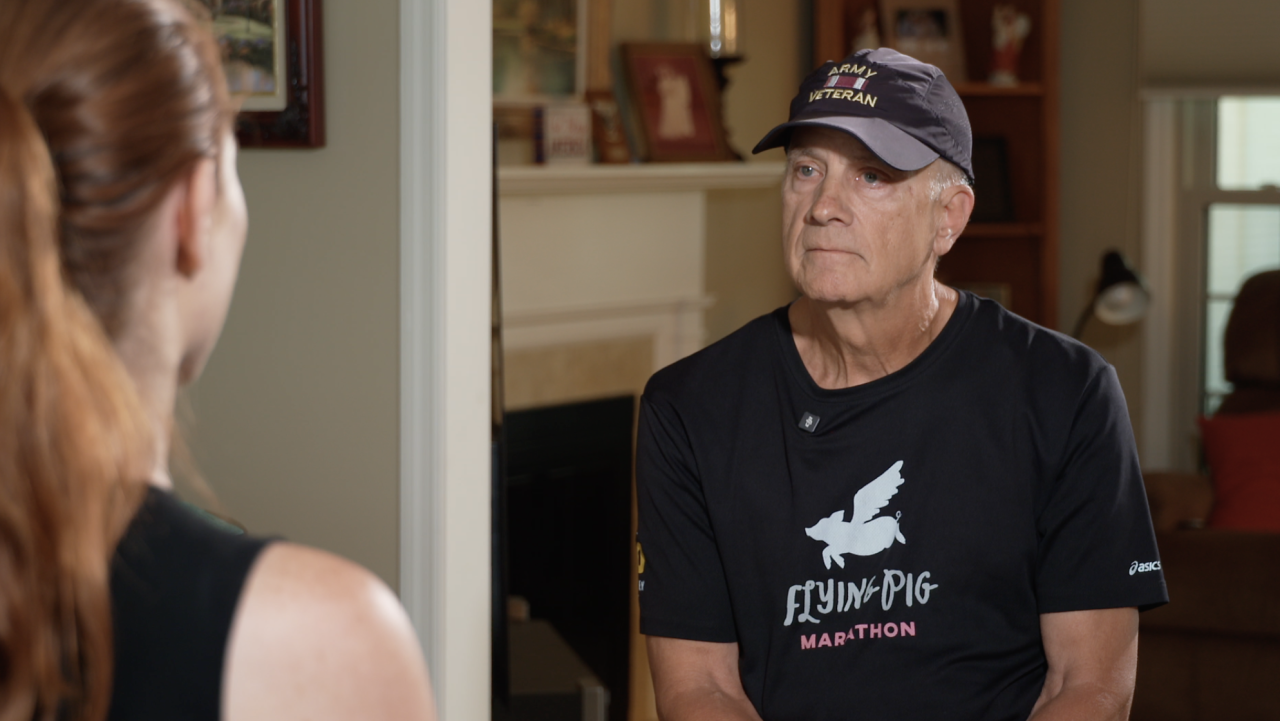
Piepmeier believes that shift has also produced lower bonds in some serious cases.
"The bench has really drifted to the left, more liberal, so it's hard to get a high bond on a serious case anymore in Hamilton County, Ohio," Piepmeier said.
That is Piepmeier's assessment, not a finding of WCPO's review.
His larger concern, he said, is what happens when a defendant's criminal history and the seriousness of a new allegation appear to indicate a risk to the public.
Piepmeier said judges should pay particular attention to prior violent offenses, gun cases and repeated contacts with the criminal justice system.
For Piepmeier, those cases raise a different question than whether a defendant is presumed innocent of the new charge. He argues a judge can respect that presumption while still considering what is already known about a person's criminal record and the allegations before the court.
"We've seen case after case locally where somebody committed a serious offense, they get out on bond, and while out on bond, they commit another serious crime," Piepmeier said.
He was particularly critical of low bonds in cases involving guns, rape and murder.
Piepmeier said prosecutors do not necessarily seek high bonds in every case. For lower-level offenses, he said, prosecutors may not request a financial bond at all. But he believes allegations involving serious violence should be treated differently.
He also cautioned against the opposite extreme.
Asked about extraordinarily high bonds, including bonds reaching tens of millions of dollars, Piepmeier called that kind of figure a "stunt." For a murder case with strong evidence, he said, a bond in the range of $1 million could be appropriate, depending on the facts.
The point, Piepmeier said, is not that every defendant should receive the highest possible bond. Rather, he believes the amount and conditions should reflect the seriousness of the alleged crime and the risk presented by the individual defendant.
His frustration with some decisions is intense.
"Some of these judges, I don't know how they can live with themselves," Piepmeier said.
The public defender's office challenges the broader premise that defendants released before trial routinely fail to appear or commit new crimes.
"I think it's a misconception that these folks go back out, skip court and reoffend," Vicente said.
Chang said high-profile cases can disproportionately shape public perception because cases that end badly receive significant attention, while people who complete pretrial release generally do not.
"When we try to shape policy or try to change laws just around the few incidents, we're really giving up something that we value," Chang said. "One of the biggest values in our court system is the presumption of innocence."
What happens when someone cannot afford bond?
The public defender's office also pointed WCPO to Cincinnati data from The Bail Project, a national nonprofit that provides bail assistance to people who otherwise cannot afford to pay for their release.
The organization says its Cincinnati operation had assisted 825 clients through June 30, 2026, providing a total of $4.6 million in bail assistance.
Of those clients, 71% were people of color and 73% were younger than 40, according to data The Bail Project provided to WCPO.
The organization reported a 94% court appearance rate among Cincinnati clients who received bail assistance.
That figure is significant to Vicente because one of the central purposes of bond is ensuring a defendant returns to court.
He pointed specifically to the court appearance rate.
"94% of those people who put no money on the line (and received bail assistance) came back to court," Vicente said.
The Bail Project's data also show its Cincinnati clients spent a median of 12 days in jail before being released. Their median time from release to case disposition was two months.
Nearly one-third — 31% — ultimately had all of their cases dismissed, according to the organization.
The nonprofit estimates its work in Cincinnati prevented 34,650 days of pretrial incarceration and saved taxpayers approximately $2.7 million. Employment assistance was the most common need identified among its Cincinnati clients.
The figures describe people accepted for assistance by The Bail Project and should not be interpreted as the appearance or dismissal rates for all defendants released before trial in Hamilton County.
But Vicente said the numbers illustrate his broader argument that putting money on the line is not necessarily what brings someone back to court.
He said practical obstacles — including transportation, remembering numerous court dates and balancing work and family obligations — can contribute to missed appearances. Text reminders and transportation assistance can address some of those problems, he said.
Chang agreed.
"Even if people miss court, most of the time it's not because they're up to no good or they are thumbing their nose at the court or they don't take it seriously," she said.
Is cash a measure of danger?
The Bail Project data feed into a larger disagreement over whether a higher cash bond necessarily makes the public safer.
Chang and Vicente argue that it does not.
"Cash bail is a wealth test. It's not a safety test," Vicente said.
A wealthy defendant accused of a serious offense could afford a high bond, Vicente argued, while a low-income person accused of a less serious crime could remain incarcerated because they cannot afford release.
"Money doesn't equal public safety," Vicente said.
Chang said remaining incarcerated before trial can have significant consequences even when someone is ultimately acquitted, or the charge is dismissed.
A defendant can lose a job, housing or time with family simply because they could not afford to leave jail.
"Locking someone up pre-trial only causes further disruption, and more likely creates bad results afterwards," Chang said.
Piepmeier sees the public-safety calculation differently.
He argues a serious allegation combined with a significant criminal history can provide warning signs judges should not ignore.
'You don't have the power to predict the future'
Rucker spent 13 years on the bench and said he presided over more than 300,000 cases. He was also among the attorneys designated by the Ohio Supreme Court to help shape changes to the state's bail and bond rules.
He said he remembers one lesson from judicial training particularly well.
"You don't have the power to predict the future," Rucker said.
A person released on bond may later be accused of another crime, prompting questions about why the original judge allowed the person out.
The Wright case has put that question into stark relief. So have the Riverfront Live case and, most recently, one of the men accused of bringing stolen guns to The Banks.
But Rucker said a judge must make the decision based on the information available at that moment — not what becomes known weeks or months later.
Judges are also expected to resist public pressure surrounding particularly high-profile cases, he said.
That can put the court at odds with a community that sees an arrest, reads an allegation and expects detention.
Asked whether the presumption of innocence gets lost in those moments, Rucker answered: "Every single time."
And asked whether judges sometimes simply get bond decisions wrong, Rucker drew a distinction between a decision that is unpopular and one that violates the law.
"I don't think they get it wrong. I think that the decisions that are made may be contrary to public opinion, but I don't think that makes it wrong," Rucker said. "I just think that makes it contrary to public opinion."
This story was reported on-air by a journalist and has been converted to this platform with the assistance of AI. Our editorial team verifies all reporting on all platforms for fairness and accuracy.
