



CINCINNATI — Ayman Soliman shakes his head and throws up his hands.
“Don’t film my kitchen,” Soliman said. “Please. It’s a mess.”
He’s making a protein shake. And after I put the camera down, he laughs and drinks straight from the blender.
“It’s just because we’re late,” Soliman said. “I don’t normally do that.”
But these days, Soliman’s often late.
It’s been three months since his release from the Butler County jail, where he was detained for more than 70 days after government officials revoked his asylum status earlier this year.
Soliman’s been busy.
“I never thought it would happen until it happened to me,” Soliman said.
WATCH: If deported, he says he would have been killed.
Soon, Soliman will be leading prayer service at the Clifton Mosque. And then, he’s giving a speech. He gave a similar one at Xavier University. He also spoke to a group of Muslim students at the University of Cincinnati the day after that.
“No one is immune,” Soliman said. “No one is safe.”
He says that because he came to America legally. He came after death threats and torture, he says.
“I was always on the side of the people,” Soliman said. “And that put me in a lot of trouble.”
He sought asylum here, and it was granted in 2018. Soliman had worked as a freelance journalist covering the violent revolution in Egypt more than a decade ago. He uses the word “kidnapped” to describe what happened to him.
Then, he uses the words "Guantanamo Bay" to help me understand what happened next.
“I was told that they will either kill me or disappear me — so no one will ever know,” Soliman said.
In Egypt, he was detained like this on four occasions, according to court documents. He says his family begged him to come to America.
And before he did, he took his son to the zoo. In Soliman’s small apartment, more than a decade later, he shows me a picture of them together. His hand almost covers the boy's entire stomach.
They’re both smiling.
“This is the last time I saw him,” Soliman said.
He puts that picture down and picks up another one. The day after Soliman made it to America, he told me his home in Egypt was raided, and a message was left for him:
We’ll find you.
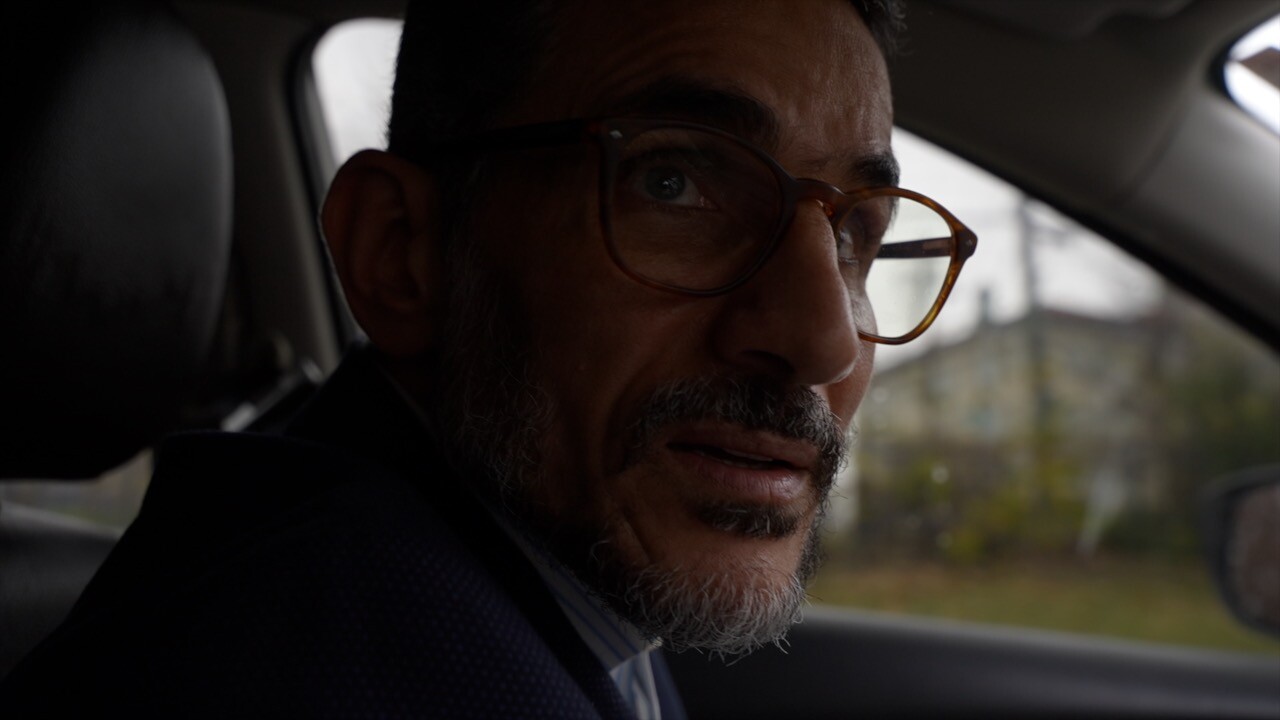
He's telling me this in his car on the way to the mosque.
“And here I am — almost 12 years after — and I still cannot go back to my country,” Soliman said. “Unfortunately, I was not safe enough in the U.S.”
‘A moral obligation to speak’
It’s raining now.
I had told Soliman I’d get an Uber back to his home, because he had other plans after the prayer. In the mosque's lobby, I'm talking to a man who runs a food pantry there.
That's when my phone rings.
“Where are you?” Soliman said. “I didn’t know it was raining. I’m on the side of the road. Hurry. People are honking.”
Soliman doesn’t sleep very well anymore. And he says he’s looking for a therapist. It’s part of his story the world doesn’t see. Even though the former hospital chaplain’s arrest became national news.
In his apartment, Soliman shows me a stack of letters he received while in jail — he guesses about 760. Some were from children or parents he’d met at the hospital. Most of them, he didn’t remember.
But they remembered him.
“It really made me cry," Soliman said.
Near the University of Cincinnati, an employee at Cincy Cafe won’t let Soliman pay for his drink. After going back and forth a few times, Soliman shoves his cash into a tip jar.
When I ask him about it, Soliman tells me he regularly gets stopped on the street. People take selfies. It’s part of the reason he’s always late.
Toward the end of our conversation, a woman interrupts us.
The two start talking, and she almost cries. The counselor is moving back to Saudi Arabia in a few weeks, after completing her doctorate at UC. She tells me Soliman helped a family she worked with from Kuwait.
They lost a child. And she wanted to thank him.
'It was emotional'

I ask if he misses it.
“Of course,” Soliman said. “I miss the job. I miss the children that I cared for. I miss the families that I cared for. I miss my colleagues.”
In November, he visits a 1-year-old girl who needs 17-hour reconstructive surgery. A few months after his release from jail, Soliman returned to the hospital where he had worked since 2021. This time, he was just a visitor.
Like a lot of cases Soliman worked on there, doctors told Bryan McClain his daughter would probably die.
Violette had been born with bladder outlet obstruction. And one day, she stopped breathing. McClain says Soliman was one of the first people in the room.
“Ayman saved Violette’s life,” said Taylor Hill, her mom.
McClain tells me he doesn’t remember exactly what Soliman said, because he was in tears. Soliman tells me it’s not really about what he said. It’s about being there.
Violette’s parents tell me it's much more than that.
“It takes special people to take care of kiddos like V," Hill said. "And Ayman was one of those people.”
'I don't think I'll ever feel safe'

U.S. immigration officials reinstated Soliman's asylum protection in September. It was only a few weeks before a trial in federal court about his possible deportation.
Officials cited mistakes in his case that linked Soliman to alleged terrorist groups — accusations he says were not true.
“I don’t think I’ll ever feel safe anytime soon," Soliman said. “Without people speaking up and advocating on my behalf, I wouldn’t be free today."
Inside the mosque, Soliman takes off his shoes and walks to a private room to think about what he's going to say. His topic is injustice. There are quite a few people here already, but he’s early.
And then someone starts singing.
“Oh wow,” Soliman said, tapping the microphone he's wearing. “I’m late.”
