

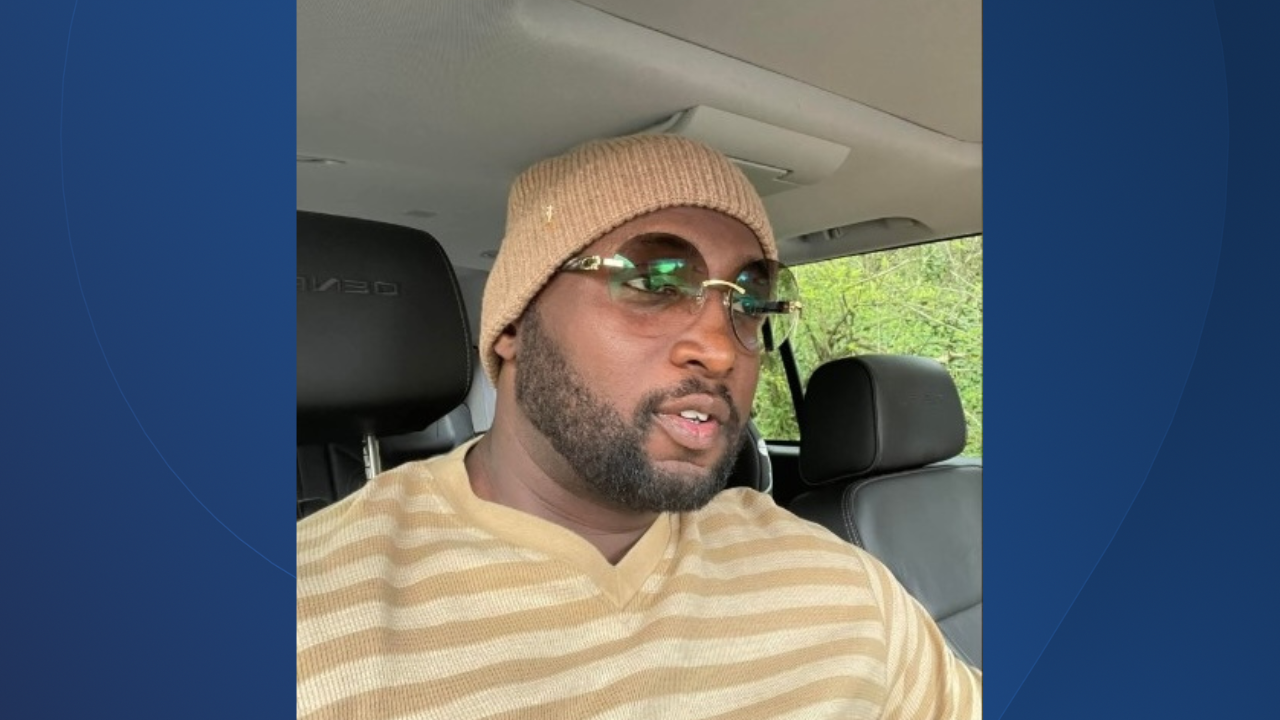


CINCINNATI — The family of a Cincinnati city worker killed in a Metro bus crash on the Norwood Lateral is now being represented by an attorney as questions continue to surround the driver’s history behind the wheel.
Cooper Elliott is representing Shauntae Boothe, the mother of Jonathan Allen Young’s two children. The firm said it is investigating the crash, as well as Metro bus driver Kyle Taylor’s driving and hiring history.
In a statement, attorney Jeffrey Kenney said, “If the information regarding Kyle Taylor’s employment history is true, how many chances does a Metro driver get? We saw the same pattern in the Beverly Kinney case. It is appalling that another family is now paying the price for a lesson SORTA didn’t learn. Jonathan Young’s children deserve answers, and we’re going to get them.”
Young, 46, died following the July 16 crash involving a Metro bus and two City of Cincinnati vehicles on the Norwood Lateral.
WATCH:
According to the Hamilton County Sheriff’s Office, a city maintenance pickup truck towing a trailer was traveling west on the Lateral near the 1.8-mile marker. Three city employees were working on a traffic project when the Metro bus approached the city vehicle from behind.
The sheriff’s office said the bus struck the pickup truck, pushing it forward into the trailer of another city pickup truck. Young was taken to the hospital, where he later died. Another city employee was also injured.
Taylor was later charged with vehicular manslaughter. He pleaded not guilty, and a judge set his bond at $5,000 at 10%. If he posts bond, he is not allowed to drive.
Kevin Ryder, owner of Forensic Human Factors, a consulting firm that investigates catastrophic car and truck crashes, told WCPO 9 that investigators should examine not only what the bus driver was doing before the collision, but also when a driver reasonably could have recognized that a vehicle ahead was stopped or moving slowly and what warnings motorists had before reaching the work zone.
Ryder said a crash like this can involve a phenomenon known as a "perceptual looming event."
"We think that crashes like this shouldn't occur during the day. You can see things reasonably well," Ryder said. "So this is what's called a perceptual looming event."
Ryder explained that when drivers see another vehicle ahead in their lane, they generally expect it to be traveling in the same direction and at roughly the speed of other traffic.
The difficulty, he said, comes when that expectation is wrong.
"If it's stopped or it's slow moving, our ability to recognize that from a distance as we're approaching is incredibly limited," Ryder said.
From a substantial distance, Ryder said, a driver may be able to see another vehicle but have difficulty judging how fast it is moving. As the distance closes, the vehicle begins to take up more of the driver's visual field, providing a stronger indication that the driver is approaching it.
On a highway or higher-speed road, however, Ryder said that realization can sometimes come too late to avoid a collision.
"By the time we can actually be alerted to that reality of this completely unexpected event, oftentimes it's too late to actually brake or swerve and avoid," he said.
What warnings did motorists have?
Ryder said that issue is one reason advance warning signs, lane closures, barrels and other traffic-control measures exist around road work.
He stressed that he has not been hired to investigate the Norwood Lateral crash and does not have all of the evidence surrounding it. He said he cannot determine from the information he has seen what traffic-control measures were required for this particular operation.
But, generally, Ryder said standardized signs are intended to alert drivers that conditions ahead may differ from what they normally expect.
"They give drivers that advance notice that something's happening, and it allows us to look forward and realize there may be construction, there may be a stopped vehicle, there may be a lane closure," Ryder said.
Ryder pointed to the Manual on Uniform Traffic Control Devices, or MUTCD, which establishes national standards for traffic-control devices.
"We want to take all the decisions and all the guesswork out of the drivers' hands," Ryder said. "We want to tell them what's coming up so that they have time to make the right choices."
Exactly what that warning should look like depends on the kind of work being performed, Ryder said.
For a moving operation, such as mowing, he said a warning vehicle with bright lights or an arrow board directing drivers to change lanes can be used. For a fixed work zone, he said traffic may instead be moved out of the affected lane using a lane closure and channelizing devices such as barrels.
"If this is a fixed construction zone, they really should have had a lane closure," Ryder said while describing how such a work zone would generally operate. "And so some further back channelizing devices, commonly barrels, would be angled so it shoves everyone over toward the left lane."
But Ryder immediately cautioned against applying that general assessment to the Norwood Lateral operation without more information.
"That's the kind of thing that we would expect a situation like this to have, and it prevents crashes regularly," he said. "Whether this particular job needed that, that I don't know at this time."
According to the Hamilton County Sheriff's Office, a City of Cincinnati maintenance pickup truck towing a trailer was traveling west on the Norwood Lateral near the 1.8-mile marker while three city employees were working on a traffic project. Investigators said the Metro bus approached from behind and struck the pickup, pushing it forward into the trailer of another city pickup. Young was taken to a hospital, where he died. Another city employee was injured.
Records from the Ohio Department of Public Safety show Taylor has been convicted of 12 traffic violations since 2010, including violations for speeding, failing to stay in marked lanes and failing to obey traffic signs.
Hamilton County court records also show Taylor caused a crash while driving a bus on June 17, about a month before the crash that killed Young. He received a right-of-way violation in connection with that incident.
Metro previously said Taylor was placed on administrative leave following the charges, calling it the agency’s standard practice while the matter is under investigation. Metro also offered its sympathies to Young’s family and friends.
Family remembers Young
Young worked for the City of Cincinnati’s Department of Public Services. Following his death, his cousin, Raniesha Marie, described him as a loving, caring and hardworking father who was always willing to help others.
She said Young took pride in his work, rarely missed family gatherings and was devoted to providing for his children.
City Manager Sheryl Long said after the crash that the city was “heartbroken” by the death and was providing support to employees grappling with the loss.
Cooper Elliott previously represented the family of Beverly Kinney, an 87-year-old woman who WCPO 9 reported was struck and killed by a Cincinnati Metro bus driver in 2024. That case resulted in a $10 million settlement and new training requirements for Metro drivers.
This story was reported on-air by a journalist and has been converted to this platform with the assistance of AI. Our editorial team verifies all reporting on all platforms for fairness and accuracy.
