

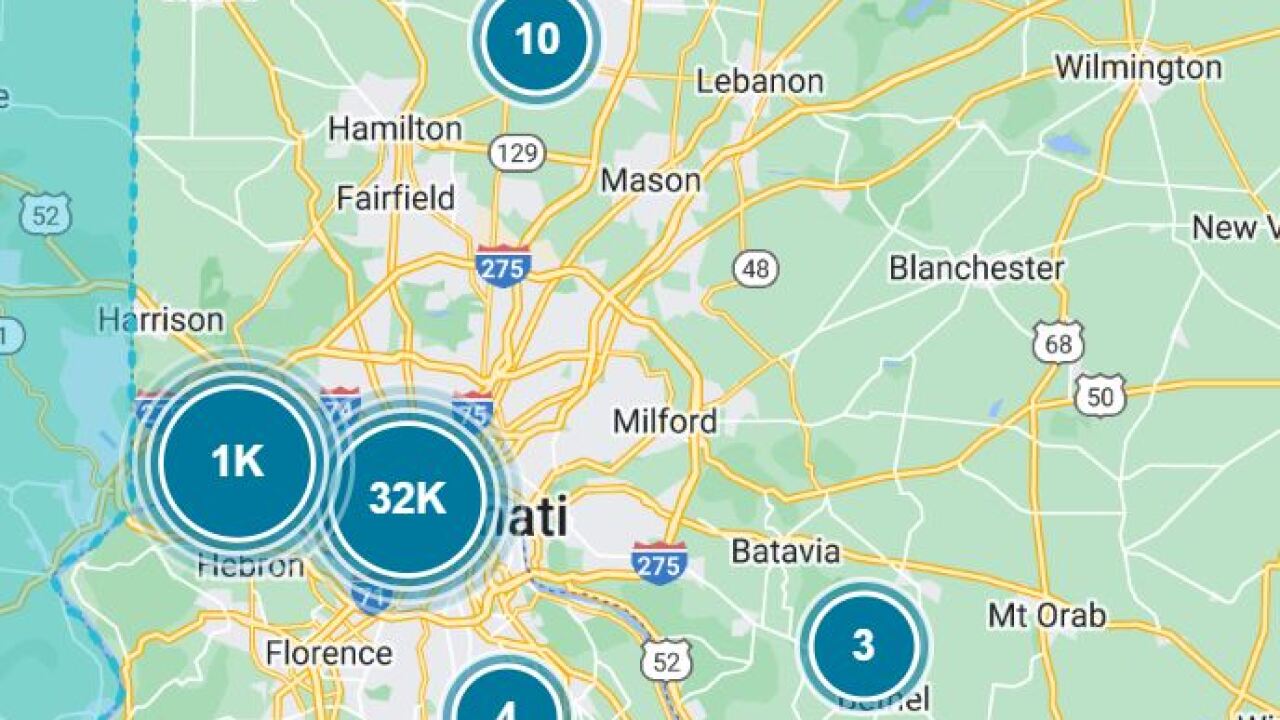


With more than 200,000 customers losing power in the recent storms in the Cincinnati area, many homeowners are getting fed up with outages lasting longer than a few hours.
It can mean lost work (especially if you work from home), no high-speed internet or TV, and hundreds of dollars of lost food.
And for older people in sweltering homes and apartments, it can be life-threatening.
Many of those homeowners are now considering purchasing a standby power generator. But what type is best, and how much do you need to pay?
WATCH as a generator store explains the pros and cons of each type:
Stores hit by surge in calls and sales
Every time a devastating storm hits, Paul Gangloff gets calls at the generator supply company he owns, Riverside Electric, in Woodlawn, Ohio.
"We've noticed our business has picked up 300%" he told us during the last surge in sales after heavy storms.
Company president Krista Mahon says many people ask about portable generators due to their budget-friendly pricing.
"The portables can range anywhere from $400 dollars all the way to $1,200," she said.
But she warns that budget models often struggle to power more than a refrigerator and some lights.
"People tell us it bogged down, or the lights dimmed," she said. " I have to explain that it is because it is too small a unit for your home."
Whole house generators more popular than ever
Mahon says more homeowners are now buying whole-house standby generators like the Generacs that they sell.
They are powered by natural gas or propane, unlike gasoline, and start up automatically. They will also power your home's central air conditioning.
Cost? $10,000 and up in 2026, installed, with all switches and connectors to your home's electric panel. Simpler models can cost only $5,000 but won't be fully wired into your home's electric panel, and may not be enough to power your central air conditioning.
Portable models still most popular
Most families opt for a portable gasoline-powered unit, from stores like Home Depot and Lowe's. Many models are available for under $1,000 (but are often sold out the week after a storm).
But if you are thinking of buying, or already own, a portable generator, the most important thing before you turn it on is your family's safety.
Nicolette Nye with the Consumer Product Safety Commission says 85 people die each year from carbon monoxide poisoning, on average, linked to portable generators.
She says opening doors and windows isn't enough to protect you, and that it is important to keep generators out of basements, crawl spaces, garages and even carports.
"You want it running at least 20 feet away from the home or structures that people can enter, with the exhaust pointed away from your home," she said.
Another common and deadly mistake, she said, is refueling a portable generator with gasoline while it's running.
"Stop the engine, allow it to cool down first," she said.
New budget option becoming more popular
The fastest-growing segment of home power supplies in 2026 is portable power stations, sold on Amazon and at big-box stores.
These sell for as little as $150 for a small one, or as much as $1,500 for one that can power large appliances.
Think of them as giant cell phone portable chargers that can power several lights in your home, a couple of TVs and even a hair dryer for a short time.
However, you will likely need one with at least 1,000 watts (with surge power of 2,000 watts) to power your refrigerator.
Even then, most will only power a fridge for 6 to 8 hours. But that beats throwing all your food away.
Krista Mahon says generators can save food and keep you connected after a big weather event.
"You can plug into whatever you need to use," she said,
As always, don't waste your money.
________________________
"Don't Waste Your Money" is a registered trademark of Scripps Media, Inc. ("Scripps").
_________________________
Follow John:
- Facebook: John Matarese Money
- Instagram: @johnmataresemoney
- X/Twitter: @JohnMatarese
Follow Taylor:
- Facebook: Taylor Nimmo
- Instagram: @tnimms
- X/Twitter: @tnimms
For more consumer news and money saving advice, go to www.dontwasteyourmoney.com
