

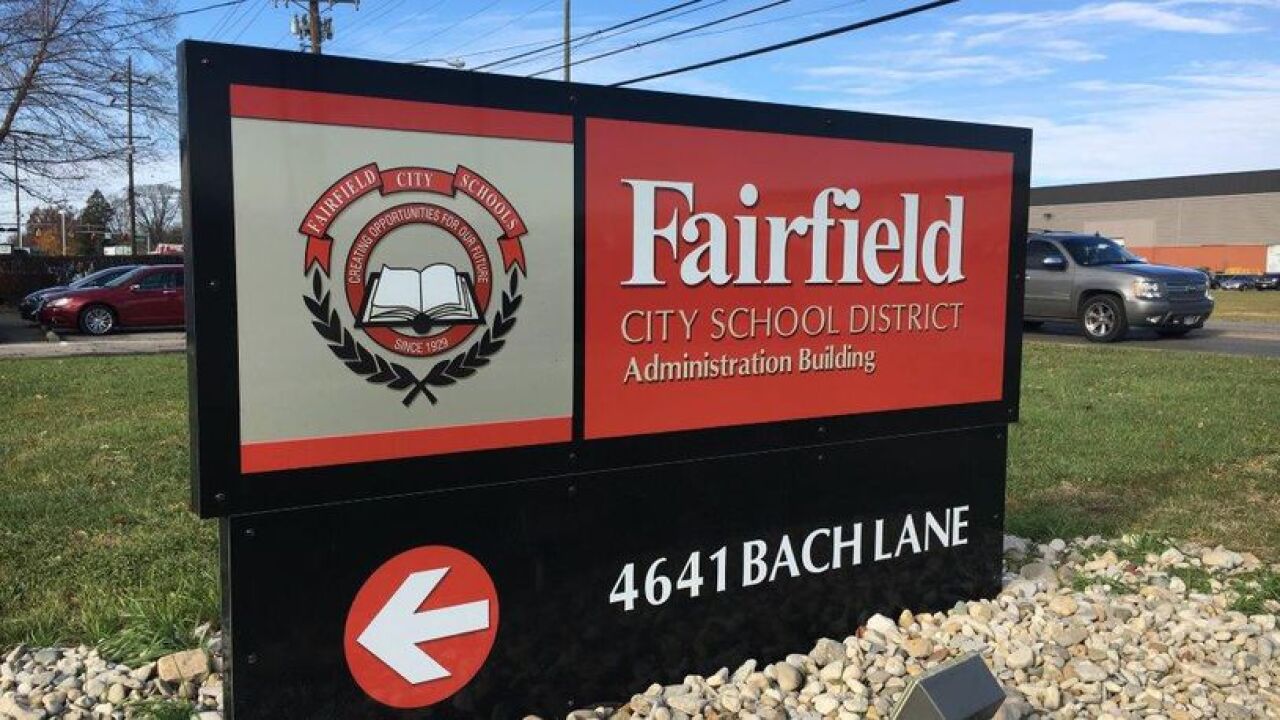


FAIRFIELD, Ohio — Fairfield City Schools is considering asking voters to approve another tax increase in May 2027, as district leaders warn that its financial outlook is becoming increasingly difficult to sustain.
WATCH: Fairfield City Schools says it's running out of money. Learn what's at stake
It would be the district’s fourth attempt to secure additional tax revenue after three previous proposals failed — a 6.9-mill property-tax levy in 2024 and two 1.25% earned-income tax proposals in 2026.
The district says it has already reduced staffing and spending, but those changes have not been enough to keep pace with expenses. Without additional revenue, officials warn that more positions and programs could be affected, and the district’s latest five-year forecast shows its cash balance falling below zero by 2029.
“We’re not just talking about having a lower cash balance in the bank,” Treasurer Jay Phillips said. “The cash balance goes past zero.”
The district has reduced approximately 84.5 positions since the 2022-2023 school year. It also made another $5.7 million in reductions going into the 2026-2027 school year.
Phillips said changes in state funding tied to property-tax reform have meant approximately $6 million less for the district over the past three years.
Even after those reductions, district leaders say additional cuts could be necessary if voters do not approve new revenue.
The district has identified 132 positions that could be eliminated without additional funding. Those potential reductions span multiple areas, including classroom teachers, elementary art, music and physical education, reading support, educational assistants, English-language tutors, social workers and maintenance staff.
Separately, 37 preschool positions are being transitioned to the Butler County Educational Service Center. That transition is distinct from the 132 potential position eliminations.
District leaders say their goal is to preserve programs and opportunities for students, but budget constraints continue to make that a challenge. Fairfield City Schools has earned a four-star rating on Ohio’s state report card, and officials say further reductions could affect the services and programs that contribute to students’ experiences.
“What our staff members do, they are truly miracle workers,” Superintendent Billy Smith said.
A fourth attempt after three defeats
The district's most recent tax proposal was a five-year, 1.25% earned-income tax on the Nov. 3 ballot. It failed by 951 votes, with 14,152 voters opposed and 13,201 in favor.
That followed another 1.25% earned-income tax proposal in May, which failed by 1,059 votes. In that election, 7,289 voters opposed the tax and 6,230 supported it.
The margin between the two earned-income tax proposals narrowed by 108 votes, though both were rejected.
Laura Metzler, chair of the Yes for Fairfield campaign and a parent of two students in the district, said she sees the narrowing margin as a sign that more voters may be coming around to the district’s financial argument.
“Each time we have gotten closer and closer,” Metzler said.
The district is now weighing what kind of tax, if any, it will put before voters in May 2027. Three options are under consideration:
- A property-tax levy: Phillips has estimated that an 8.9-mill levy would be needed to maintain a 60-day cash balance. That figure is an estimate, not a finalized proposal.
- An earned-income tax: The district previously asked voters for a 1.25% tax. Phillips has said he is comfortable asking for that rate again, although his estimate for reaching the district’s cash-balance target is approximately 1.33%.
- A traditional school-district income tax: Unlike an earned-income tax, which applies to earned income, this type of tax would have a broader base. The district has estimated a rate of approximately 1%.
Those estimates could change as the board continues its discussions. No tax proposal has been selected.
Metzler said she would prefer another earned-income tax rather than a property-tax increase. She said supporters have spent years explaining the district’s financial situation and worries that changing the type of tax could make it harder to maintain support.
She also argues that new revenue would not be used to expand the district’s offerings, but to maintain what students already have.
“That money is to keep us where we’re at,” Metzler said.
Some taxpayers say the state should step in
Not everyone believes another local tax is the answer.
Michael Shawn McCabe, whose two children graduated from Fairfield schools, voted against the most recent tax proposal. He said he supports the district and values the opportunities his children received, but believes Ohio should take greater responsibility for funding public education before asking local residents to pay more.
“I don't want it to be a temporary Band-Aid,” McCabe said. “I want it to be a real solution from the state to protect our community.”
McCabe said he wants to see state lawmakers address the school-funding system and provide a more sustainable solution for districts facing financial pressure. He worries that repeatedly asking local taxpayers for more money does not address the underlying problem.
That debate could take on added importance under incoming Gov. Amy Acton, who has said she wants to fully fund Ohio’s Fair School Funding Plan.
The plan, adopted in 2021, is designed to determine how much state funding public school districts should receive based on the cost of educating students and local communities’ ability to pay. Its scheduled phase-in is set to reach 100% in the 2026-2027 fiscal year.
But reaching that phase-in milestone does not necessarily mean the formula reflects the current cost of running schools. The formula still relies on older cost data, and future funding decisions will require action from state lawmakers.
Acton has also called for greater transparency and accountability in the use of taxpayer money for private-school vouchers.
For Fairfield, any changes to the state funding formula would have to make their way through the state budget process. A new governor cannot unilaterally determine how much money the district receives.
Metzler said the district cannot wait for those decisions to play out.
“We can't count on the government to fix in the immediate time period what we need fixed to balance our budget,” she said.
What happens next?
The Fairfield Board of Education has not decided whether to put another tax proposal before voters, or which type of tax it would pursue.
Board members are expected to continue discussing the district’s options at their Dec. 10 meeting. The district is working toward the May 2027 ballot, with a filing deadline of Feb. 3, 2027.
For district leaders, the concern is the growing gap between revenue and expenses, and how long the district can continue making cuts without affecting students and staff.
“The revenue is just being outpaced by expenditures in a big way, and that doomsday clock is here,” Phillips said.
For residents, the next decision will be whether another local tax is the right way to address that problem, or whether the state should take a larger role in finding a solution.

