

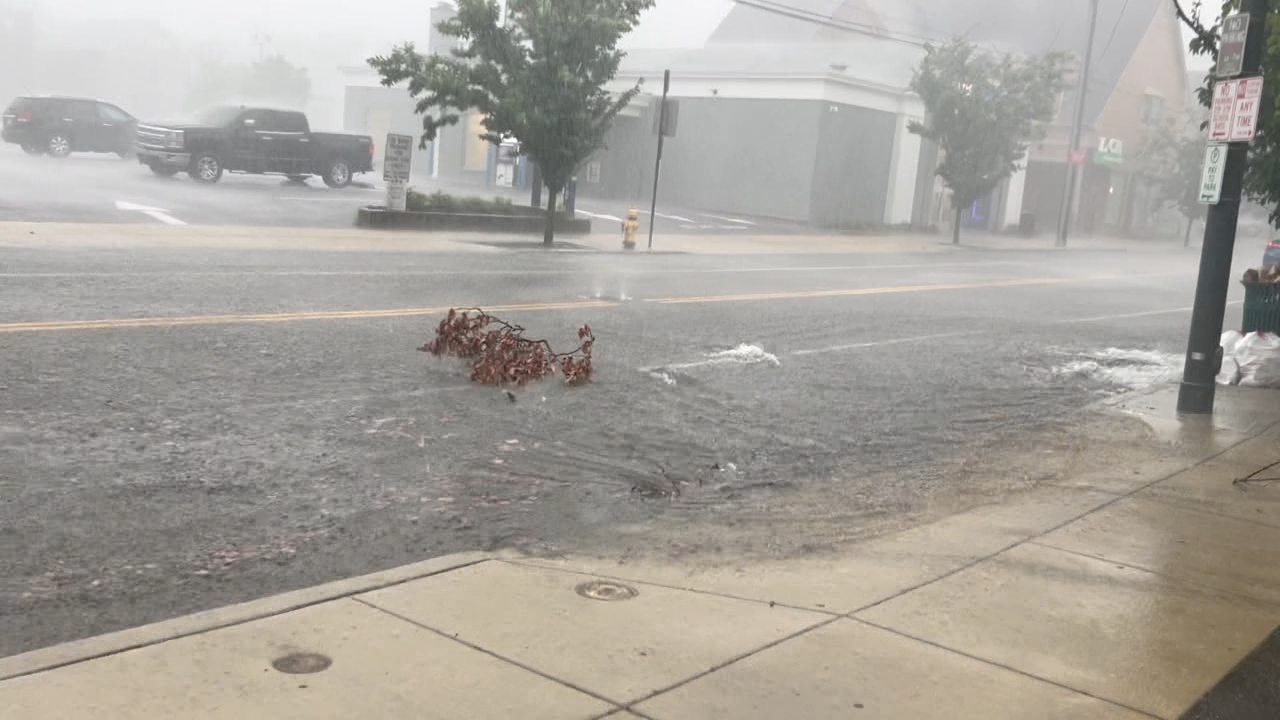


CINCINNATI — After July's flash flooding caused major damage in some city neighborhoods, city leaders are seeking to better understand what went wrong and how to prevent similar damage in the future.
Tuesday at City Hall, representatives from the Metropolitan Sewer District (MSD) and the Sewer Management Utility (SMU) presented their findings on what went wrong and what they are doing to address the problems.
The presentation lasted nearly 2 1/2 hours. During the presentation, MSD Director Diana Christy said that while they are working on solutions, future flash flooding problems are inevitable.
"It is going to happen again," Christy said. "We do not have fixes that can be put in place immediately."
WATCH: Hear what MSD and SMU officials had to say about their efforts to mitigate future flooding issues:
MSD Deputy Director Reese Johnson spoke for most of the presentation. He said the intensity of July's storm was a major factor in the extensive damage.
"Five inches of rain fell within three hours," Johnson said. "That is literally off the charts."
Officials with MSD and SMU also pointed to issues with the city's sewer infrastructure.
They said about 95% of the city uses combined sewer systems, meaning sewage and stormwater flow through the same pipe. They said that in extreme rainstorms, it can lead to backups and overflows.
However, Johnson said separating the sewers is not as easy as it might seem.
"If we were to try to separate the entire city of Cincinnati, we would be talking about billions and billions of dollars," Johnson said.
MSD and SMU officials said they're working on solutions such as detention basins in communities, replacing the barrier arm that failed at the Duck Creek floodgate and making administrative and policy changes.
However, City Councilman Mark Jeffreys said the plans presented Tuesday lacked specifics.
"I thought, honestly, it was incomplete," Jeffreys said. "We need a lot more answers."
Jeffreys said he understands long-term solutions will take time, but he wants City Council to have clearer plans for short-term fixes so members can budget for them.
"This will happen again," Jeffreys said. "We know it and I think we need specific next steps on plans that can be put in place in order to mitigate it."
There were also several assistance programs for residents after the flooding.
MSD's Sewer Backup Program has approved more than 1,200 claims, with an estimated cost of $5 million.
In August, City Council approved $2 million in flood relief funding for residents and business owners. Since then, more than $770,000 has been disbursed to 675 residents, according to data presented by the Department of Opportunity and Resident Services Tuesday.
However, Jeffreys said he would rather see money go toward solutions that could prevent damage in the first place.
"I think people would much rather have a solution rather than 'hey let's put money to help people with the effects of floods'," Jeffreys said.
We wanted to speak to MSD and SMU officials after the presentation to ask more questions about the work they are doing to address the problems. However, they declined all media interviews.
