



CINCINNATI — Tears and cheers erupted inside a Hamilton County courtroom Friday as a jury returned four not-guilty verdicts in a murder trial over a deadly shooting inside a Clifton Shake Shack.
The defendant cried as the verdicts were read. Behind him, family members cried, cheered and embraced.
Then came the words they had waited more than a year and a half to hear: He was a free man.
Antwoine McCants was acquitted of two counts of murder and two counts of felonious assault in the shooting death of Christopher Stallworth.
McCants never denied firing the fatal shot. Instead, the trial centered on what McCants believed was happening in the moments before he pulled the trigger and whether prosecutors could disprove his claim of self-defense.
Jurors began deliberating around 12:30 p.m. Friday after hearing closing arguments from both sides. Hours later, they returned not-guilty verdicts on all four counts.
Afterward, McCants described how he felt in two words: "Feel blessed."
He said the weeklong trial had taken a toll.
"I didn't sleep at night. I haven't slept all week. I only ate once a day. It's been stressful," McCants said.
When the judge told him he was a free man, McCants said one thought went through his mind.
"Free. I'm back to normal, man. I got my life back," McCants said.
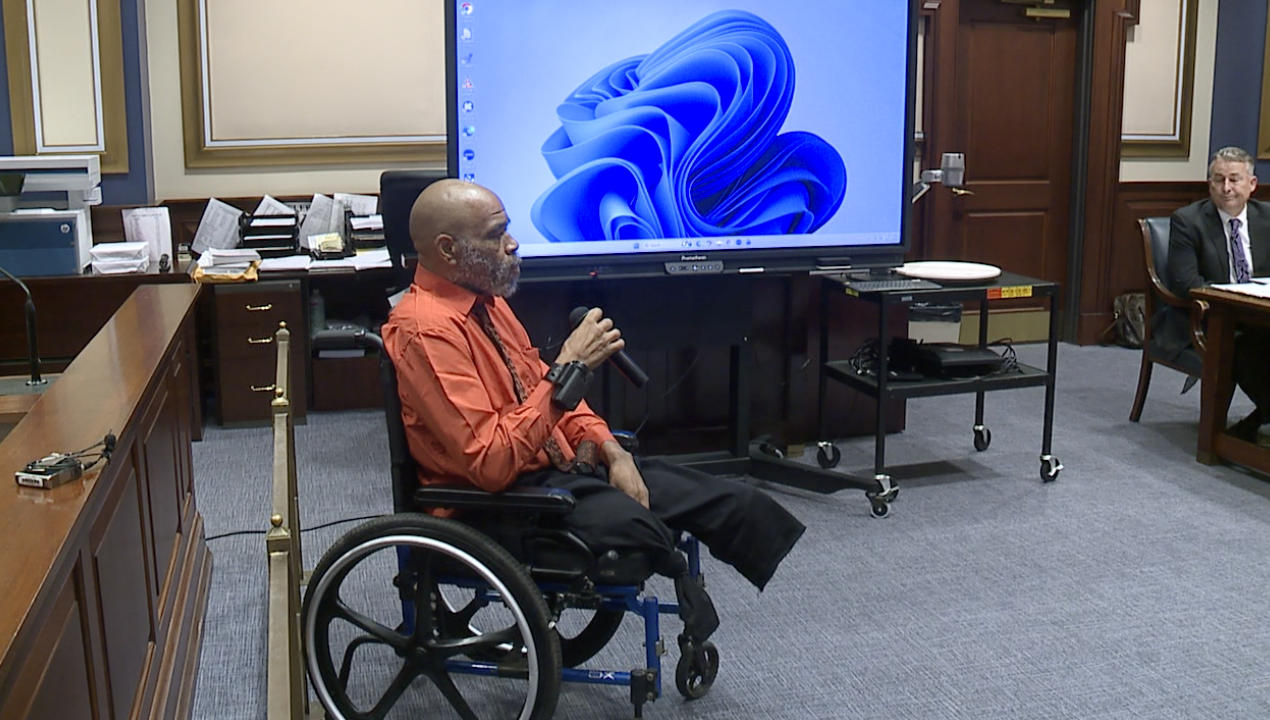
McCants testified he feared for his life
McCants took the stand on the final day of testimony, telling jurors he feared for his life as Stallworth followed him through the Shake Shack and eventually confronted him.
The encounter began with a parking dispute outside the Calhoun Street restaurant. McCants testified that after he and his wife went inside, Stallworth and the woman with him also entered the restaurant.
McCants said he became increasingly nervous when Stallworth began following him as he moved through the restaurant.
"Because he was getting closer and closer to me quick," McCants testified.
McCants' physical condition at the time of the shooting also became part of his defense.
McCants had already lost his left leg and was wearing a prosthetic. He had also lost the toes on his right foot and testified that he had difficulty walking and maintaining his balance.
McCants has since lost his other leg and used a wheelchair throughout the trial.
McCants testified Stallworth eventually confronted him and accused him of pulling a gun on the woman Stallworth was with.
McCants denied doing so.
He testified Stallworth then reached into his right pocket. McCants said he could see what he believed was the slide of a gun getting caught inside Stallworth's pocket as Stallworth tried to pull it out.
"That's when I cocked it and shot him," McCants testified.
McCants told jurors he believed both he and his wife were in danger.
"I was feeling like my life was in danger. I felt if I was to get shot, he was going to shoot my wife next," McCants testified.
Prosecutors questioned what McCants knew before he fired
There was no dispute by the end of the trial that Stallworth had a gun.
Prosecutors acknowledged during closing arguments that Stallworth had a sky-blue firearm that was later found outside near where he collapsed.
But where that gun was before the shooting — and, more importantly, whether McCants knew Stallworth was armed when he fired — became one of the central disputes at trial.
Prosecutors challenged McCants' account by comparing his testimony with what he told investigators on the night of the shooting.
McCants told police that night that he did not see Stallworth with a gun and did not see a bulge indicating he had one.
Prosecutors argued the trial was the first time McCants specifically testified that he saw the imprint or slide of a firearm in Stallworth's pocket. They also noted McCants did not tell the 911 dispatcher that he saw Stallworth with a weapon.
Prosecutors repeatedly directed jurors to surveillance video from inside the restaurant.
They argued the video showed Stallworth approaching McCants with his hands already in his pockets. Prosecutors said McCants drew his firearm, attempted to fire, racked the gun and then shot Stallworth in the chest as Stallworth was backing away.
"Mr. McCants never saw a gun on Stallworth. He never saw him reach for anything, because his hands were already in his pocket," prosecutor Kip Guinan argued during the state's closing.
Guinan ended his argument by telling jurors, "That, ladies and gentlemen, is not self-defense. That is murder."
Jurors ultimately disagreed, finding McCants not guilty on all four counts.
Defense points to testimony about Stallworth's gun
McCants' attorneys argued Stallworth returned to the restaurant to confront McCants, followed him through the building and was armed.
Defense attorney Lindsay Arway argued during closing statements that McCants did not draw his gun simply because Stallworth was following him. She said the threat became immediate when McCants believed Stallworth was pulling a weapon from his pocket.
"What he feared was that it was a gun and it was meant for him," Arway told jurors. "And guess what? He was right. There was a gun."
The defense also pointed to evidence surrounding Stallworth's gun after the shooting and argued it supported McCants' testimony about where the weapon had been.
After the verdict, Arway said testimony from a witness about the gun's location was particularly significant.
"I think in any trial there's a little bit of that that goes on, but Antwoine, as I mentioned in my close, he stayed consistent in the main facts," Arway said.
"And certainly the big bombshell with the witness and changing her testimony and actually placing the firearm in Stallworth's pocket was pretty important."
Arway said surveillance video showing the witness going into Stallworth's pockets after the shooting further supported the defense's argument.
"In light of the video where she's seen going into his pockets, to us that was pretty key because again, it corroborated what Antwoine had said the whole time, that he was going into that pocket in particular, and that's the pocket that he named, and she was going in it," Arway said.
'We ready to get back to our life'
The emotion that filled the courtroom followed McCants outside the courthouse after the verdict.
Family and friends surrounded him, having sat behind him during the trial.
"That's my biggest support team. I wouldn't trade them for the world," McCants said.
McCants also shook hands with some jurors as they left. Those same jurors shed their own tears as they watched McCants react to the verdicts.
"I just appreciate everything they did, taking their time out, being fair, just doing what's right," McCants said.
McCants' family celebrated around him.
"Just happy to get our life back," his wife said. "It's been over a year and a half, so we ready to get back to our life."
McCants said he wants to ride his bike again, get outside and continue working on walking after losing his second leg.
For his attorney, hearing the judge tell McCants he was a free man reminded her why she does the work.
"This is kind of what I got into it for," Arway said. "Protecting those constitutional rights is very important to us at our office, to me in particular. So this is why I do what I do."
This story was reported on-air by a journalist and has been converted to this platform with the assistance of AI. Our editorial team verifies all reporting on all platforms for fairness and accuracy.
