

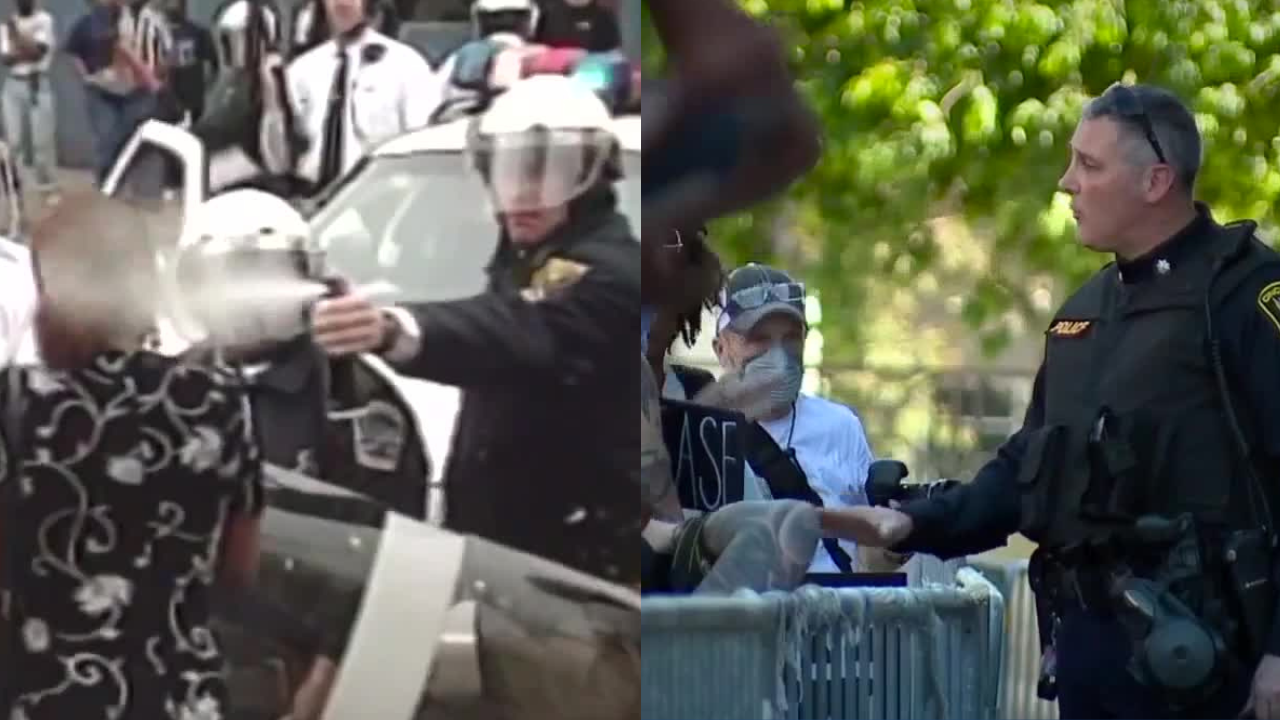


CINCINNATI — Anger, frustration and grief filled the streets of Cincinnati 25 years ago following the police shooting of 19-year-old Timothy Thomas.
On April 7, 2001, Officer Stephen Roach shot and killed Thomas in an Over-the-Rhine alley. He was the 15th Black man killed by police since 1995, his death highlighting the divide between Cincinnati's police and Black community.
In the days following Thomas' death, peaceful protesters marched to City Hall and called for answers. But the tension was mounting. Frustrations boiled over the night of April 9, 2001, after a law and public safety committee meeting that gave Thomas' mother and fellow community members no answers.
The city erupted.
Ken Kober, president of the Cincinnati Fraternal Order of Police, was a police cadet at the time.
"I get a phone call and said, 'Hey, where are you at?'" Kober said. "He's like, 'Get back here now, I think we think that there's a riot starting.' And sure enough, I get there to the headquarters, and you see people in the street throwing rocks and bottles."
RELATED | Cincinnati looks back at racial tension that led to 2001 riots
Kober said the memories are still fresh 25 years later. The unrest lasted for days, drawing national attention that ultimately led to sweeping changes in how police interact with the community.
"Of course, it's not something that happened overnight," Kober said. "It took a lot of long hours and hard work from leaders to figure out: how do we navigate through this situation? And we certainly now have a blueprint."
WATCH: Community leaders reflect on how those events changed policing in Cincinnati
Kober said the resulting Collaborative Agreement helped lay the foundation for a transition to rebuild the police's relationship with the community.
"The police department listened, especially about community policing," Kober said. "And I believe 25 years later, we are in a much, much better position when you talk about police community relations."
RELATED | How the Collaborative Agreement changed policing in Cincinnati
That change prompted Stewart Isaacs to join the Cincinnati Police Department a year after the shooting. Now, Isaacs is a sergeant and the president of the Sentinel Police Association, a group supporting Black officers.
"The goal ... is to improve upon your training to make it safer, easier and more manageable for the officers behind you," Isaacs said.
He said he has seen major improvements in training and practices used by city police.
"We didn't have things like Tasers back 25 years ago," Isaacs said. "We didn't have de-escalation techniques. We didn't have the transparency that we have."
The fatal encounter 25 years ago sparked days of unrest and forced the city to confront its relationship with police. Community leaders say while progress has been made, the conversation about trust and accountability is far from over.
"We saw a shift in policing, because there was a generation of police officers that ultimately started to phase out," said Pastor Ennis Tait, who moved to Cincinnati in 2003, a year after the Collaborative Agreement.
Tait said community engagement has been an important part of reform. That includes the Cincinnati Citizen Complaint Authority, a taxpayer-funded civilian oversight group that investigates complaints against officers and discusses reports and findings at its public meetings.
"This agreement is something that we ourselves should want to maintain, and so we need to pass it down from generation to generation," Tait said.
Now, the legacy of those committed to reform is still a work in progress.
"We always have to evolve," Kober said. "We always have to get better, but I think we're in a better place now than we were in 2001."
WCPO 9 anchor Adrian Whitsett spoke with multiple people about the complexity and impact of the Collaborative Agreement. You can read his entire story here.
