


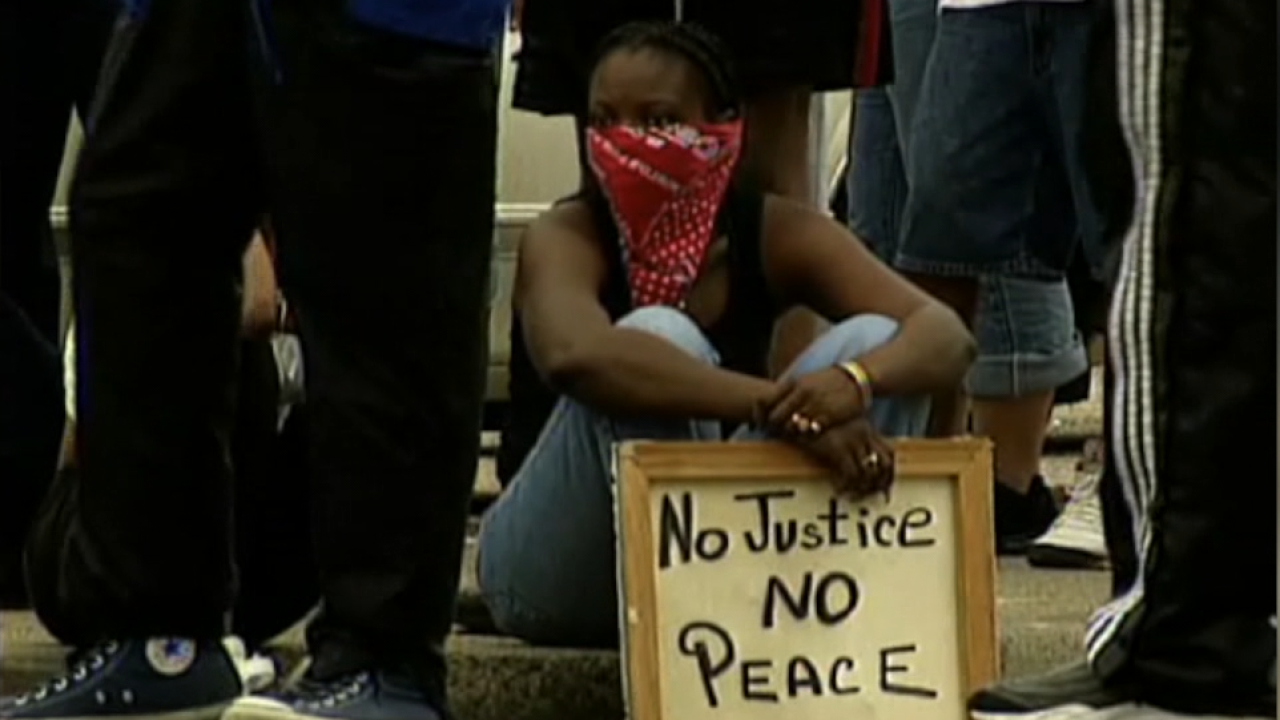

CINCINNATI — Years of mounting racial tension and police intervention shooting deaths brought the city of Cincinnati to the brink in April of 2001, culminating in multiple nights of rioting and $3 million in damage.
The flashpoint came in the early-morning hours of April 7, 2001, with the death of a 19-year-old in an Over-the-Rhine alley.

That man, Timothy Thomas, became the 15th Black man killed by police since 1995. Cincinnati Police officer Stephen Roach shot Thomas in the chest after a brief foot pursuit. At his trial, Roach would testify that he thought Thomas was reaching for a gun when he was really just pulling up his pants.
Prosecutors built a criminal case against Roach, but a jury ultimately acquitted him.
Former Cincinnati leaders reflect on the chaos of the April 2001 riots
Three key figures then — Mayor Charlie Luken, then-Fraternal Order of Police President Keith Fangman, and the Rev. Damon Lynch III, head of the Black United Front — worked to keep the city from imploding entirely.
Twenty-five years later, Luken, Fangman, and Lynch are recounting what led up to and what happened during those fateful days and nights.
"Things had been building for a long time, and frustrations were high," Luken said.
Watch the three recount the April 2001 riots here:
"The four years prior to the 2001 riots, the Cincinnati Police Department was unfortunately involved in 15 police intervention shooting deaths," Fangman said. "Out of the 15, 13 of them were armed with deadly weapons."
"You mentioned racial tension? Yeah, definitely it was," Lynch said. "It was racial, because all the men who were being killed by the police were African American. So clearly, there was a racial component to it."
"Roger Owensby was not armed. And Timothy Thomas was not armed," Fangman said.
"It was just a series of events where people were tired of it and they were going to do something about it. And they did," Luken said. "Some people think it started at Law and Public Safety Committee meeting, but I'm like, you know, that was just a trigger. It was going to happen with Timothy Thomas' death, and things just exploded."
A mother's unanswered question
For days after the shooting, peaceful protesters marched to Cincinnati City Hall while City Council met to demand answers in the deadly shooting. City leaders held a meeting on the night of April 9, 2001.
"It was a law and safety committee chaired by John Cranley. The mayor was not there, but City Hall was packed," Lynch said.
Thomas' mother, Angela Leisure, came to the meeting looking for answers. She spoke directly to members of city council.
"Even when you tell me why, it isn't going to make it better,” she said. “But at least I'm gonna hear you acknowledge the fact that you took a part of my life from me. So, I demand to know: why?"

But she still found no answers about why her son was gunned down. It was later that night that peaceful demonstrations would give way to unrest in downtown Cincinnati and Over-the-Rhine.
"It just, was an absolute nightmare for everybody. It was horrible," Fangman said.
"It was just a very contentious environment for everybody, and it was just kind of like the perfect storm," Fangman said. "It really was. It was just the perfect storm that resulted in a very, very bad outcome."
Past the boiling point
"There were some people who came down to that with the specific intention of disrupting it and making it horrible and they were successful. And then that night, there was trouble. I mean, rocks through windows," Luken said.
Watch: Look into the archives of the 2001 unrest
Fangman described it as something out of "The Twilight Zone."
"There were businesses on fire. There were shots being fired in the air all over the place," he said. "There was rampant looting going on right in front of us, with hundreds and hundreds of looters going into the Deveroes clothing and shoe store that was there and a lot of the mom and pop businesses around Findlay Market."
Police radio traffic broadcast the increasing tensions as crowds grew dramatically.
"You'd listen to the police radio and they'd be like, the police would be saying, 'Well, there's 30 people on the corner,' then there were, half hour later, there were 100 people on the corner, then an hour later there were 500 people," Luken said. "So it kind of grew and grew, and then for a few days, it went on."

"It was chaos. It was absolute chaos. And if anybody says that this, this isn't true, they're just being intellectually dishonest. Those first couple of days, those first two, almost three days of the riots in Cincinnati, we had, we had pretty much lost control," Fangman said.
Both Fangman and Lynch would become champions for opposing sides. Both men said they and their families received threats for their words and actions.
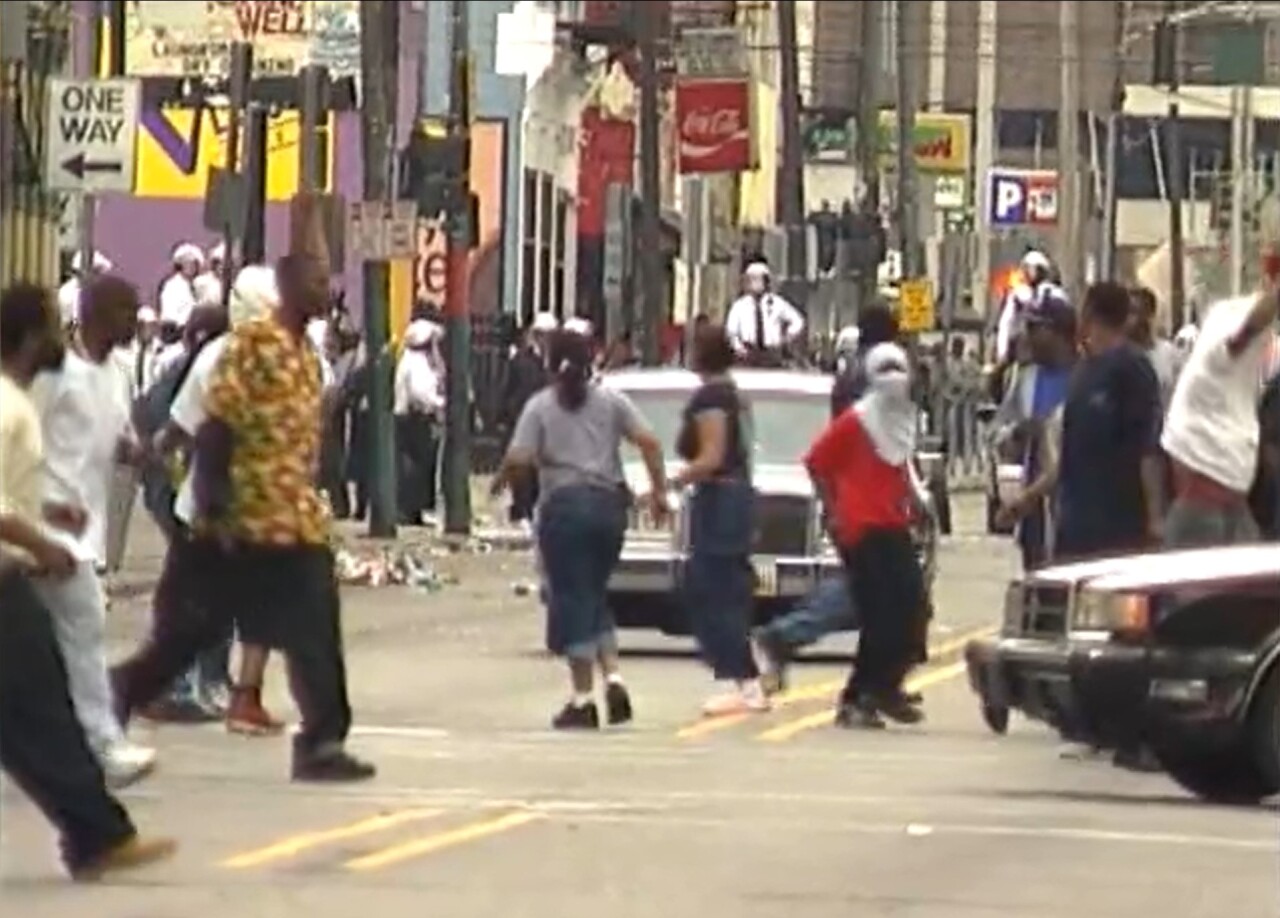
Days of unrest would lead Luken to declare a citywide curfew on April 13, 2001.
"The first night of the curfew, like, six o'clock came, and people were like, 'Oh, that little white guy down at City Hall said we got to go home.' And they all started going home. And you know, it pretty much ended," Luken said.
But that wasn't the end of the story.

"It was the civil unrest that really sparked the city and the business community to say something needs to be done," Lynch said. "Sure enough, nobody was in the street. And so, you know, you know we're thinking as the leaders, we're thinking just how crazy, you know that really was. You all were out here wilding out and tearing up people's property as if you were, you know, real freedom fighters. And the moment the person in power says it's over, it ended."
"People just got tired of it, and physically tired and emotionally tired, and so regardless of what the real reason was, we were very, very thankful and fortunate that it did stop," Fangman said.
After multiple nights of rioting, the work was just beginning. Lynch instituted a boycott of the city, and hard work began on a first-of-its-kind agreement to change police policy.
A new agreement takes shape
In the months following the unrest, some 3,500 Cincinnati residents would come together to give their input on what they thought would make the community stronger.
Members of the police community came to the table alongside community members.
What they accomplished became known as The Collaborative Agreement. That agreement led to a change in police pursuit protocol, the Citizen Complaint Authority, mobile crisis teams, Tasers for police officers and body-worn cameras, training for responses to people with mental health problems, revised policies on the use of police dogs, beanbags and chemical sprays.
U.S. District Judge Dlott told WCPO in 2021 that the agreement also created "C-POP," which stood for community problem-oriented policing, which set the community and police as partners in preventing crime by identifying hot spots where multiple calls for service originated and then sending social workers and police officers there to work with the community to address those issues.
Dlott said the Collaborative Agreement and the Memo of Agreement with the Department of Justice, which conducted its own investigation into the Thomas shooting, were signed at 2 a.m. on April 12, 2002, almost a year to the day that the riots ended.
You can read more about the Collaborative Agreement here.
Check back for updates to this story over the course of the week as WCPO 9 marks 25 years since the Cincinnati riots.
This story was reported on-air by a journalist and has been converted to this platform with the assistance of AI. Our editorial team verifies all reporting on all platforms for fairness and accuracy.