

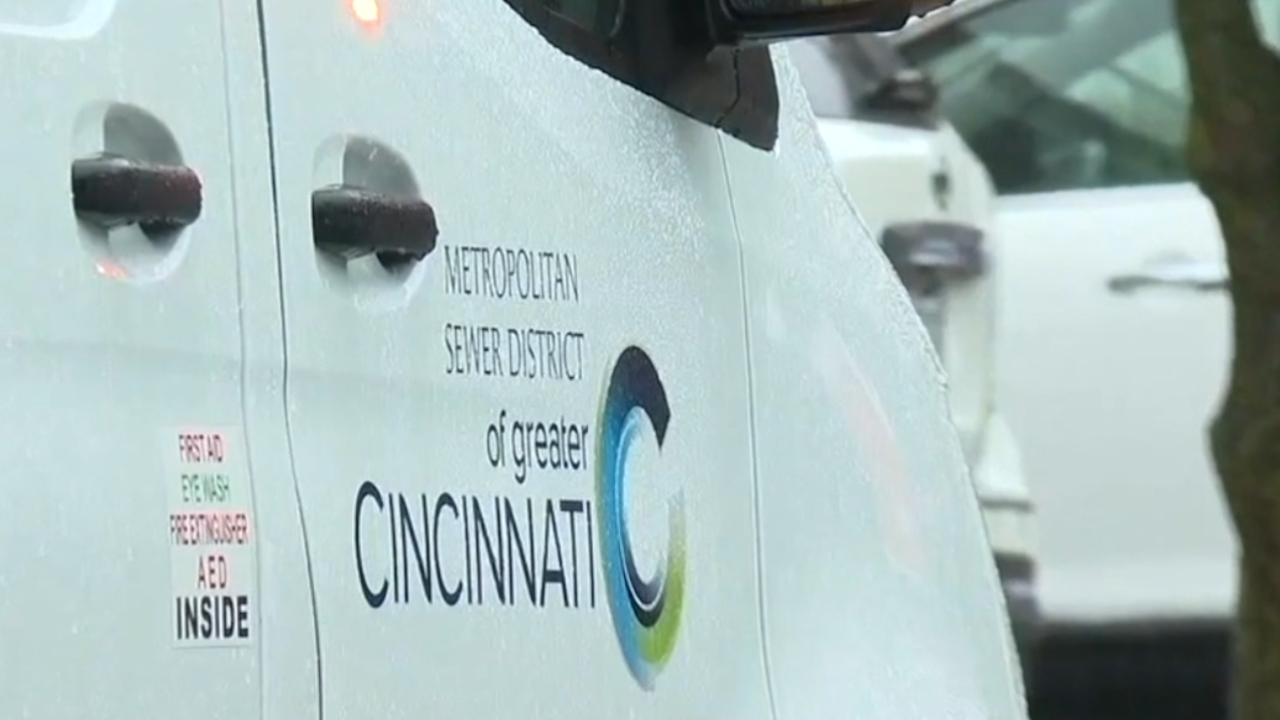


ANDERSON TOWNSHIP, Ohio — Hamilton County health officials are warning residents around Anderson Township to avoid Dry Run Creek after a sewage discharge may have contaminated the water, according to a health alert issued by Hamilton County Public Health.
HCPH said the sewage discharge was found in Dry Run Creek along SR-32 near 8 Mile Road; both HCPH and the Metropolitan Sewer District were notified about it on June 24.
The agency says the sewage discharge happened because heavy flows in the creek eroded the creek's banks and damaged sewer infrastructure.
Since then, MSD has diverted and stopped the sewage from flowing into the creek, but it's still working on a permanent solution to the issue. No sewage is actively leaking into the waterway at this point, but HCPH is still advising residents and pets to avoid the creek "out of an abundance of caution."
"The safety and health of Hamilton County residents and visitors is a top priority for all agencies involved," Craig Davidson, assistant health commissioner for environmental health services at HCPH, said in a press release. "We're grateful to collaborate with a partner like MSD, who continues to make capital improvements to the region's public sewer system in order to keep Hamilton County residents, workers and visitors safe."
HCPH is advising residents to:
- Avoid swimming, boating or playing in or near the potentially contaminated waterway.
- Avoid letting bare skin come into contact with the water.
- Wash hands, clothing and footwear thoroughly if you must be in a potentially contaminated area.
- Check MSD's combined sewer overflow map
HCPH officials said heavy rains in the Greater Cincinnati area can cause issues with waterways, and with sewer systems.
It's not the first time in recent years that a combined sewer overflow issue caused sewage to make its way into a publicly used space: In 2025, University of Cincinnati students discovered "alarming levels" of human E. coli in Burnet Woods Park likely tied to combined sewer overflow events, according to UC professor Bob Hyland.
That overflow issue persisted for months and even prompted a partial closure of areas of the park near the Trailside Nature Center.
Following that incident, a spokesperson for the Metropolitan Sewer District announced in a statement it would partner with the University of Cincinnati and officials with the U.S. Environmental Protection Agency to conduct a fall study in the park.
MSD said the study would focus on potential health risks at the park.
"The city remains committed to working together on long-term solutions that improve public safety and protect our natural spaces," the statement read.
At the same time as the issue in Burnet Woods, "elevated E. coli levels" were also found in Winton Lake, prompting a days-long closure of that body of water. Hamilton County Public Health and the Metropolitan Sewer District (MSD) first announced the lake's closure on May 20, 2025, saying sewage may have entered a creek that feeds into the lake.
