

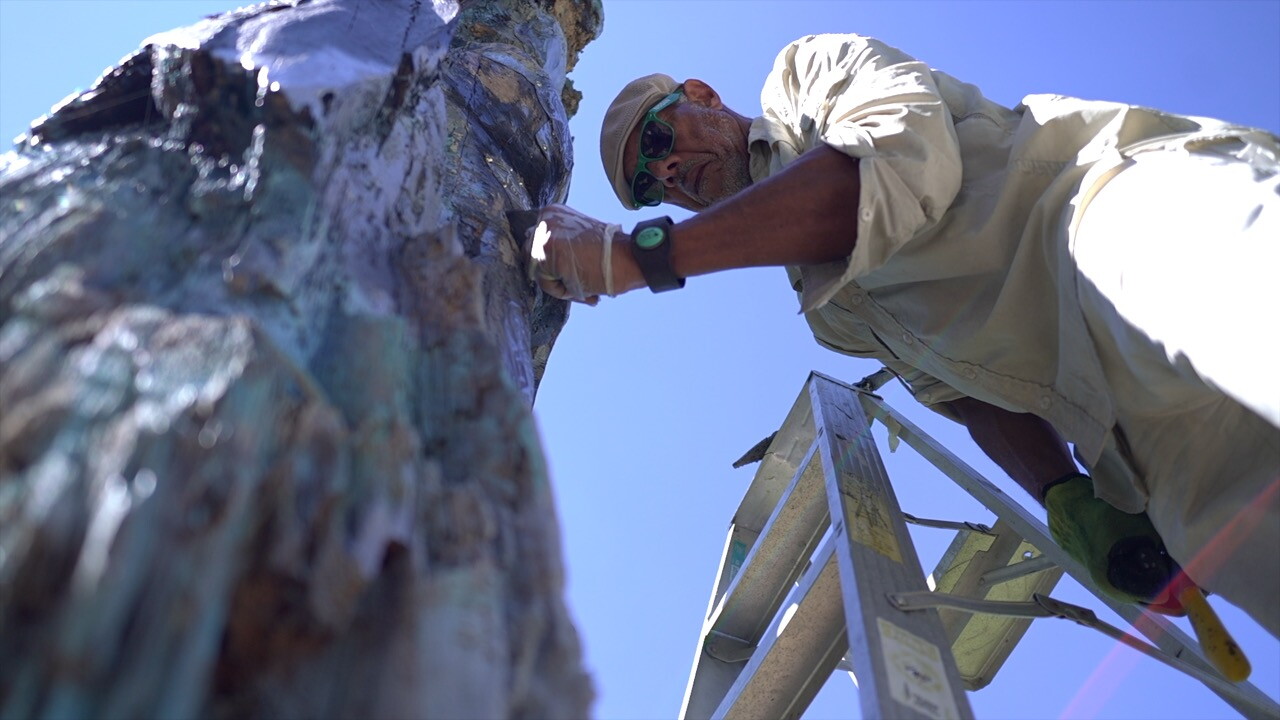


CINCINNATI — Daniel Buford couldn’t find the grave. He walks up a steep hill, gingerly using his walking stick. Then he walks down.
“Where did you go?”
He walks up again, this time breathing heavily. He’s looking for his dad’s grave.
“I know he’s here somewhere,” Buford said. “I did the funeral and watched him go into the hole.”
WATCH: Why this artist is turning a tree into a memorial at historic Black cemetery
As Buford walks through the United Colored American Cemetery, he tells me he’s embarrassed because he can't find his dad's marker. But it actually makes his point better than anything he can say. Because at this cemetery, thousands of people buried here don't have markers.
It's Ohio's oldest Black cemetery, and it was once declared a public nuisance. Because residents didn't want Black people buried in their town.
Buford comes here almost every day now, and he stays for as much as 4 hours — if he can. He's turning an old tree near the front of the cemetery into a memorial.
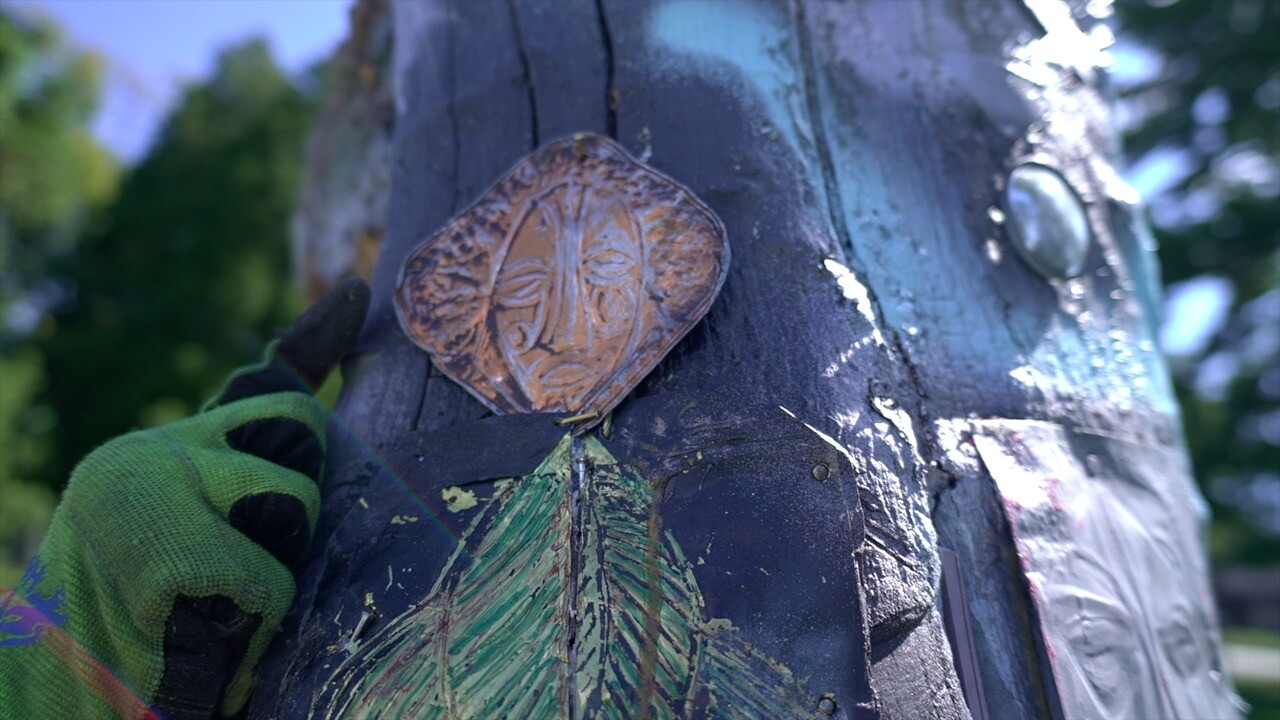
“You had so many people die who were never memorialized, never funeralized,” Buford said. “To me, each of these faces is a representation of one of those elders.”
Buford taps on a face he's pinned onto the tree. This one came from the metal tin on the bottom of a tea canister. Another one from a pot pie. This one, he says, is a cookie tin.
"Old Bay spice," Buford said.
Then, he asks me to stand back.
“I don’t want this over-spray to get on you,” Buford said.
He taps on the tree several times. Once for the nose, once for the mouth and once for the eyes. Because he's shaping the tree into a large face, with individual tins representing tears.
“It’s going to be called the 'wiping the tears' totem pole,” Buford said. “We’re here to memorialize and preserve the memory of those people.”
After I leave, a local historian helps look for Buford’s father. They couldn't find him.
