

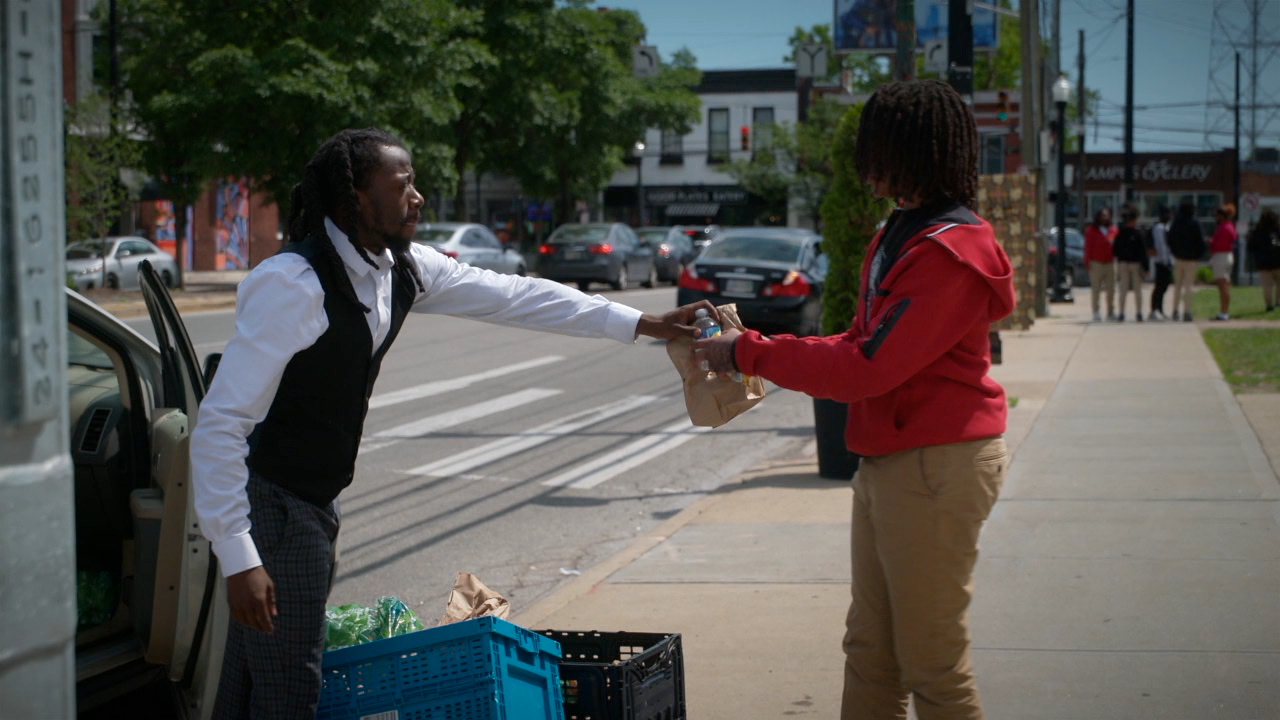


CINCINNATI — Cincinnati Collaborative Foundation (CCF) President Iris Roley and her public safety partners called their summer work a success at a city council Public Safety and Quality of Life committee meeting on Tuesday.
"Collaboration around public safety is well and alive in the year of 2026," Roley said.
The talks focused on the CCF's community outreach over the summer months heading into fall, aimed at curbing youth violence and funded by taxpayer dollars.
Community care monitors spent time on curfew support and engaging with young people during programs like "Rec @ Nite" and out in other parts of the city. Roley said monitors are trained in things like problem-solving, de-escalation and connecting children to proper resources.
WATCH: Here's how some taxpayer money was spent this summer with the aim of reducing and preventing crime
"The first step is to be present, and the second step is to be consistent in your presence. The third step is to make sure that you have resources for young people who need them, and to understand the environment of which they're in," Roley said.
Roley touted a drop in downtown crime numbers, reported by Cincinnati police, over the last year. She said the figures do not mean the CCF's work caused the reduction but serve as a "backdrop" for the community-based work going on.
"What we can never measure are the things that never occur," Roley said. "A de-escalated fight, a situation where maybe CPD helped young folk understand that this is not the way to go. Maybe we got to them in time and helped them get some food or way home."
According to Roley, year-to-date, robberies fell from 40 incidents to 25, aggravated assaults dropped from 24 incidents to 16 and shooting incidents dropped from 11 to seven in the Central Business District.
"The description of what they were doing was good," said Todd Zinser, a former U.S. inspector general. "It lacked any kind of data of what they were doing. It did include data of the reduction in crimes [in] just a couple of areas."
Others, like Zinser and former city council member Steve Goodin, question how effective the publicly funded effort is.
"There is no real, true, factual nexus between what she did and crime going down," Goodin said. "My issue is the city paying for it. Okay, if there is a nonprofit that wants to step up and do this sort of work, that's fantastic."
According to a city contract reviewed by WCPO, about $54,000 was earmarked for the foundation's summer programming. Most of the money went toward paying CCF monitors and management services.
Zinser runs the website Cincinnati Watchdog and said the foundation's activities should be separated from its outcomes.
"They have a lot of activities. They have some outputs. I'm not sure they've actually measured all their outputs, but you don't know what the outcome is," Zinser said.
According to the presentation shared on Tuesday, the CCF is recommending future summer safety evaluations combine traditional crime stats with "community-based" measures:
- The number of youth contacts and sustained engagement
- Monitor hours and locations covered
- Participation in structured programming
- Meals, water and other resources distributed
- De-escalation interviews
- Resource and service referrals
- Incidents requiring law enforcement prevention
- Reported crime trends in areas receiving concentrated programming
"The briefing didn't even include the types of activities that they were engaged in with any kind of data. The number of youth served, the number of locations that they manned," Zinser said. "You could employ [Mrs.] Roley in her pursuits, but the way they've been doing it through these contracts, I think, is inappropriate."
The group's work continues this fall. Roley said the foundation's food distribution efforts provide approximately 800 lunch snacks and 850 bottled waters over two days each week at the transit site and Hughes High School.
"We talked about the significant need for children who are experiencing special needs there, who are really, really gravitating towards our resources and our food," Roley said. "These numbers are astounding; they are to be celebrated, but we still have more work to do."
This story was reported on-air by a journalist and has been converted to this platform with the assistance of AI. Our editorial team verifies all reporting on all platforms for fairness and accuracy.
