

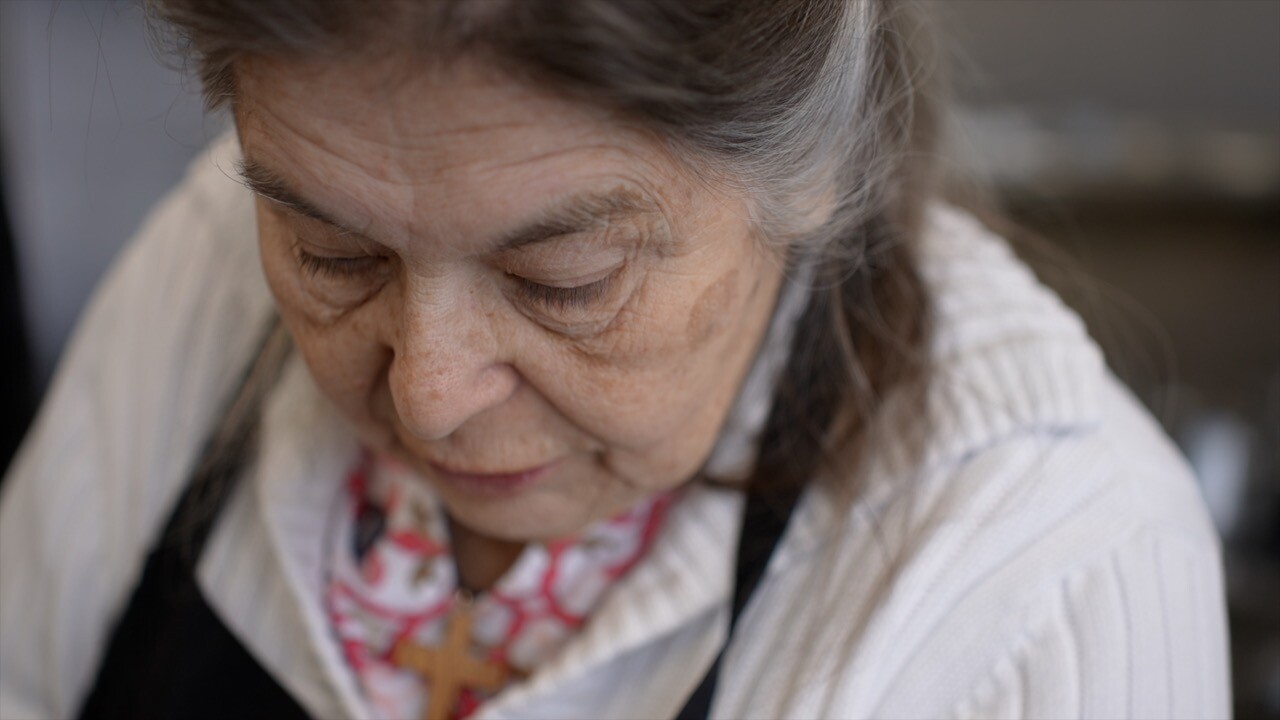


COVINGTON, Ky. — Dave Kratzer asks his wife if she wants to tear the bread. She does, and then she stuffs a piece into her mouth. She’s laughing. Her husband is too.
But he also looks like he doesn’t know exactly what to do.
“That’s for the soup,” Dave said.
A few minutes earlier, he put on Hannah Kratzer’s apron. They're standing at cooking station No. 4.
“She’s not going to get better," Dave said. "And I have to learn how to deal with the stages.”
Hannah was diagnosed with dementia 10 years ago. That’s why they’re here, making grilled cheese and tomato soup at the Baker-Hunt Art and Cultural Center.
WATCH: Daughter teaches mom with dementia how to cook again
Now, their bread is burning. And JoEllen Hothem is laughing. She’s running the class.
“Don’t do it like my dad,” Hothem said. “Put some oil on the bottom of your pan.”
Hothem is a chef who teaches classes across the Tri-State. This one is for people living with dementia. Her mom, Hannah, is the person who taught her to cook. And Hothem tells me she developed this class mostly from working with her mom.
But not from when she was a kid — from when Hothem says she had to relearn everything about how to interact with her.
While Hothem talks to me, her dad is filming us with his phone. And Hannah keeps interrupting.
“Come on,” Hannah said. “Don’t leave us.”
“Mom,” Hothem said. “You want to get in the picture with me?”
For years, her parents have come to events like this, put on by the Center for Memory Support and Inclusion.
“It can be such an isolating disease,” said Shannon Braun, who’s known the family for years. “By just creating environments that are a little more inclusive, we open the community back up.”
Braun runs that center, which trains people on how to help those living with dementia. The organization also puts on free programs like this one. Because memory care and dementia-related support can often be among the most expensive aging services.
More than 3,000 people participated in the center's programming last year, a spokeswoman said.
“There’s a language that’s spoken that people that are living it really understand,” Braun said. “And it really makes a difference for people with dementia that would otherwise be isolated at home.”
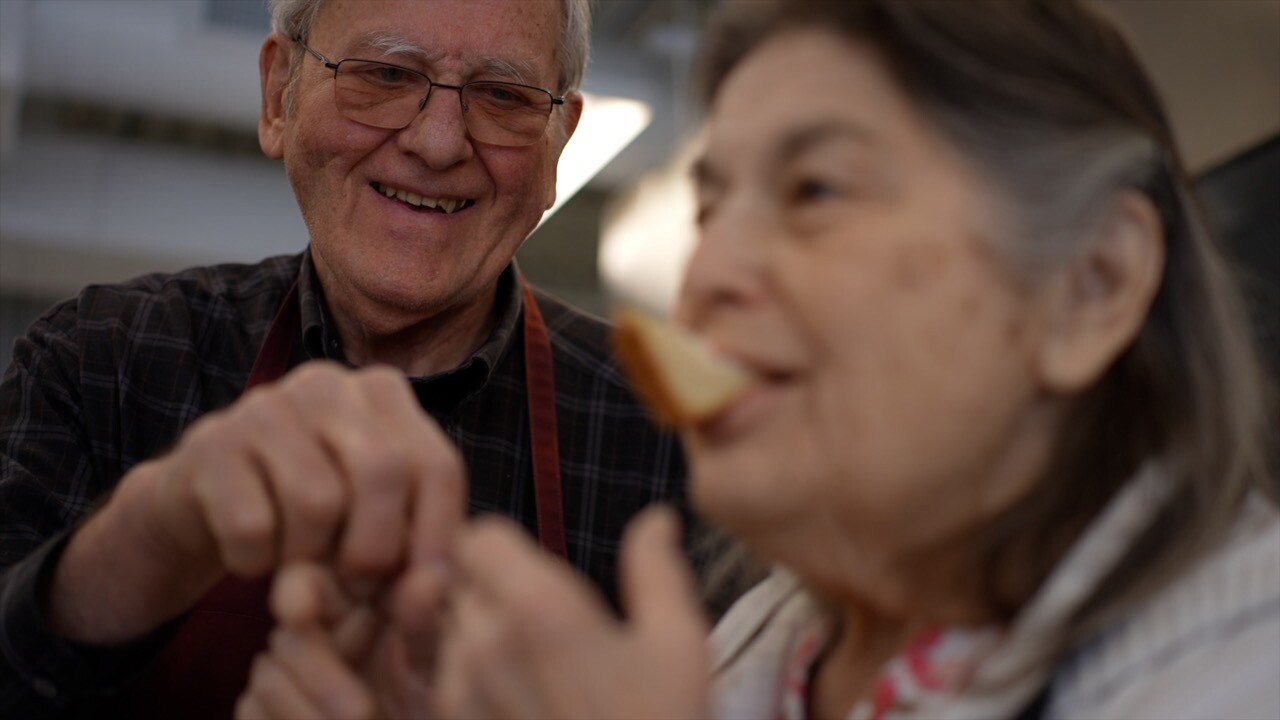
Dave tells me he met his wife at school in California, and they've been married for 63 years.
“She didn’t like me much at first. I had to convince her,” Dave said. “I liked her from the beginning. She was a great gal.”
Dave does that sometimes, referring to his wife in the past tense — even though she’s still alive. That’s how bad the dementia is. When they first started coming to programs like this, Hannah thought she was coming to help.
"As it's gone downhill, she has no idea" Dave said.
He tells me almost all the friends they made going to classes like this have died. Then, he scoops grilled cheese out of his pan and onto a cutting board.
“Oh well,” Dave said. “It all goes in the same place, right?”
Hannah tells him she doesn’t know. Then, she keeps talking. But it becomes difficult to understand what she’s saying. She asks where her granddaughter is.
Keith wants to hear from you. You can contact him here:

“Maddie’s not here,” Dave said.
A few minutes later, Hannah is laughing again. Her daughter walks around the kitchen, checking on other people in the class. When she sees her mom, she smiles.
"She's having fun," Hothem said.
