

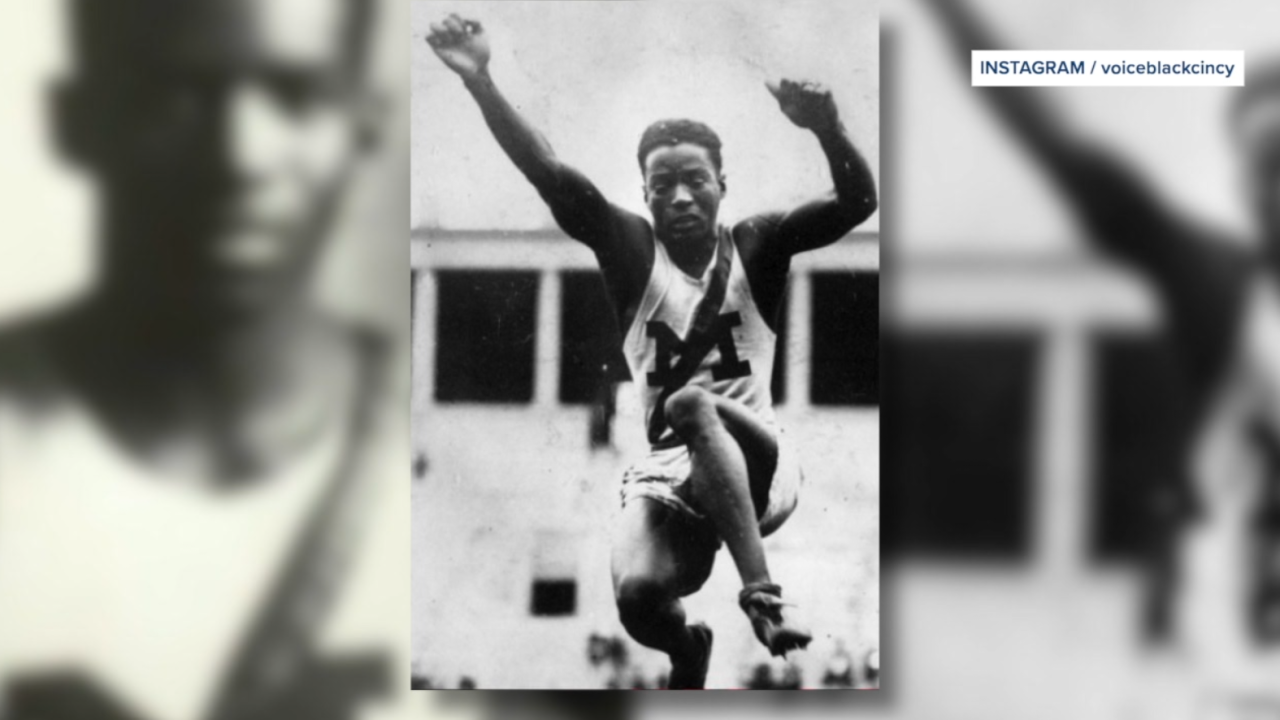


CINCINNATI — The Olympic Games may be over for now, but for those who medal, their legacy lives on long after the torch is extinguished.
I dug into the archives at the Cincinnati Museum Center to learn more about one remarkable Cincinnati Olympian whose story still resonates nearly a century later.
Christine Engles, curator of manuscripts at the museum, knows a little about a lot. She helps care for millions of historical pieces, each with a story to tell.
Among the most prized pieces she shared with me is a collection belonging to DeHart Hubbard — the first Black American to win a gold medal in an individual Olympic event. He earned his medal in the running long jump at the 1924 Paris Olympics.
Watch to see the artifacts saved from Hubbard's historic career:
“So these are all his different medals from when he was at the University of Michigan,” Engles said. “Some of them are for broad jumps, some of them are for 100-meter dashes.”
Hubbard was born in 1903 right here in Cincinnati and quickly became known as the fastest runner in the city.
“He went to Douglas School and then went to Walnut High,” Engles said. “He was just amazing.”
One of the most striking artifacts in the collection is a handwritten letter Hubbard wrote in the 1920s while traveling to the Paris Games.
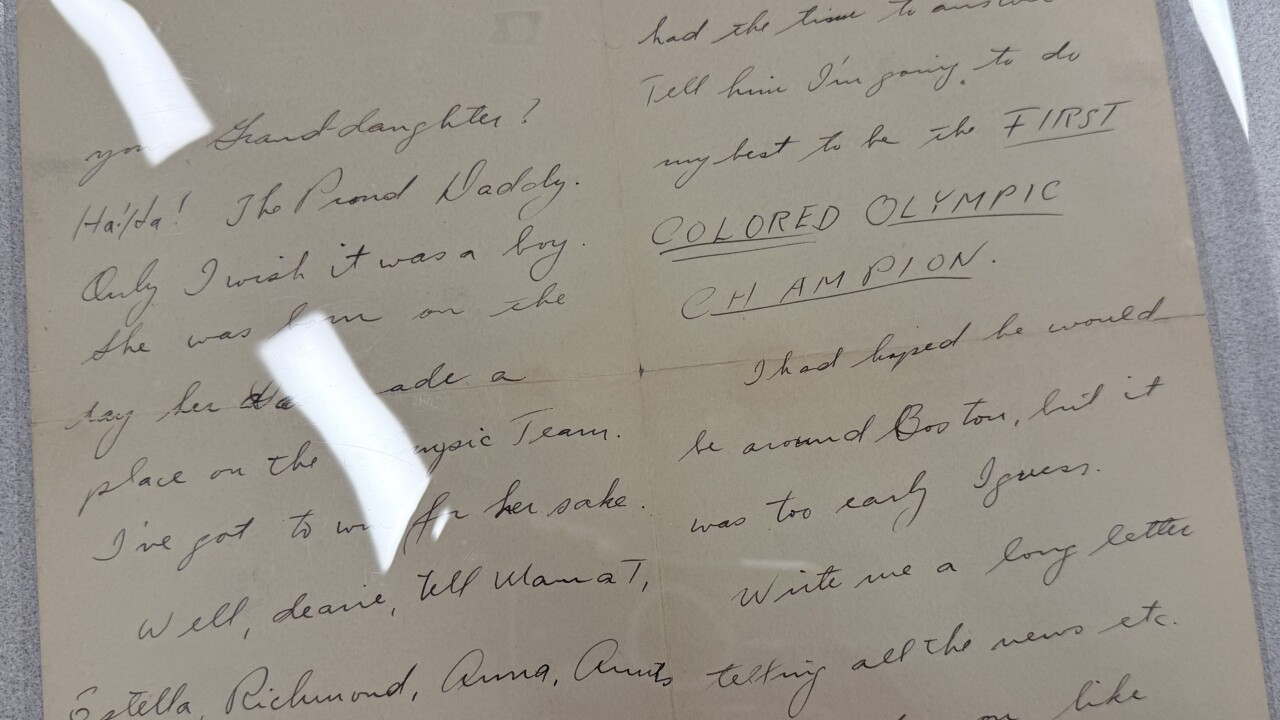
“He’s writing to his mother on his way to the Olympics," Engles said. "His excitement is palpable.”
At the Games, Hubbard won the gold medal in the long jump. He also competed in the triple jump, though he did not medal in that event.
But his success continued beyond the Olympics — the following year, in 1925, he broke the world record for the 100-yard dash.
Engles said reading Hubbard’s words feels surprisingly familiar.
“You can see the excitement current athletes have,” she said. “Then you read his letter and you’re like — nothing’s changed.”
Engles hopes stories like Hubbard’s inspire more people to explore the museum’s collections.
This story was reported by a journalist and has been converted to this platform with the assistance of AI. Our editorial team verifies all reporting on all platforms for fairness and accuracy.
