

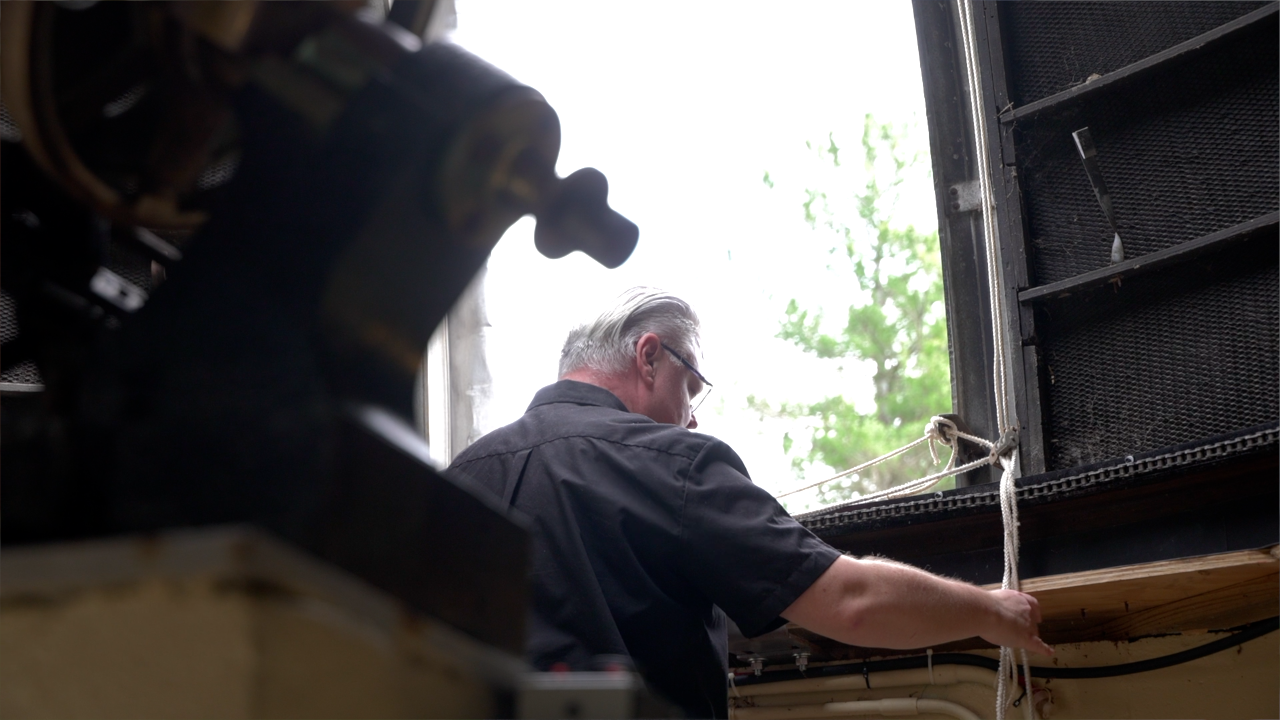


CINCINNATI — For members of the Cincinnati Astronomical Society, the launch of Artemis II marks not just the latest development on the front of space exploration, but history in the making.
"It's a long time coming — 54 years is quite a spell to wait," said Terry Endres, CAS first vice president. "My hope is that the Artemis program, not just (Wednesday's) flight but the entire program, will inspire future young people to take careers in the sciences."
It's been more than 50 years since humans last went to the moon, during the Apollo 17 mission in 1972. Bryan Simpson, president of the Cincinnati Astronomical Society, said he vividly remembers watching that Apollo mission and others as a kid.
"I grew up in the shadow of the Apollo program in the 70s, and it really affected how I looked at the future and what the future could bring," he said. "I really hope these Artemis missions have the same effect on this generation. To give that sense of optimism and what the future might hold."
Endres and CAS Second Vice President, John Blasing, remember watching the first moon landing back in 1969. They said Artemis II marks a full-circle moment.
"It does feel full circle," Endres said. "There's a little bit of a tinge to it, because I've had to wait so long."
WATCH: One thousand miles away from the Artemis II launch, Ohio leaves astronomical footprint on mission
The mission, which follows Artemis I in 2022, will take four astronauts farther from the Earth than any humans before them. As reported by Scripps News, the mission's key objectives include testing spacecraft systems and life-support capabilities in a crewed environment, assessing astronauts’ ability to maneuver the spacecraft, and conducting rendezvous and docking demonstrations to prepare for future lunar landings.
"It's going to be a fairly quick mission, but again, this has to be done to lay the groundwork for what's to come in the future," Simpson said.
That future work wouldn't be possible without support from the Buckeye State.
"The state of Ohio has always been key when it comes to the space program, all the way back to the Wright Brothers, right?" Simpson said. "Ohio is really key when it comes to this sort of endeavor."
Dozens of companies around the state have played a role in the effort to send humans to the moon for the first time in more than 50 years, including L3Harris.
The Florida-based company's space and sensors division, which operates in Mason, produced technology that will be paramount to the mission's Space Launch System, the 322-foot rocket that will carry four astronauts into space in the Orion capsule.
"Having been an engineer at GE aerospace, I had quite a bit of exposure to developments in materials that are used for aerospace applications," said John Blasing, CAS second vice president. "And there was a lot of Ohio talent that went into those."
Up in Cleveland, thousands of researchers from NASA Glenn Research Center spent years working on the Artemis II mission, including preparing the Orion capsule, which will hold the astronauts.
"We put it through its paces and made sure all the systems that need to function after a launch abort were to occur, will occur," Rob Ahlman, the deputy systems engineering lead for the Orion Crew and Service Module Office, told Scripps News Group's WEWS.
