

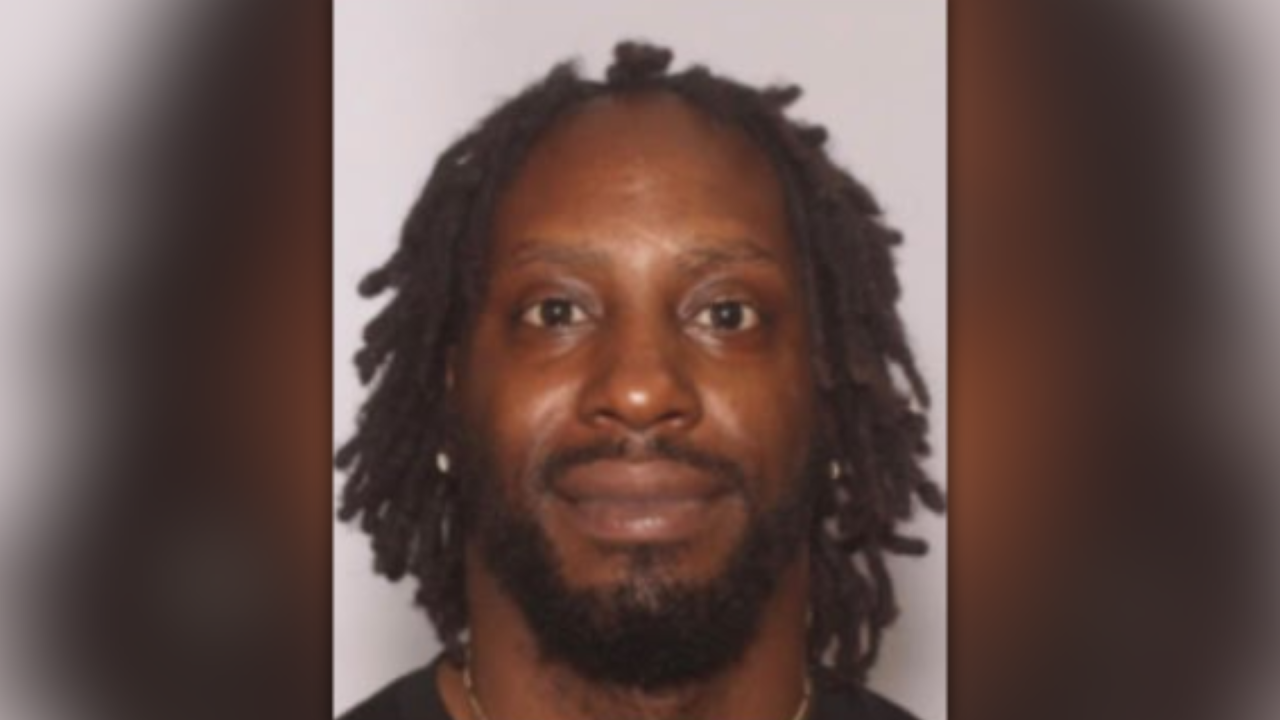


CINCINNATI — A man has been arrested and charged after authorities opened an investigation into reports of inappropriate conduct by a health professional, according to Cincinnati police.
Cincinnati police say Willie Hill, 35, was charged with five felony counts in the fifth degree of sexual battery, two felony counts in the third degree of sexual battery and voyeurism.
Hill was arraigned Tuesday morning and given a $10,000 cash bond on one of the sexual battery counts and a combined $31,000 on the other sexual battery charges and voyeurism charge, the latter of which he must pay 10% of.
Officers responded to the 2400 block of Kipling Avenue on Oct. 26 after receiving reports of inappropriate contact with victims by a health professional, police said.
WATCH: Police: Health professional faces multiple sexual battery charges
A criminal complaint obtained by WCPO states that one of Hill's alleged offenses took place at Glenwood Behavioral Health Hospital, which is in the area mentioned by CPD.
The alleged offenses outlined in criminal complaints range from inappropriately touching female victims to spying on them while showering.
The complaints say the offenses took place Oct. 25. The complaints also stated that Hill had "supervisory authority" over the victims.
The allegations are raising questions about the protections afforded to patients in psychiatric facilities, where some individuals may be involuntarily admitted and dependent on staff members for their care.
Amy Price, associate advocacy director and abuse and neglect team leader at Disability Rights Ohio, said patients in these facilities can be particularly vulnerable because they often have little control over their surroundings or who provides their treatment.
She spoke with WCPO generally about patient rights and institutional abuse, rather than the specific allegations against Hill.
"They don't have control over who is providing their care in that moment," Price said. "They don't have choice."
Price, who spent nearly 30 years working in behavioral health before joining Disability Rights Ohio, said patients may also be hesitant to report misconduct because they depend on staff members for treatment and, in some cases, decisions about when they can leave.
"They're brave to speak out. They're already in a vulnerable position," Price said.
She said incidents of abuse in institutional settings are often underreported because patients may fear speaking out against someone responsible for their care.
"They're on that unit, and they can't walk off that unit on their own to get away from the situation," Price said.
She said Disability Rights Ohio is not currently involved in the case.
Ohio law requires psychiatric hospitals to report certain serious incidents to the Ohio Department of Behavioral Health.
Under Ohio Administrative Code 5122-14-14, hospitals are required to report qualifying incidents within 24 hours of discovery, excluding weekends and holidays. Facilities must also document and review incidents and take steps to address identified safety concerns.
WCPO contacted the Ohio Department of Behavioral Health to determine whether it had received complaints or incident reports involving Glenwood, whether the allegations against Hill had prompted an investigation and whether previous inspections had identified deficiencies.
The department's director of media relations and outreach confirmed the inquiry had been forwarded to its legal office.
The department has not confirmed whether Glenwood reported the allegations or whether the state is investigating the facility's response.
WCPO also contacted Glenwood Behavioral Health Hospital and its parent company, Acadia Healthcare, seeking information about Hill's employment status and whether either organization knew about the allegations before his arrest. WCPO has not received a response to those questions.
Beyond the allegations in this case, Price identified what she considers a significant gap in Ohio's system for protecting vulnerable patients. She said Ohio's developmental disabilities system maintains an abuser registry that can prevent individuals with substantiated findings of abuse from working with people served by that system.
However, she said no equivalent registry exists specifically for behavioral health facilities.
That means someone who loses their job following substantiated abuse allegations may not necessarily be prevented from working at another psychiatric facility.
"People may lose their jobs, but that doesn't prevent them necessarily from going and working at another facility," Price said.
Price said Disability Rights Ohio supports establishing a registry across systems serving vulnerable populations, with safeguards and criteria for inclusion established through state law or administrative rules.
"We absolutely believe that there should be an abuser registry where people who have substantiated, you know, abuse against individuals that meets a certain threshold," Price said.
She explained that her organization can investigate allegations of abuse and neglect, review facility records and recommend corrective action. However, Disability Rights Ohio cannot independently close a facility, restrict admissions or terminate employees.
Those decisions fall to facilities and the appropriate state regulatory authorities.
Price said timely intervention is especially important when allegations involve patients who may be unable to remove themselves from potentially unsafe situations.
"We're talking about facilities, often the highest level of care, where staff are charged with protecting them at some of their most vulnerable points in their illness," Price said.
This offense is being investigated by the Cincinnati Police Department's Personal Crimes Squad. Anyone with information is encouraged to contact the Major Offenders Unit at (513) 352-3542.
