



CNN, MSN and Politico are suing the Trump administration after journalists from all three organizations were turned away from the White House over the weekend.
The organizations argue the ban violates their First Amendment rights and retaliates against coverage the president dislikes.
Kenneth Katkin, a professor at Chase College of Law at Northern Kentucky University, said the White House generally has broad authority over press credentials — but that authority has limits.
WATCH THE STORY:
"They generally do have a lot of authority and discretion to determine who gets press credentials, but they're not allowed to censor based on viewpoint," Katkin said.
Katkin said the First Amendment does not guarantee journalists the right to cover the president inside the White House, but it does protect against government retaliation based on criticism.
"Nobody has a right to get admitted into the White House. Nobody has a right to have a certain press credential. The White House has a lot of leeway there, but the First Amendment does protect against retaliation based on the idea that there's criticism of the government," Katkin said.
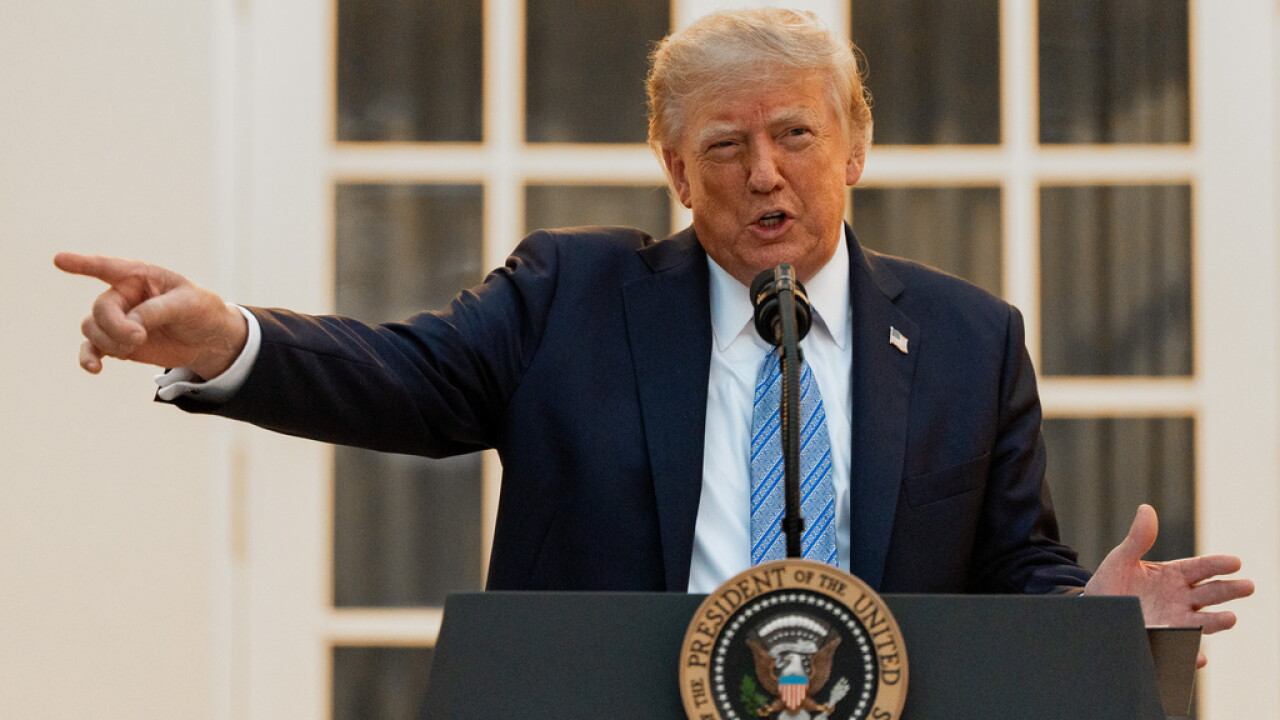
When asked about the ban, President Trump told reporters he dislikes negative press coverage. Katkin said those comments could prove damaging in court.
"I think those comments are important evidence of why he took away the credentials from these particular networks. In a way, he's really kicking the ball into his own goal with those kind of comments, because there's other kinds of reasons that would have been permissible, but he's sort of said he did it for a reason that's fairly impermissible," Katkin said.
Katkin said he expects lower courts to side with the networks, though the case will likely reach the Supreme Court.
"I think in the lower courts, you're gonna see judges ruling in favor of the networks. You never know what will happen when it gets to the Supreme Court, and it probably will get to the Supreme Court," Katkin said.
Katkin acknowledged the administration could argue the networks are not truly being censored, since they can still report critical coverage of the president.
"His lawyers will argue that the networks that are critical of him are not being censored and they can continue to run critical coverage," Katkin said. "But I do think a judge is more likely to rule that this was retaliatory based on the content of the speech, and that in the area of political speech, that's a core First Amendment activity."
The case also raises Fifth Amendment due process questions. A 1977 ruling in Sherrill v. Knight in the D.C. Circuit Court established that the White House must use clear, non-politically motivated standards when making credentialing decisions and that journalists are entitled to due process.
Katkin said the Fifth Amendment argument centers on the value of the networks' reputations as a form of protected property.
"The Fifth Amendment says that the government cannot deprive a person of life, liberty, or property without due process. I think the property here would be the property in the value of the reputation, and they would be able to argue that he has deprived them of some of the value of their reputation without due process," Katkin said.
Katkin drew a distinction between the president publicly criticizing news organizations — which he said is likely protected speech — and actively revoking their legal access.
"If he just talks and that harms their reputation, he's probably got a First Amendment right to do that, and he doesn't owe them any due process. But the difference here is that he's actually taken their legal rights away from them. They used to have this pass which gave them a right to go in there. He's taken away that pass from them. They've lost that right that it represents. And because of that, they've lost the value of their reputations," Katkin said.
