



WASHINGTON TOWNSHIP, Ohio — The Ohio EPA will conduct air testing at a controversial coal ash landfill in Clermont County as soon as this week, following months of complaints about a severe rotten egg sulfur odor that neighbors say is causing migraines, body aches, breathing issues and nausea.
“When that smell is intense, every single thing on my body hurts, from my bones to my muscles, everything,” said Rhonda Brittain, who lives across the street from the landfill in rural Washington Township. “The only way to get any relief from it is to get away from this property, to get away from this area.”
Texas-based Vistra Corp. owns the retired Zimmer coal plant and its massive landfill. A company spokesperson said it will work with the Ohio EPA to monitor the air, “to ensure that there are no health concerns with the site.”
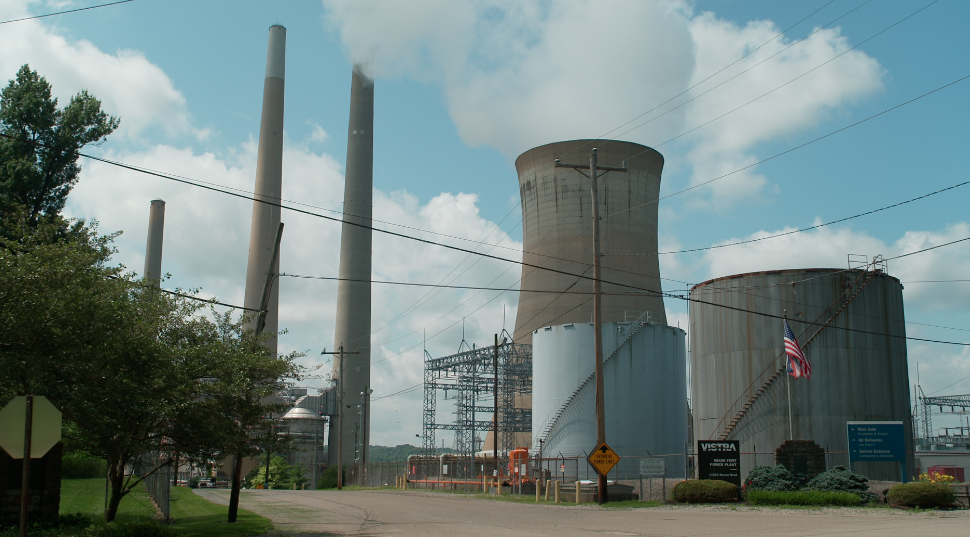
This comes after the WCPO 9 I-Team reported last month on the terrible stench and neighbors’ fear that they were being exposed to high levels of hydrogen sulfide.
For weeks, no agency had been willing to perform the air testing. Then the Ohio EPA notified the I-Team on June 25 that it would start monitoring as soon as this week, “to better characterize the source of the smell.”
WATCH: Ohio EPA to test air at Clermont County landfill after complaints of stench
Authority and enforcement ability over the bad odor at this coal ash landfill are in question.
Over the past month, spokespersons for the Ohio EPA, U.S. EPA, Clermont County Public Health and Southwest Ohio Air Quality Agency have told the I-Team that their agency did not have jurisdiction, or the ability to regulate or enforce odor control at this landfill.

“I want to know why the Ohio EPA doesn’t have control over it, and why keep spinning us. If you contact Ohio EPA, they say it's federal. But if you call federal, they say it's Ohio,” Rhonda Brittain said. “Somebody needs to get their act together and figure it out because they’re failing us.”
Rhonda Brittain said she and her husband, Brian, are now leaving their home for days at a time because of severe sickness from the odor.
“You get heartburn from just breathing the air,” Rhonda Brittain said. “It burns, it burns my throat, it burns my nose, and it’s just overwhelming. You don’t want to eat because you feel nauseous all the time.”
She said their symptoms have worsened since the I-Team first reported on this in late May, because of an intense perfume odor they believe Vistra is using to mask the underlying sulfur smell.

“It’s developed into something different because now it smells like they are pumping in some type of air freshener, which makes it worse,” Rhonda Brittain said.
“In the last month, I’ve started developing migraines,” Brian Brittain said, and excruciating leg cramps that wake him in the middle of the night.
The smell at the landfill has been an issue since at least April 2017, but it has worsened recently, said Dennis Cooper, chair of the Washington Township Board of Trustees.
“The stench it is emanating throughout the township,” Cooper said. “Where our residents once didn’t smell it, they are smelling it now.”

The landfill was once a prime farmland in rural Clermont County. In the mid-1980s, then-Cincinnati Gas and Electric Company converted the troubled William H. Zimmer plant on the Ohio River from nuclear power to burn coal. It began buying up family farms a few miles away on the hill, to build a landfill for leftover coal ash with a massive perimeter around it.
The county auditor’s site lists the total parcel size as 1,453 acres, with deep tree cover.
The I-Team first reported on this stench in April 2023, after residents said they couldn’t open their windows, eat meals outside or sit on their porches, and were forced to hold their breath when they drove past the landfill.
In the aftermath, Cooper said then-U.S. Sen. JD Vance’s staff came down to investigate, and he drove them around the landfill, where they could smell the odor.

In recent weeks, Cooper said U.S. Sen. Bernie Moreno’s staff members have visited, along with U.S. Rep. Dave Taylor, Ohio Rep. Adam Bird and Clermont County Commissioner David Painter, “and they could smell what’s going on,” Cooper said.
Vistra representatives flew in from Texas two weeks ago to take Cooper, Bird and Painter on a tour of the landfill, but Cooper wasn’t optimistic about the outcome.
“I don’t think anything was solved. I’ve been up there before; I’ve seen the same scenario before, and basically, the answers were the same. ‘We’re working on it, we’re trying to find a fix,’” Cooper said. “I think a fix is there, but I don’t know if they want to fix it. That’s my concern. Do they really want to fix this?”
Bird said he’s working to determine if the U.S. EPA or the Ohio EPA has jurisdiction over the odor.

“I’m trying to determine what level of responsibility the Ohio EPA has versus the level of responsibility that the U.S. EPA has,” Bird said. “For me, the next step is to see what Ohio EPA’s responsibility is in this issue and to work with them in order to make sure that they are providing the assets needed to take care of this.”
In early June, Painter told the I-Team that if no agency would help, then commissioners would push for air testing to determine if unsafe levels of hydrogen sulfide exist near the landfill.
The Brittains said they asked for help, but the Ohio EPA and Clermont County Public Health declined to test their groundwater, soil or the Little Indian Creek on their property, which runs through the landfill and also flows through land owned by several neighbors.

“Usually after a lot of rain it looks pretty clear or it’s muddy, but if you look at it right now, it’s got a gray film,” Brian Brittain said. “With the rain that we’ve had, there should be fresh water in the holes and not water that looks filmy on top.”
“That looks like something may have overflowed into it,” Rhonda Brittain said.
The Brittains bought test kits to detect what heavy metals exist in the creek water and showed the results to the I-Team.
“The magnesium and calcium levels are off the charts,” Rhonda Brittain said.
The Brittains have been in contact with Earthjustice, the nation’s leading law nonprofit.

“They shared the information with me about the high levels of magnesium and calcium in their creek; it is concerning, and I am looking into what it might mean and what more Earthjustice might be able to do,” Thom Cmar, deputy managing attorney for the Midwest office of Earthjustice, wrote in a June 24 email.
Cmar believes the Ohio EPA has jurisdiction over the stench at the landfill under the Ohio Air Nuisance Rule, or other clean air laws. Instead of being focused only on the landfill permitting rules, he said the state agency had lost sight of the bigger picture, “which is their duty to protect people from environmental harm.”
“I think they clearly could exercise jurisdiction here if they wanted to — which they seem to finally acknowledge when they say that they will be working with the company to reduce the odors and also conducting additional monitoring. I hope we see some progress there soon,” Cmar wrote.
Ohio EPA can utilize the Air Nuisance Rule to regulate some sources of odors, spokesperson Bryant Somerville wrote in an email to the I-Team last week.

“However, based on the information currently available, the facility has identified the source of the odors as leachate from a sedimentation pond from an older section of the landfill. The pond is permitted by Ohio EPA’s Division of Surface Water and is not subject to odor-control requirements under that permit. Ohio EPA is working with the company to institute measures to reduce odors from the pond,” Somerville wrote. “Additionally, to help address the problem, Ohio EPA will begin conducting odor monitoring and evaluating available information to better characterize the source of the smell.”
A Vistra spokesperson said the landfill uses odor-mitigation systems such as pond aeration and a carbon filtration system, and is closely monitoring conditions to improve odor control.

“Intermittent odors near the landfill can result from water or leachate coming from an inactive part of the landfill, which is collected in the sedimentation pond. At times, meteorological conditions may affect the intensity and movement of odors in the area,” spokesperson Jenny Lyon said last month.
Residents said the odor is worst at night and in the mornings, especially after rain, dew, fog or heavy cloud cover. On some mornings, their cars are covered with white ash.
Zimmer’s owner, Texas-based Vistra Corp., closed the coal plant on May 31, 2022. But it kept the Zimmer landfill open so it could receive Zimmer’s leftover coal waste and sludge from the Miami Fort Generating Station in North Bend, which Vistra also owns.
Officials, such as Painter and Bird, have questioned why coal waste from Hamilton County was being trucked into Clermont County, and residents say those trucks use their narrow local roads instead of the private haul road.

Vistra officials had insisted the bad odor is not related to any materials from Miami Fort and instead is coming from an older section of the landfill.
But the Ohio EPA said it will investigate the source of the odor.
Cmar said waste being trucked in from Miami Fort is “scrubber sludge.”
“Essentially, it’s the sulfur that gets stripped out of the smokestack when the power plant burns coal, so it has a very high sulfur content,” Cmar said. “It’s well documented that when you dispose of that in a landfill, there may be chemical reactions that occur that would generate these types of sulfuric acids.”
Rhonda Brittain asked Vistra to see the written logs from every truck that has dumped waste from Miami Fort into the landfill, an amount that Bird estimated was nine truckloads a day.
“Miami Fort being trucked over here doesn’t seem right,” Rhonda Brittain said.
