



WASHINGTON TOWNSHIP, Ohio — A Clermont County commissioner is pushing for air testing to determine if unsafe levels of hydrogen sulfide exist near a coal waste landfill after a WCPO 9 I-Team report on a terrible stench that residents say is making them sick.
Some Washington Township residents who live close to the landfill say a strong odor that smells like rotten eggs and sewage is causing headaches, breathing problems and nausea, and has worsened since the I-Team first reported on it in 2023.
“They have had some complaints about headaches; they have had complaints about their eyes burning, which would say that the concentration of hydrogen sulfide would be high enough that it would start to impact your health,” Clermont County Commissioner David Painter said. “So there needs to be some more investigation.”
Painter said he notified the county health commissioner last week, who contacted the Southwest Ohio Air Quality Agency about conducting additional testing. He said if no enforcement agency will perform it, then commissioners will likely vote to hire an environmental company to do the testing on the county’s behalf.
“Because if that sampling would come back that there really is a hazard there, then obviously we can abate that hazard,” Painter said, noting that commissioners have the power to intervene if an environmental nuisance impacts the safety of citizens.
Watch: What we know about the Zimmer landfill causing problems for nearby residents
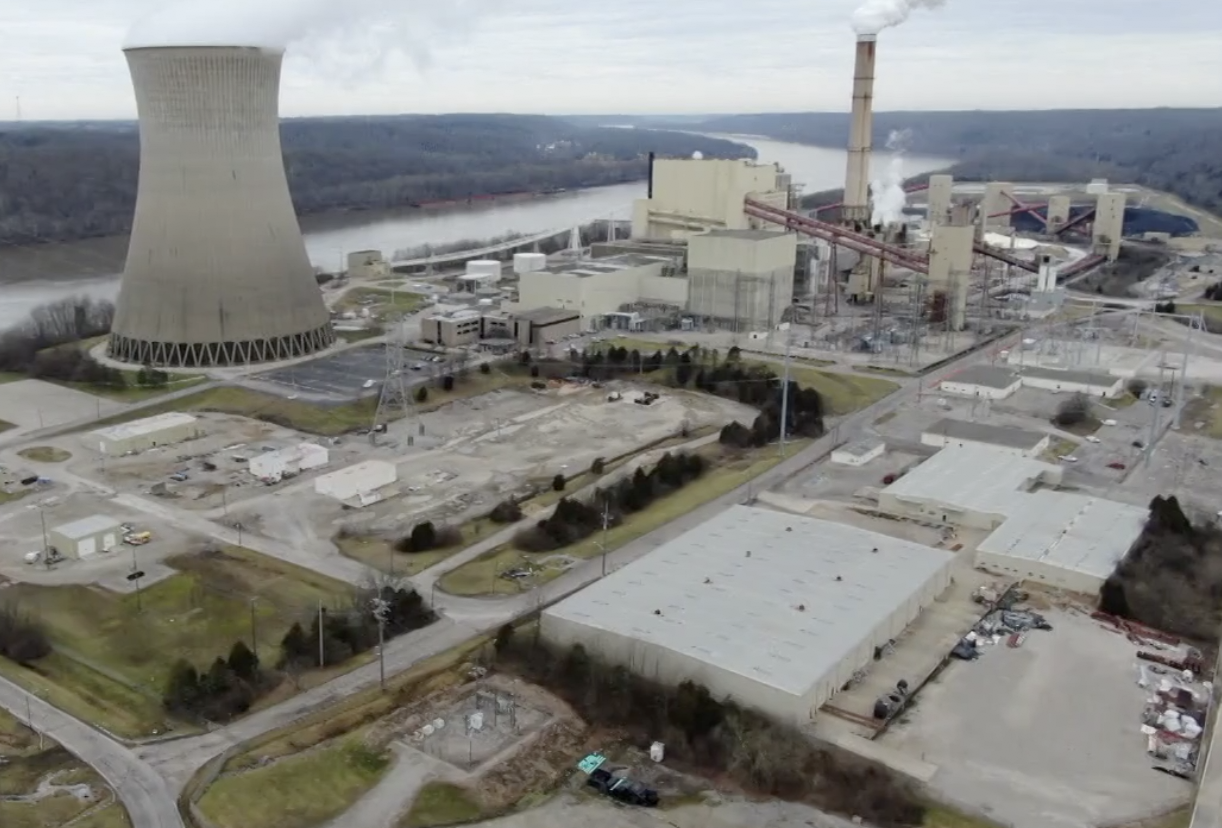
The landfill was once a prime farmland in rural Clermont County. In the mid-1980s, then-Cincinnati Gas and Electric Company converted the troubled William H. Zimmer plant on the Ohio River from nuclear power to burn coal. It began buying up family farms a few miles away on the hill, to build a landfill for leftover coal ash with a massive perimeter around it.
The county auditor’s site lists the total parcel size as 1,453 acres, with deep tree cover.
The I-Team first reported on this stench in April 2023, after residents said they couldn’t open their windows, eat meals outside or sit on their porches, and were forced to hold their breath when they drove past the landfill.
Now, three years later, residents said the stench has gotten worse.
“Over the years, it’s just gotten worse and worse and worse,” said Rhonda Brittain, who lives across the street from the landfill with her husband, Brian. “Before, it would be a couple of times a week. Now it’s almost every single night.”
Brittain said she gets intense heartburn and daily headaches that won’t subside, “no matter what I do.”

“The second that you start smelling it, you feel like you are going to vomit. Immediately. It is so intense, it just takes over everything. It is awful,” Rhonda Brittain said.
The Southwest Ohio Air Quality Agency received at least five complaints about the odor since January, including one on March 3, in which a resident said, “It smells horrific out here today WOW. The complaint that in fact is not being resolved at all and I don't know why. Can you help me understand that?”
That is a question the WCPO 9 I-Team has tried to answer.
In response to complaints, SWOAQA inspectors drove the loop around the landfill and, in some cases, smelled the same strong sulfur odor earlier this year. But a spokesperson said the agency has no jurisdiction over the stench.

“Our office does not plan on doing H2S (hydrogen sulfide) monitoring. In the past, Ohio EPA and U.S. EPA has completed this air monitoring. I would continue to contact those offices for more information,” Hamilton County Environmental Services assistant director Kerri Castlen wrote in an email to WCPO.
The Ohio EPA performed air testing at the Zimmer landfill in 2023 after the first I-Team report, but a spokesperson said the agency will not conduct future testing.
“Since 2015, U.S. EPA has been the regulator of coal-residual landfills in Ohio … Until 2023, Ohio EPA also regulated these facilities under separate state industrial waste rules (and conducted inspections of sites, such as the Zimmer coal-residual waste landfill,” Ohio EPA spokesperson Dina Pierce wrote in an email. “This explains why Ohio EPA investigated odor complaints in 2023 with multiple visits to the area. Then, hydrogen sulfide (H2S) was detected in some locations, though the levels were not a public health risk.”
In that 2023 monitoring, multiple tests showed hydrogen sulfide in the 3 to 5 parts per billion range, and a few approaching 10 (ppb).
“These are levels that are generally considered low, but significant enough that many people exposed to them would detect an unpleasant odor,” said Thom Cmar, deputy managing attorney for the Midwest office of Earthjustice, the nation’s largest legal environmental nonprofit, who reviewed the 2023 Ohio EPA test results.
“It’s important to note that a lot of the regulatory standards are aimed at short-term exposures (1 hour or less, such as at a workplace) and are not designed to protect people who may be subject to consistent, long-term exposure in their homes. Even if the levels aren’t high enough to make people seriously ill, forcing local residents to be subject to an unpleasant smell in their homes on a consistent basis can still have significant impacts on people’s mental health if nothing else,” Cmar wrote in an email to WCPO.
Cmar said additional data should be collected during different times of the day and weather conditions, so that experts have a better understanding of what residents are being exposed to.

“It’s also important to note that the results detected by Ohio EPA may not be representative of what people living nearby are actually experiencing during the worst conditions, especially if those conditions are most likely to occur at times other than when the monitoring took place (such as early morning or late evening),” Cmar wrote.
There is also no Ohio rule specifically identifying an odor threshold for hydrogen sulfide. Additionally, the Ohio EPA does not regulate odors at the landfill, and a wastewater permit it issued does not contain odor-control requirements, Pierce wrote.
“In 2023, state law directed Ohio EPA to adopt regulations equivalent to the federal CCR program As a result, the previous Ohio industrial waste requirements no longer apply to coal-residual landfills regulated under the federal program. State law also directed Ohio EPA to develop rules to adopt the CCR program, and Ohio EPA is currently in that process. Today, U.S. EPA remains the regulator of coal-residual landfills in Ohio,” Pierce wrote.

The Ohio EPA directed WCPO to the U.S. EPA, and a spokesperson for that federal agency said, "The Zimmer Landfill may fall under multiple jurisdictions. At the federal level, coal combustion residuals (CCR) rules apply to the landfill. These rules establish minimum criteria for CCR landfills, surface impoundments and lateral expansions. CCR regulations apply to topics such as groundwater monitoring, corrective action, closure requirements and post-closure care."
Concerned residents may file a complaint directly with EPA using the 'Report Environmental Violation' tool in the ECHO database [echo.epa.gov] .
“If we can’t get some sampling, then we would think about doing some independent sampling with an environmental company,” Painter said. “This isn’t something that we haven’t done before. We’ve done independent sampling when it came to the CECOS landfill, and we’re more than capable of managing a contract to that effect.”
Zimmer’s owner, Texas-based Vistra Corp., closed the coal plant on May 31, 2022. But it kept the Zimmer landfill open so it could receive Zimmer’s leftover coal waste and sludge from the Miami Fort Generating Station in North Bend, which Vistra also owns.
The Ohio EPA issued a permit to Vistra on May 11, 2022, allowing workers to remove buried coal waste from a runoff pond at the Zimmer plant and take it to the landfill. This would allow the company to rebuild a clay soil liner to comply with federal laws.
At around that time, residents said the odor from the landfill became much worse, especially at night, in the early morning hours, and after it rained, with the intensity and frequency of the odor worsening until now.

“We smell the stench, as we call it, all the time. We’re nauseous from it constantly. It’s like we can’t get away from it,” Rhonda Brittain said.
“Sometimes, where we’re at, it lasts for days,” Brian Brittain said.
Painter questioned why coal waste from Hamilton County was trucked into Clermont County.
“Why would it be better suited here in Clermont County, out in a rural area of low to medium income, versus a higher median income down by the Miami Fort plant?” Painter asked. “As a commissioner, having grown up in that area, I’m not going to be too settled with that. I’m going to make sure that they employ the technologies that raise the quality of life here in Clermont County for those people.”

He said Vistra should be using the best available technologies to scrub the bad smell so residents don’t have to experience it.
Vistra spokesperson Jenny Lyon described the waste from Miami Fort as “a limestone-based byproduct consisting primarily of silica and other naturally occurring particulates, such as river sediment, that are not removed during the gypsum washing process.”
But Cmar said it was “scrubber sludge.”
“Essentially, it’s the sulfur that gets stripped out of the smokestack when the power plant burns coal, so it has a very high sulfur content,” Cmar said. “It’s well documented that when you dispose of that in a landfill, there may be chemical reactions that occur that would generate these types of sulfuric acids.”
But Pierce, the Ohio EPA spokesperson, said the Miami Fort material is not the source of the odor and confirmed it is being stored in a different section of the landfill.

Ohio EPA inspectors visited the Zimmer landfill on May 12 and determined the company had isolated the odor source to a pipe that carries leachate from an older section of the landfill where the material includes flue gas desulfurization waste.
A Vistra spokesperson said the landfill uses multiple odor-mitigation systems such as pond aeration and a carbon filtration system, and is closely monitoring conditions, while adjusting improve odor control.
“There have been no material changes to operations at the Zimmer landfill facility in the past three years,” Lyon said. “Intermittent odors near the landfill can result from water or leachate coming from an inactive part of the landfill, which is collected in the sedimentation pond. At times, meteorological conditions may affect the intensity and movement of odors in the area.”
Residents said the odor is worst at night and in the mornings, especially after rain, dew, fog or heavy cloud cover. On some mornings, their cars are covered with white ash.

“It just depends on the weather and the way the wind blows, but most of what I smell is at night,” said Carla Benjamin, who lives a half mile from the landfill. “It smells a little bit like sulfur but more like raw sewer … and it seems like at night it penetrates through the windows.”
Benjamin even purchased new windows, but she said it didn’t block the stench from permeating into her home. She also worried about the fragrances Vistra uses to cover up the sulfur odor.
Residents said they felt helpless, but Painter said, "We will do what is necessary to try to bring this thing to an acceptable condition.”
