



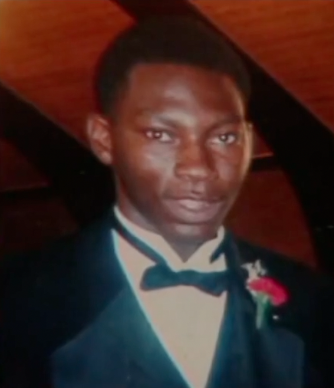
CINCINNATI — Twenty-five years ago, on April 7, 2001, a Cincinnati police officer shot an unarmed 19-year-old, Timothy Thomas, in an Over-the-Rhine alley. He was the 15th Black man killed by police since 1995, and his death sparked days of unrest. The riots, looting, vandalism and fires drew national attention and highlighted a deep divide between Cincinnati’s Black community and the police. That mistrust, along with lawsuits accusing the department of a decades-long history of racial profiling, helped shape the Collaborative Agreement. We hope our coverage this week will start a conversation about what led to the unrest, what has happened since, and what work still needs to be done.
Former Mayor John Cranley was 27 and had been a Cincinnati City Council member for only a few months when he chaired a chaotic Law and Public Safety Committee meeting on April 9, 2001, two days after the police shooting death of Timothy Thomas.
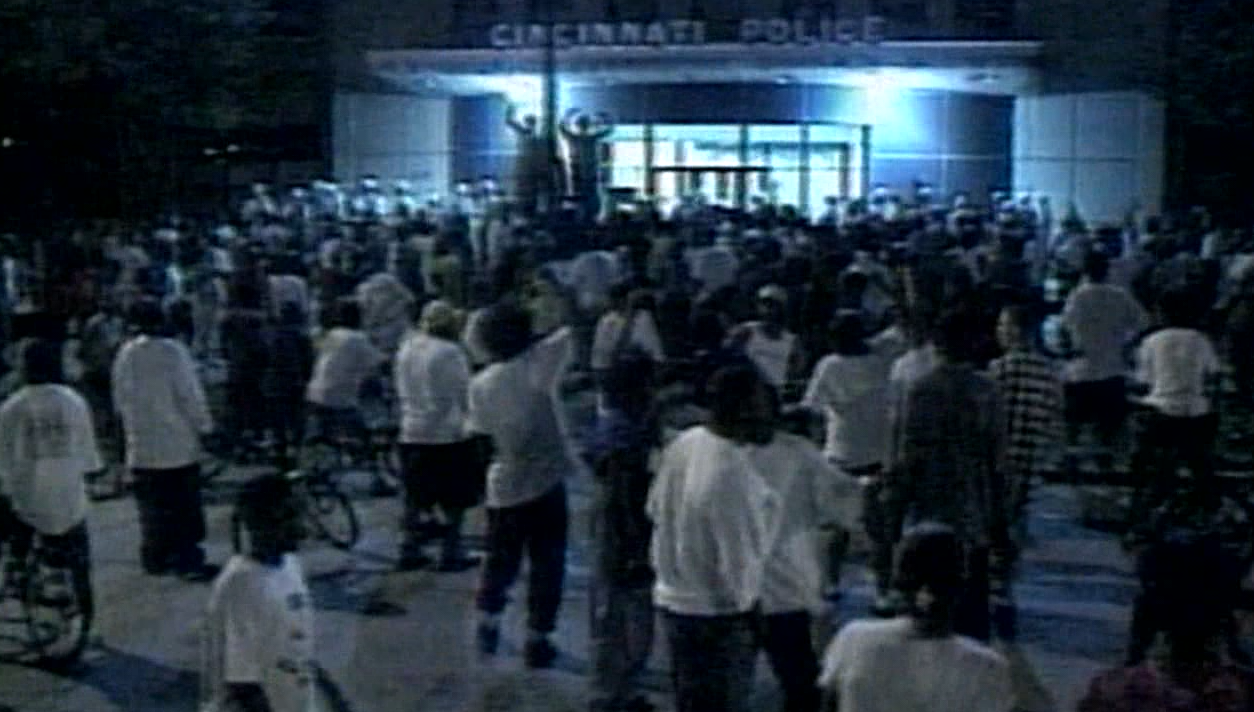
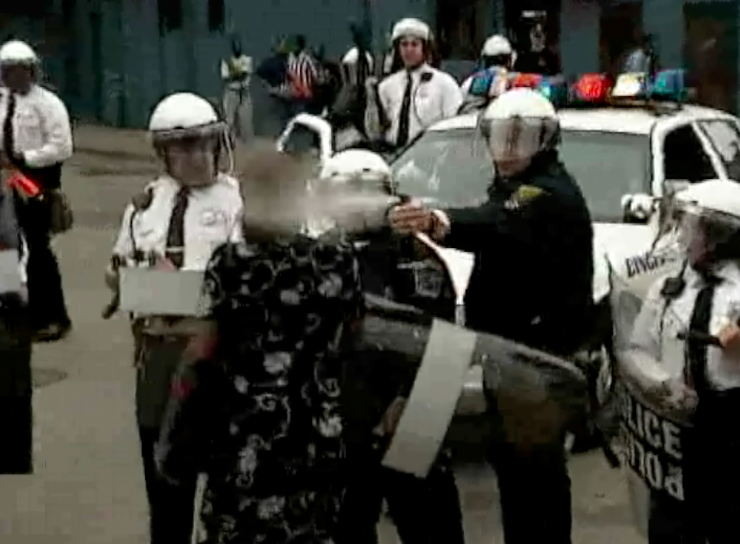
A crowd, including Thomas’ mother, passionately demanded answers. More than 200 protesters took over the meeting and, by some accounts, trapped council members in City Hall for more than three hours, before the protest shifted towards the District 1 police headquarters. Once riots began, the fires, looting, vandalism, and confrontations with police stretched on throughout the week.
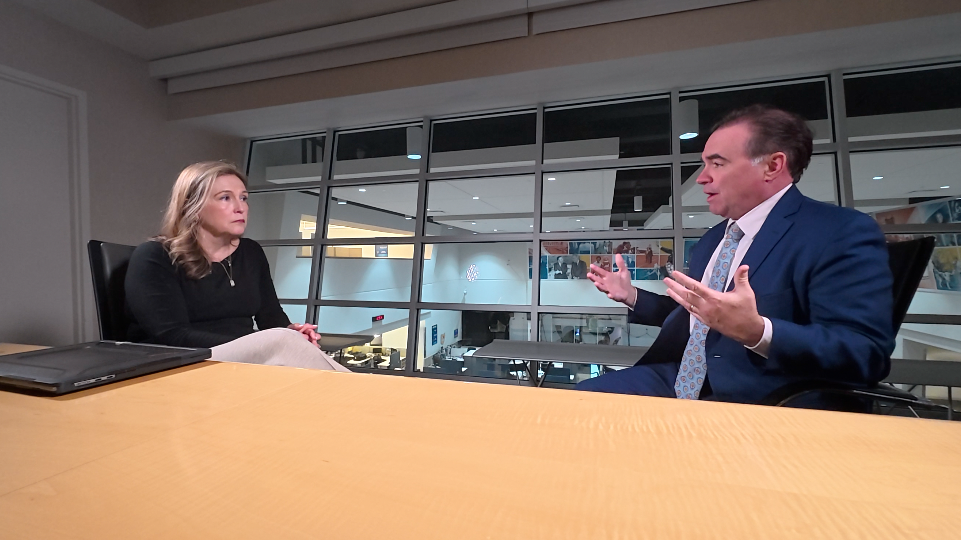
On the 25th anniversary of those events, Cranley sat down with WCPO 9 I-Team reporter Paula Christian to reflect on that crisis and how the city came back from it.
Cranley served on the Cincinnati City Council from 2000 to 2009, and returned to City Hall as mayor in 2013, serving two terms until 2022.
Watch our interview here:
Q: Why is it important that we, as a city, never forget that time period?
A: It was a wake up call where people felt that the city was either going to make a comeback, or the city was going to completely disintegrate. It was the moment where we were either going to die as a city or have a rebirth. And I’m happy to say, in collaboration with a lot of people, we had a rebirth.
Q: What were the factors that were building before this shooting?
A: At a macro level, you had capital flight, white flight from the city to suburbs and exurbs, not just within our region but within the country … it led to a shrinking pie and concentrated poverty and concentrated segregation of poverty where increasingly you had wealth and opportunity in the suburbs. You had a poorer set of people living in the city that did not have the same access to opportunity.
Part and parcel of that trend was unresolved racial tensions, history of discrimination, history of prejudice … long patterns of unequal treatment for Black Cincinnatians ... At the same time, we had a very old-fashioned system of policing that was very old school, just kind of crack some skulls, round people up, mass arrests and so a lot of innocent people were caught up. And there was a deep sense of bitterness among all African American Cincinnatians that they were being treated differently from white people.
So, the combination of all of those things, and then the killing of Timothy Thomas, which came a couple of months after the death of Roger Owensby … but the Owensby case was literally the George Floyd case. Owensby was killed because the officers knelt on his back and suffocated him to death … and then just a few months later, Timothy Thomas happened, and it exploded.
Q: Did you have any idea that things would happen the way they did?
A: Yes, because … again, I can’t emphasize the importance of the Roger Owensby death enough because it is so amazingly similar in a scary and bad way to what happened to George Floyd. When that happened, tensions were at a complete boil.
Then I got on city council, and not too long afterwards, I was appointed chair of the Law and Public Safety Committee. At that time, I went to the civil rights leadership and said, "What can we do about all this racial tension?" They said, we have been advocating for a ban on racial profiling within policing for at least a decade. This was a cause that was taken up around the country, but no city had voluntarily done this.
So, the very first major legislative act that I ever introduced to city council was to ban racial profiling by the police. This happened in February and March of 2001, and there were a ton of hearings and big debates. Big op-eds and editorials. The FOP was against it; the civil rights community was for it. It was a big, big debate. And it basically said you should not be pulled over solely because you’re black. (On March 28, 2001, the city passed an emergency ordinance addressing racial profiling.)
Q: Was there a sense in the city that the frustration was growing, that it was inevitable something would happen?
A: You could cut the racial tension with a knife. You could feel it everywhere. There was a real sense of anger and frustration. In those days, every week, we would have hours of testimony from civil rights leaders coming down and telling us how they were being mistreated by the police.
Q: When Timothy Thomas was killed, when did you know it would spark a huge reaction?
A: I remember very clearly, I believe it was the Sunday after Timothy Thomas was killed … I remember that afternoon being at Lunken Airport playing tennis, and I was a councilman, and Charlie Luken called me, the mayor. It was the day before the Law and Public Safety meeting that didn’t go so well. And he said I think this is going to be really bad. This is really bad.
Q: Describe that Monday Law and Public Safety Committee meeting.
A: That meeting was awful. I also think it was important. The images and the videos are rough, and there are a lot of perceptions out there that were incorrect. For example, we had a lot of police in the room in plain clothes, and there was constant communication between them and us. There were some people who argued that we were being threatened or were in physical danger.

Q: By some accounts, it was almost like a hostage situation.
A: Yes, people have used that rhetoric, and I’m not sure that was accurate. I mean, Chief Streicher was there for hours, and he certainly had his people protecting him and us.
Q: But they were so angry?
A: Extremely. People were hot. But Paula, the point I would make time and time again and have made is: that infamous day in my life and certainly the city’s life is that Angela Leisure, the mother of Timothy Thomas, was there personally. She sat down at the witness table … and said I’m not leaving until I get answers.

Now, many people have said to me and written about whether we should have canceled that meeting or walked out, and to this day, I think that would have been a mistake.
Here was the grieving mother of Timothy Thomas. What was I supposed to do, have her removed? Was I supposed to have the police arrest her? It’s absurd. What we needed to do that day was listen and hear the anger that was coming at us. To really pronounce the tensions that could no longer be ignored in our city.
RELATED | 25 years later, Cincinnati looks back at racial tension and progress made since riots
Q: How do you, watching what’s happening on national news back then, think Cincinnati can ever come back from this?
A: I think it’s fair to say that at that time, the mayor and city council ... were the most unpopular group of people in the history of city council. I mean, everywhere we went, people were telling us we were doing a terrible job … while no one liked us, we made the decisions that permanently put the city on a comeback.
We had a very young city council. I was the youngest; we also had Alicia Reece, David Pepper, Pat DeWine … Mayor Charlie Luken, who was still relatively young, certainly young at heart. This set of young, ambitious, hardworking people who loved Cincinnati knew … that we had to lead and do things very differently.

So, you had a number of big changes. You had the Collaborative Agreement. You had 3CDC. You had Issue 5 on the ballot in 2001, changing the way we hire and the police and fire chiefs, which created more accountability. And we were then transforming into the stronger mayor system, so Charlie was going to become the first stronger mayor, and there was a greater sense of political accountability for the problems.
READ MORE | 'Transformational': How the Collaborative Agreement changed policing in Cincinnati after the 2001 riots
So all of these things changed at the same time. I don’t believe the political will would have been there in the space to be creative, to change the way we did economic development, to change the way we did policing, to change the way we did government, to change the way we hired and fired police and fire chiefs, had it not been for what happened in 2001.

Q: Where did the idea for 3CDC come from?
A: Downtown already did not have a particularly vibrant nightlife, and then the events of 2001 only made it way worse. Suburbanites in particular were afraid to come downtown.
So, the problem was getting worse, and there was a real question of whether Procter & Gamble, Kroger, and others would make a long-term commitment to Cincinnati ...
We put together an economic development task force, and George Schaefer, who was then the CEO of Fifth Third Bank, was the chairman of that task force … the number one recommendation of their report was to create a nonprofit development corporation that would have the power to buy land and redevelop property, that would be funded in large part by the business community. That, of course, became 3CDC.
RELATED | Over-the-Rhine 25 years after Cincinnati riots: Where is it now and what is its future?
The other thing that happened in that same year, 2002, was that I wrote all the TIF districts in downtown and Over-the-Rhine, and I did something radical that was opposed by the business district at the time. I created TIF districts that combined downtown with Over-the-Rhine, so a TIF district west that had Fifth Third headquarters in it, and Macy’s headquarters and Over-the-Rhine west. And then Over-the-Rhine east with Procter & Gamble’s headquarters going up into Over-the-Rhine.
Q: As opposed to cutting it north and south?
A: The business community at the time was very angry at me, and they said we should do one for Over-the-Rhine; they said it’s not fair to take our taxes to subsidize this ghetto.
I’m proud to say that I overruled their advice and got the city council to go along. And those TIF districts have funded the city’s contribution to Washington Park, the Fountain Square revitalization, the ice-skating rink, and Ziegler Park.
So many things that 3CDC has done to revitalize Over-the-Rhine were primarily funded by the private sector, by the business community, but the city portion came from those TIF districts that I put in place in 2002.

Q: Describe how 3CDC got started once Steve Leeper was hired?
A: At the time, the issue wasn’t Over-the-Rhine; the issue was downtown.
So, we started with Fountain Square, and that was a huge controversy to revitalize Fountain Square … to move the fountain … These were huge controversies at the time. For 3CDC, this was their first test as to whether they could do something, and candidly, it was incredibly unpopular. If you had polled the city at the time, should we work with 3CDC to improve Fountain Square, it would have been 80 to 20 against.
But again, David Pepper, Alicia Reece, myself, Pat DeWine, this bipartisan group, Charlie Luken, we knew that something big had to happen and had to change. So, we took some very tough votes to push those changes forward. Of course, it paid huge dividends because they did a great job, they brought in far more activity, far more restaurants ...
But quietly at that time, the business community, through 3CDC, started buying up a bunch of vacant property in Over-the-Rhine. It was incredibly depressed, and that was before the stock market crash of 2009 … When other cities couldn’t raise capital because nobody was lending money anymore, Cincinnati had the resources, the deep-pocketed resources of the business community to reinvest and revitalize property when nobody else could.
I give a lot of credit to Procter & Gamble and to Kroger for their visionary leadership to put tens of millions of their own dollars in to save their city. They could have picked up stakes and gone to the suburbs. They could have picked up stakes and gone to another city. But we really are blessed to live in a city where our corporate business leadership, when the chips are down, are willing to double down and help save our city.
Q: What are the lessons that you think are important to remember from back?
A: The big one is transparency. In those days, the police were insulated from any political accountability whatsoever. They just decided whether they were going to tell the public what happened or not.
One of the big principles of the Collaborative is transparency. Get the facts out. Get the video out. Get the body cameras. Let people see with their own eyes what happened. And I will be the first to say happily that body cameras overwhelmingly exonerate police officers and their actions.
So, that spirit of transparency, of leveling with the public good, bad, and ugly … Transparency, I think, is something that too often there is a temptation by people in power to try and hold back information from the public. That, to me, is an ever-vigilant principle that I think could be lost. I think it’s being lost at the national level, and it’s at risk of being lost at the local level.
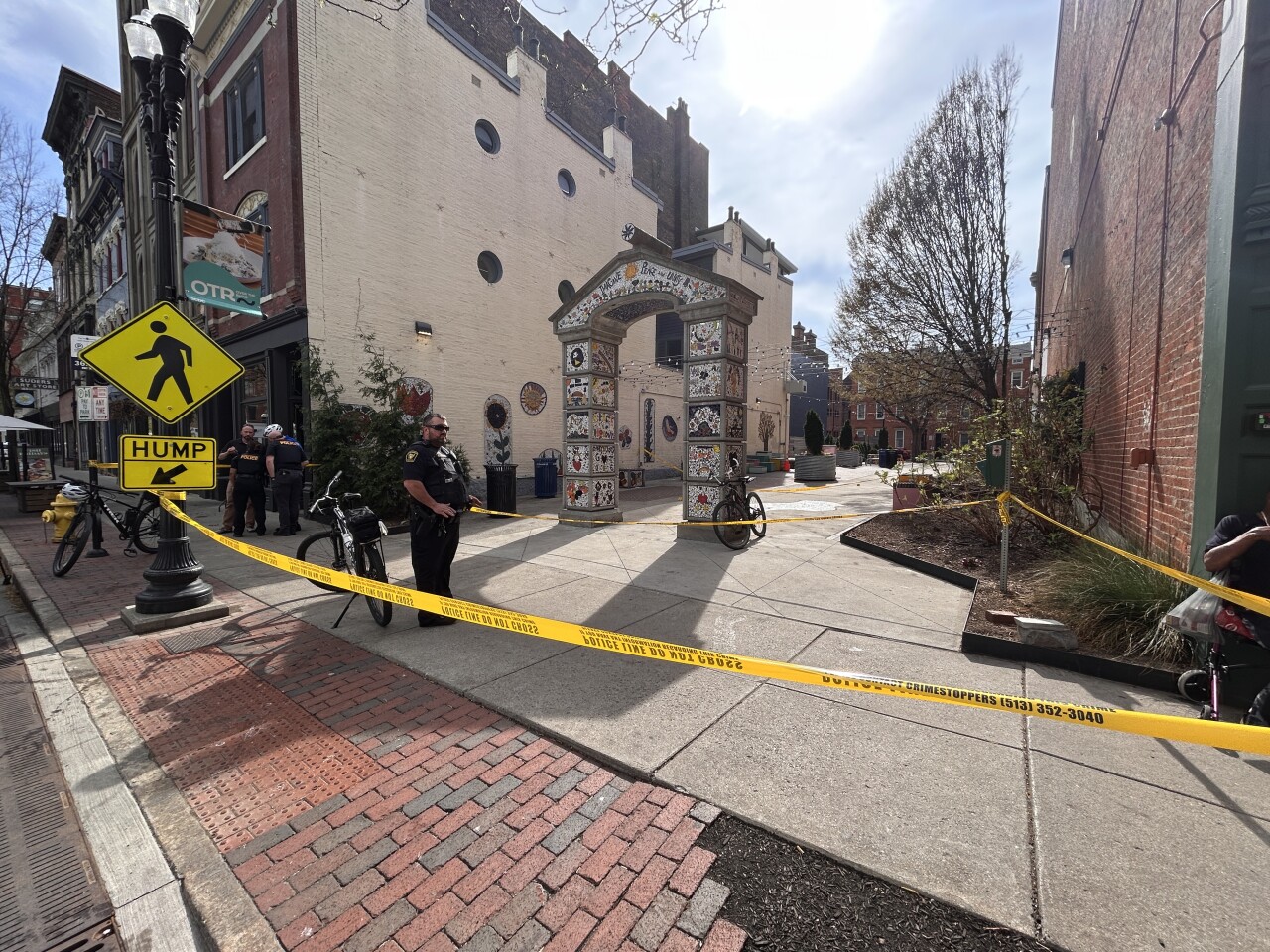
Q: What about Over-the-Rhine?
A: I think there’s a lot more work that could be done in Over-the-Rhine. A ton of progress has been made, but like anything, sometimes you take one step forward, two steps back, and then three steps forward. I think re-accelerating that effort would be big.
Q: You mean north of Liberty?
A: Exactly. North Liberty is still the frontier, and it’s got a lot of issues, so I think extending the efforts there would be good …
In 1970, the population of Over-the-Rhine alone was 30,000 people ... Today, despite all the progress we’ve made, the population in Over-the-Rhine is still at 10,000, maybe at 11,000 ... There is still an enormous opportunity to bring in new people without displacing the old, and in the process giving all people greater opportunity.
Q: Are there any specific changes that you think would be helpful from City Hall?
A: What I want is for 3CDC to be as ambitious as it was for the last 20 years, for the next 20 years.
To go north of Liberty. To continue to fill out pockets. And then go outside of Over-the-Rhine and downtown, to go into other areas of concentrated poverty in the city, whether it’s on the West Side, the Mill Creek corridor, and work with the Port Authority and others, and Cincinnati Development Fund and organizations like that to have the same kind of public-private partnership that worked so well for downtown and Over-the-Rhine.
Q: Is the momentum there, or is the momentum gone?
A: Well, I’m not in City Hall right now, so I can’t answer that, but I can tell you what I clearly hope to be true.

Q: Is there anything that you look at that now and you think, ‘That’s not quite how we intended it, or maybe it’s taken a veering off?’
A: I think that the proactive policing - we have to get back to, and specifically what I mean by that is getting back to group and gang activity.
And really working … and breaking up some of those behaviors that lead to the open-air drug dealing and violence and the culture of drug violence. I think we’ve got to reinvigorate that.
Q: What about the growth and economic development?
A: Well, look, you’re either growing or dying.
I’m very proud that every year, when I was mayor, we had a record-breaking permit pulls to do more development. There are obviously macro factors: interest rates, recessions, and banking environments that are out of the city’s control. But 3CDC and its best work were happening during the Great Recession …
Under Mayor Mallory, under Mayor Luken, we’ve all worked together to partner with 3CDC and to keep the spirit of this Collaborative alive, and I just hope it continues …
If we can make the city safe, clean, and have a pro-growth mentality with an eye on justice to make sure we don’t fall back into the habits that led to the racial unrest, then I think we can continue and accelerate our comeback.
You can read more of our coverage on the 25th anniversary of the 2001 riots here.
Note: Answers were shortened for brevity.
