


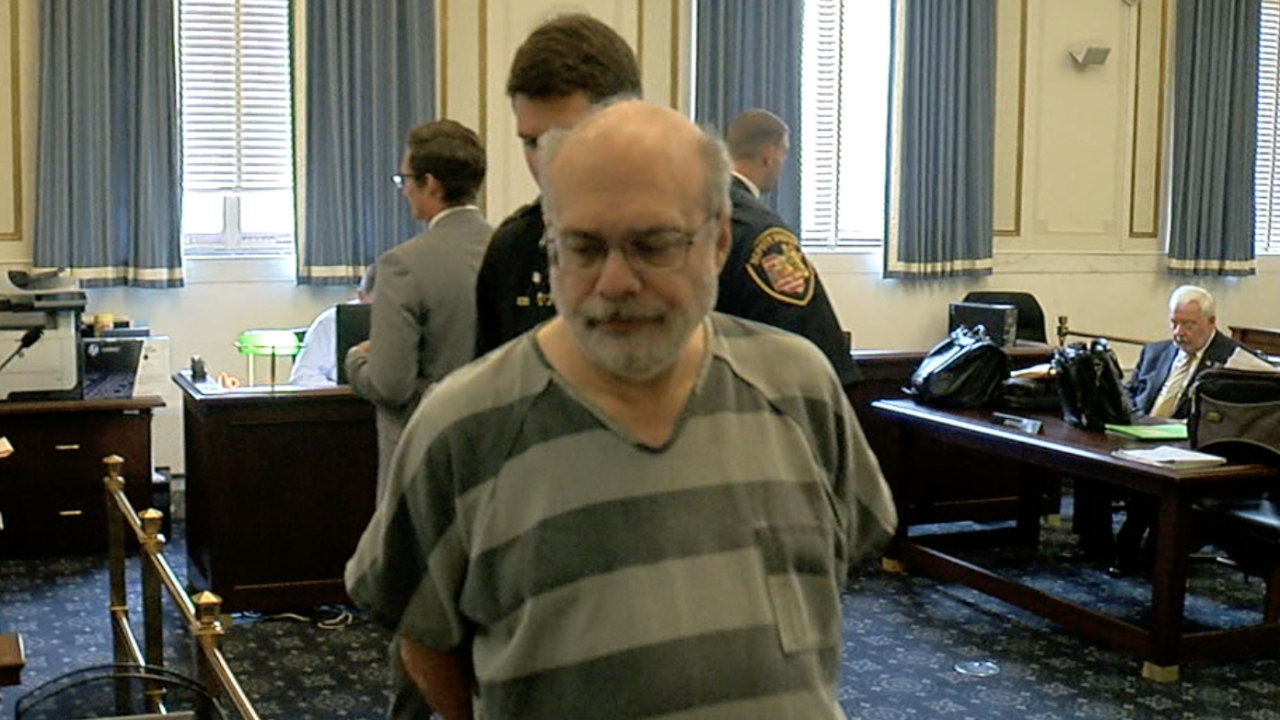


CINCINNATI — A former priest and confessed rapist was released from prison on Monday morning after completing his 7-year sentence, and authorities are warning the public that he is still very dangerous.
Geoff Drew was released from the Noble Correctional Institution, a medium-security prison for men in rural Noble County between 8:30 and 8:45 a.m., according to an Ohio Department of Rehabilitation and Correction spokesperson.
Now Drew is set to live in a two-story halfway house in Over-the-Rhine, Volunteers of America, a re-entry program on W. McMicken Avenue that currently houses 35 registered sex offenders, according to the Ohio sex offender locator website.
“He mastered his craft,” said retired Cincinnati police detective Dana Jones, who led the case against Drew with Green Township police detective James Conforti. “His title of being a priest gave him the arrogance and the confidence to have his victims submit to him in a way that I haven’t seen before,” Jones said. “I don’t think our community is safe with him out. They’re going to be at risk. People will be at risk. Young men will be at risk.”
Jones spoke publicly for the first time about Drew for a new WCPO 9 I-Team podcast, What They Knew: The Father Geoff Drew Investigation. New episodes of the podcast will be released on Tuesday and Thursday mornings on Spotify, Apple Podcasts and YouTube.
You can watch or listen to Episode 1 of What They Knew: The Father Geoff Drew Investigation on YouTube here:
Watch or listen to the podcast on Spotify below:
Drew pleaded guilty to the repeated rape of an altar boy when the boy was 9, 10, and 11 years old. It happened in the late 1980’s and early 1990’s when Drew was music director at St. Jude in Bridgetown. Drew later became a priest.
In 2021, Judge Leslie Ghiz sentenced him to seven years in prison, which was set by the plea deal, but added that she would have gladly sent him to prison for life.
It was one of the most highly publicized and controversial crimes in recent Cincinnati memory. It led to the resignation of an auxiliary bishop, the demand for a Vatican investigation by 1,500 local Catholics, and questions about how the Archdiocese of Cincinnati handled complaints that spanned three decades, across three different counties where Drew worked in churches and schools first as a music or band director, and later as a priest.
A WCPO investigation revealed that priests, parents and church and school officials knew about Drew’s inappropriate behavior with boys for decades, ranging from lingering hugs and shoulder massages to vacations and camping trips where alcohol was served and a boy blacked out from drinking too much.
Police identified a second alleged victim, but prosecutors said they could not file charges in that case because the statute of limitations had expired.
“He was good at his game,” Jones said. “But I feel like his title also gave him this sense of arrogance that he was untouchable, and he could get out of things because he was protected. And you’ll see that through the investigation, he was protected. There were so many failures, so many failures.”
Then-Archbishop Dennis Schnurr placed Drew on an administrative leave of absence before his 2019 arrest, after he texted a teenage boy while pastor at St. Ignatius of Loyola in Green Township and oversaw the largest Catholic grade school in Ohio.
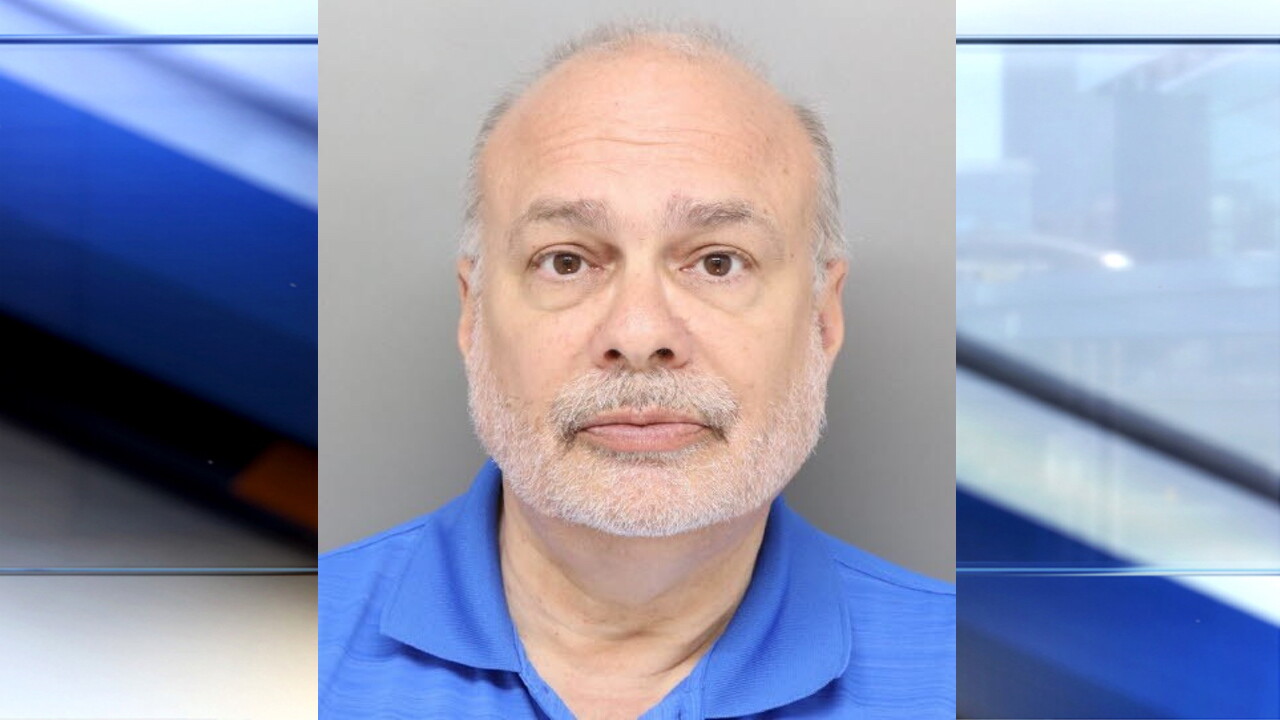
Drew is classified at the highest sexual offender level and must register his home address with the Hamilton County Sheriff’s office every 90 days for the rest of his life. Deputies would then distribute postcards containing his mug shot and criminal history to neighbors, nearby schools, and childcare centers.
Ohio law forbids Tier 3 sex offenders like Drew from living within 1,000 feet of any school, preschool, or day care. It also bans them from volunteer work where they would have extensive contact with children.
“He may be leaving prison, but he is not leaving supervision or accountability,” said Hamilton County Prosecutor Connie Pillich. “Our first responsibility is to protect children and families in our community, and while Drew has completed the maximum sentence imposed, and therefore, he must be released, the consequences of his conviction do not end at the prison gates. He will be required to register as a sex offender for the rest of his life, and we will do everything the law allows to ensure he is held accountable and that the community has the information and protections it needs.”
Now Drew is set to live in a two-story halfway house. It holds an average of 128 men and women with at least three staff members on duty 24 hours a day with video surveillance in group rooms, classrooms, day rooms, the recreation yard, smoke pits, hallways, and kitchen areas, according to the VOA’s most recent audit, which is listed on its website.
The halfway house is located two blocks from a playground and public pool, across the street from a church, and near a Metro bus stop.
Drew will be at the VOA until he can find another suitable place to reside. If Drew wants to move, he must first seek approval through the adult parole office. He will also be on supervised release for 5 years.
“Is he going to stay there? Will he be there? Is the monitoring going to be close? I’m not confident. It’s an address that he can use,” Jones said.
Drew had wanted to live with his elderly mother in her West Side home on a dead-end street filled with children. An elementary school bus stop is right in front of his mother’s house.
But Drew’s family members, including his mother, issued a statement to the I-Team in April addressing the concerns of friends, neighbors, and West Side residents: “Geoff Drew will not be living at his mother’s residence upon his release from prison or any time after that.”
Drew has deep ties to Cincinnati's west side, where he grew up and where many of his family members live. The 64-year-old owned a condominium in Green Township for 24 years, but he sold it in March 2020, seven months after his arrest, according to county auditor records.
Drew’s laicization was finalized in November 2023, and his name was subsequently placed on the list of clerics with substantiated allegations of sexual abuse on the archdiocese website, according to an Archdiocese of Cincinnati spokesperson.
He may no longer present himself as a priest. Additionally, he will not be permitted to volunteer in any capacity at any parish, school, or ministry under the jurisdiction of the archdiocese, according to a spokesperson.
“I think he will be kind and present himself as caring and loving. He will befriend families with teenage boys. He will play on the sympathy of others. But I also think he will be preying on victims, on the weak,” Jones said. “In this investigation, it also surfaced that the boys he targeted, some of them were you could say were the weaker individuals … but he knew who to target, and so that fears me and that should fear the community.”
Ohioans for Child Protection co-founders Teresa Dinwiddie-Herrmann and Rebecca Surendorff hope this case highlights the need for statute of limitations reform in Ohio because victims often wait decades to disclose abuse, if they ever report it.
A second man came forward accusing Drew of repeated sexual abuse while he was a young student and altar boy at St. Jude in the 1980’s, but prosecutors could not file charges in that case because he was age 45 when he told police.
The criminal statute of limitations for childhood victims of sexual abuse is age 43 in Ohio, with an added five years if DNA evidence is found within 25 years of the assault. For civil lawsuits, victims have until age 30, and there is no lookback window to bring forward expired claims.
“Victims need access to courts in the name of justice and public safety. When Ohio laws arbitrarily close those court doors, it leaves predators hidden in our communities. Those predators are free to work with youth in places of worship, youth camps, healthcare, education, athletics, or other places where they can have access or authority over our children.” Surendorff said. “We know predators can average 150 victims and offend through their elder years; this just puts kids at risk.”
