



CINCINNATI — A complaint has been filed after Cincinnati police arrested a man for failure to disclose personal information when officers approached him while recording a downtown bank.
In his criminal complaint, police said Angel Moses on Tuesday was recording from the outside of a bank and asking questions about bank security before he was stopped by police and asked to identify himself. Moses refused, and was charged with a fourth-degree misdemeanor as police said they "reasonably suspect(ed)" that he was about to commit a criminal offense.
However, Moses told us he was exercising his "basic rights."
Moses runs the YouTube channel Kansas City Accountability, which he said educates people on their rights. His channel, which has surpassed 100,000 followers, shows multiple encounters with police and business owners over First Amendment audits, like recording videos from public sidewalks.
He said he was encouraged to come to Cincinnati by locals who had told him how police had been treating people.
WATCH: Here's what First Amendment experts have to say about the situation
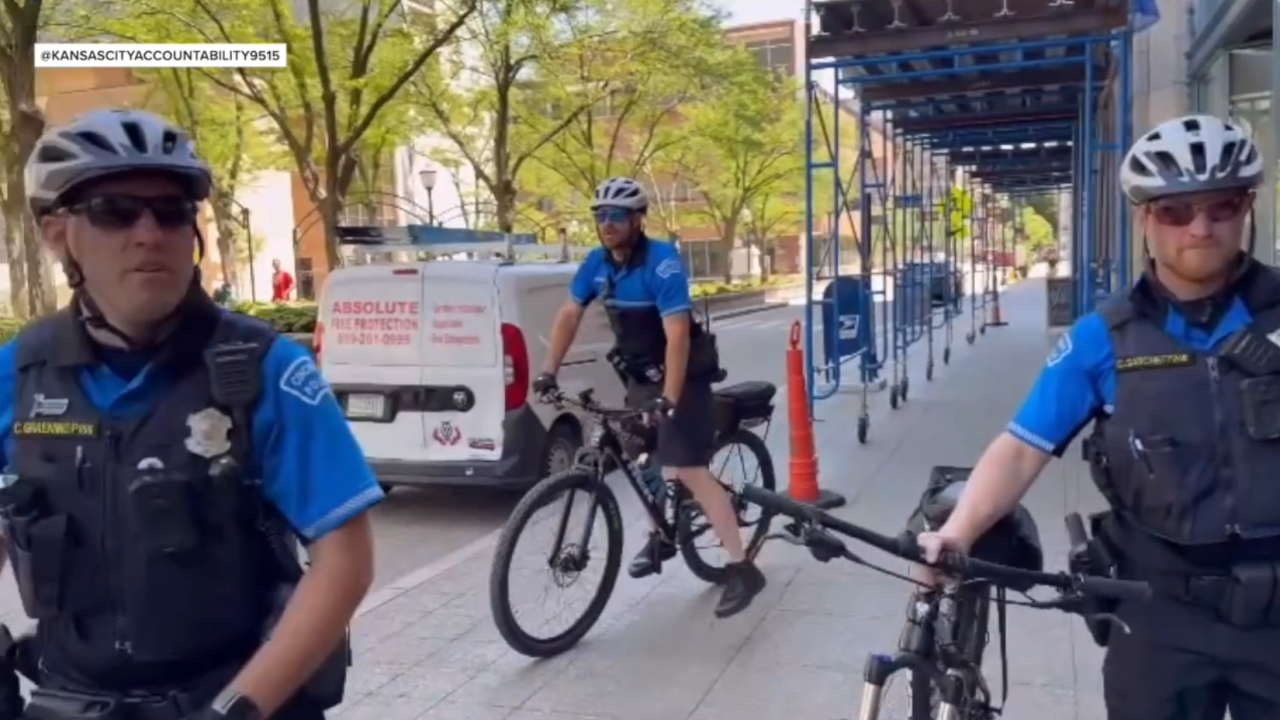
Moses recorded his encounter with police, which began when three officers on bikes approached him as he was recording into the First Commonwealth Bank on Garfield Place.
"Hello, sir," one officer says before telling Moses he was called to the area because he was recording.
"So what's wrong with that?" Moses asks.
"I'm just asking what you're doing," the officer responds.
Eventually, the officer asks Moses if there's a reason why he's recording, to which Moses responds, "I can't share that with you for free."
The officer asks why, and then tells Moses, "I can ask these questions to you ... it's up to you whether you want to answer or not."
The officer tells Moses that the bank's security called police, resulting in Moses turning to the security officer and asking, "You called them?"
Another officer then walks towards Moses, asking, "What's so confusing about this?"
"I'm on the sidewalk," Moses responds.
"Just put your hands behind your back, we're gonna detain you," the second officer says. "You're not answering questions."
"I don't have to answer questions," Moses says before telling the officers they're committing a felony by arresting him. "I'm doing legal activity right now."
The video ends there. However, Moses said he then requested a supervisor to "overlook the situation."
"(The officer) said his supervisor will speak with me after I get released from jail," Moses said. "And no one was even there to speak with me when I did get released from jail ... I'm just letting them know I'm exercised. It's a First Amendment-protected activity."

Cincinnati police have since released a statement noting that the incident is being investigated by the department's Internal Investigations section as well as the Citizen Complaint Authority.
"The Cincinnati Police Department is aware of the incident currently circulating on social media involving members of our department," the statement says in part. "We take all community concerns seriously, and we are actively reviewing and investigating the facts and circumstances surrounding this incident. ... These investigations are conducted independently and run parallel to one another to ensure thorough and impartial review process, we respectively ask for patience as the investigation continues and all relevant information is carefully examined, the police department remains committed to transparency, accountability and maintaining the policy accountability and maintaining the public's trust."
Moses said he appreciates the statement from police.
"I honestly believe that police are just not aware of our rights ... what are they truly learning to do in six months?" Moses said. "They get sworn in, their whole job is to uphold and protect the Constitution. But how are you gonna protect something that you don't even understand?"
A spokesperson for First Commonwealth Bank said in a statement on Thursday, "We are aware of a situation outside of our Downtown Cincinnati branch. We will fully cooperate with any investigation by law enforcement, if necessary."
Cincinnati FOP made a statement Wednesday saying the officers "responded, investigated and made an arrest that was based off what the law says."
"Society is at a crossroads," the statement says. "We want officers to proactively patrol and prevent crime in our communities or we don’t. Make a decision and stick with it."
Moses said his court date was set for June 17.
Under Ohio Revised Code, the fourth-degree misdemeanor charge Moses faces, failure to disclose personal information, necessitates that a person must identify themselves to police if officers reasonably suspect the person has committed, is committing, or is about to commit a crime.
Jack Greiner, a First Amendment attorney at Faruki PLL, said the key question is whether that standard was met.
"The question that, for me, has not been answered, is what crime was he about to commit?" Greiner said. "Because I don't think there's any indication that he was in the process of committing a crime, nor do I believe there's any information suggesting that he had committed a crime."
In the video, you can hear an officer tell Moses, "You're recording the bank, asking questions about the layout of the bank. You may be thinking up a robbery or something. You could be armed. You could be dangerous."
Greiner said the right to record in public is well established.
"Several federal appellate courts have ruled unanimously that a person has a right to film police activity," Greiner said. "If you're in public, you have a right to record."
Greiner said he expects the criminal charges to be dismissed.
"They just made a mistake. Police do a great job, and we need them, and they're valuable, but they're not infallible, and I think that when they make a mistake, they should own up to it and move on," Greiner said.
Ken Katkin, a professor of law at Northern Kentucky University, said the case turns on whether police had genuine reasonable suspicion that Moses was taking preparatory steps toward committing a crime.
"The judge or jury will have to decide, you know, did they want his identity because they reasonably believed that he was planning to rob this bank, even after they established that he wasn't armed or dangerous, or did they just do that because he was being insubordinate?" Katkin said.
Katkin also addressed what he called a misconception about online conversations of conflict between Cincinnati Police Department policy and the Ohio statute Moses is being charged under. CPD policy states police cannot demand a person who is recording to identify themselves.
"I really don't see the conflict. I think that they're completely consistent with each other," Katkin said. "The statute only applies when there's reasonable suspicion that the person is engaged in criminal conduct."
This story was reported on-air by a journalist and has been converted to this platform with the assistance of AI. Our editorial team verifies all reporting on all platforms for fairness and accuracy.
