



WEST CHESTER TWP., Ohio — After Julie Leonard’s husband died by suicide, members of her church made her food. It came in huge portions that fed all three of her children.
It was great. Except her kids were young, and they didn’t always like the food. But Leonard felt guilty and didn’t want to throw it away. So she put it in the freezer.
Before one meal, her child asked if dinner was coming from the “death fridge.”
In the support group she attended, the other widows couldn't relate. Because most people in that group were much older than her. They worried about being lonely. And cooking for themselves.
Leonard was trying to figure out how to restart her career. And what to put on school forms that mentioned the word, "father." She tells me he died from an intentional overdose after struggling with his mental health and addiction.
"You might be super angry. And then you might be really sad, and then you might be just feeling completely lost," Leonard said. "And all of that can happen in the same hour."
She just wanted to cook her own meals again. And she didn't really see how she could.
WATCH: We all grieve differently. This support group focuses on overdose loss
“I swear it gets better,” Leonard said. “I didn’t see that. But it does.”
Leonard now leads two support groups, including one she helped form earlier this year for people dealing with loss from a drug overdose.
“Some people don’t even tell the people in their lives how their person died,” Leonard said. "As much as you don’t want anybody to be able to relate, it’s really important to be able to find people who do.”
Because even though nearly half of our country says they know someone who’s died from a drug overdose, stigma surrounding those deaths can still make it difficult to talk about. Especially in general grief groups where no one judges the morality of someone who died from cancer.
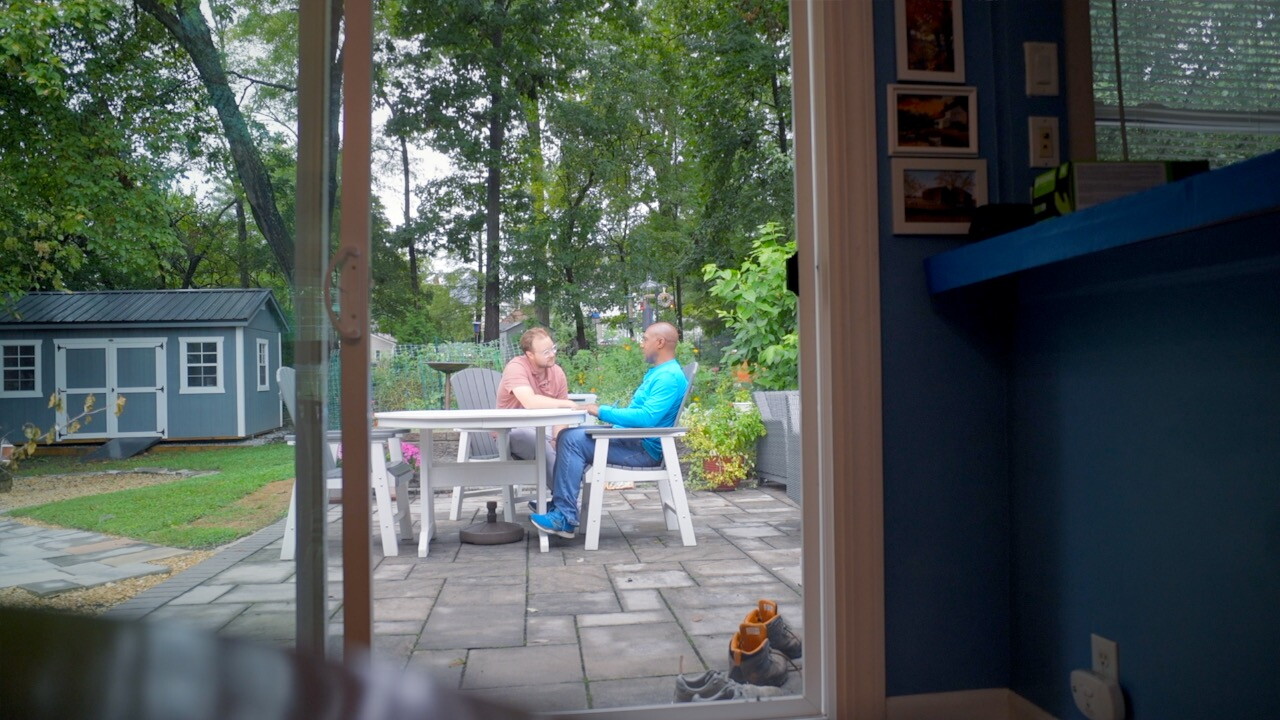
In his backyard, Jonathan Gordon lights a fire. He fans a bee smoker over his honeycombs, telling me this helps keep them calm.
His son, Jamal, died in 2019.
“I’m always thinking about him,” Gordon said.
Especially when he's taking care of his bees. Gordon doesn’t have any honey yet, but when he does, he plans to name it after his son. And he hopes people will ask about him.
“He was my only child,” Gordon said.
Gordon says he died from a combination of prescription medication and alcohol. Jamal was born with sickle cell disease, which often put him in the hospital. Gordon believes his son began self-medicating.
After his funeral, Gordon went back to his job as a police officer. But he wasn’t OK, even though he told people he was. That’s why he joined a support group through Companions on a Journey.
“I didn’t want to get to a point where I never dealt with my grief,” Gordon said. “That group has helped me open up and help me help others.”
And he found that how we die affects how we grieve. Something he now does with Leonard, whose husband died in 2008.
At first, Leonard hated looking at pictures of him. And when other people in support groups told her they'd give anything to have their person back, she thought to herself that she wouldn't. Leonard tells me this in her basement, where she has a pottery studio she works out of as often as she can.
She just wanted things to go back to normal. And while pottery hasn't done that, it's helped her find joy again.
“Part of my job as a facilitator is to help people see that there is hope,” Leonard said. “It does come back.”
‘Path to Peace’
The grief group Leonard and Gordon help run meets on the fourth Tuesday of every month, from 6 to 7:30 p.m. at Spring Grove Cemetery: 4389 Spring Grove Ave, Cincinnati, OH 45223. More information can be found by clicking on this link.
