



VERSAILLES, Ind. — Tammy Landis wants to hug everyone.
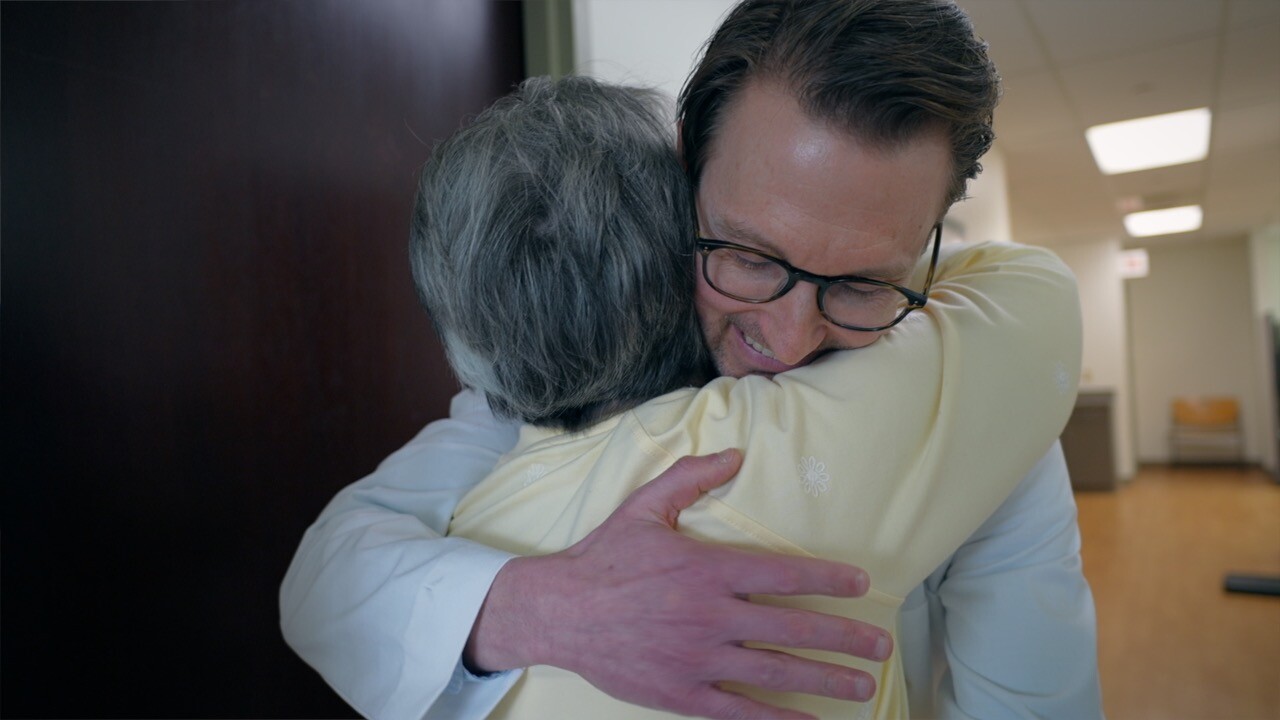
First, she hugs the PR person. Then, the nurse. Finally, her surgeon. And then she hugs him again.
“I just want to run through the halls,” Landis said. “Because I have been given a second chance.”
WATCH: Rare surgery gives Indiana woman her life back
Before a complex and rare surgery in 2024, Landis wrote letters to her kids. Just in case she didn’t make it.
Doctors had told her there was a 20% chance she would die because of complications from the procedure. And she decided to do it anyway. Because almost a decade earlier, a tracheostomy tube saved her life.
Her condition, however, continued to deteriorate. And when she breathed, it often sounded like a honk. Her son laughs about it now. And about how their family would often find Landis in grocery stores by listening for that unmistakable noise.
But Alex Landis spent many nights worrying about his mom. She couldn’t do her own laundry, and eventually it became hard for her to leave the house.
“It makes me want to cry thinking about it,” Alex said. “It was a scary time.”
His mom didn’t choose surgery because she wanted the tube taken out of her throat. She chose surgery because every Christmas, her family wondered if it would be her last.
“We were kind of out of options,” Landis said. “I couldn’t walk nowhere. I just couldn’t breathe, and so everything I did was so hard.”
In the parking garage at UC Health, she remembers not being able to walk from the van to the lobby. She tells me she’s been to this hospital hundreds of times — more than an hour drive from her home in Indiana.
But on this day, she says she doesn’t have to come back for a year.
Because Landis became one of the first patients at the hospital to undergo a robotic surgery to repair her collapsing airway.
“She had tracheobronchomalacia, which is an abnormal condition where the airway collapses on itself,” said Rob Van Haren, a thoracic surgeon at UC Health. “When I first met Tammy, what I really remember is how much her symptoms and breathing were affecting her life.”
Standing in the hallway outside his office, Van Haren tells Landis he remembers a nurse listening to her breathing before surgery and asking him if they should really continue.
“That’s why we’re doing the surgery,” Van Haren said.
The doctor said her condition is often misdiagnosed as asthma. And Van Haren only does a few surgeries like it a year, all controlled at a console a few feet away. It helps because it allows the surgeon to make smaller incisions and be more precise.
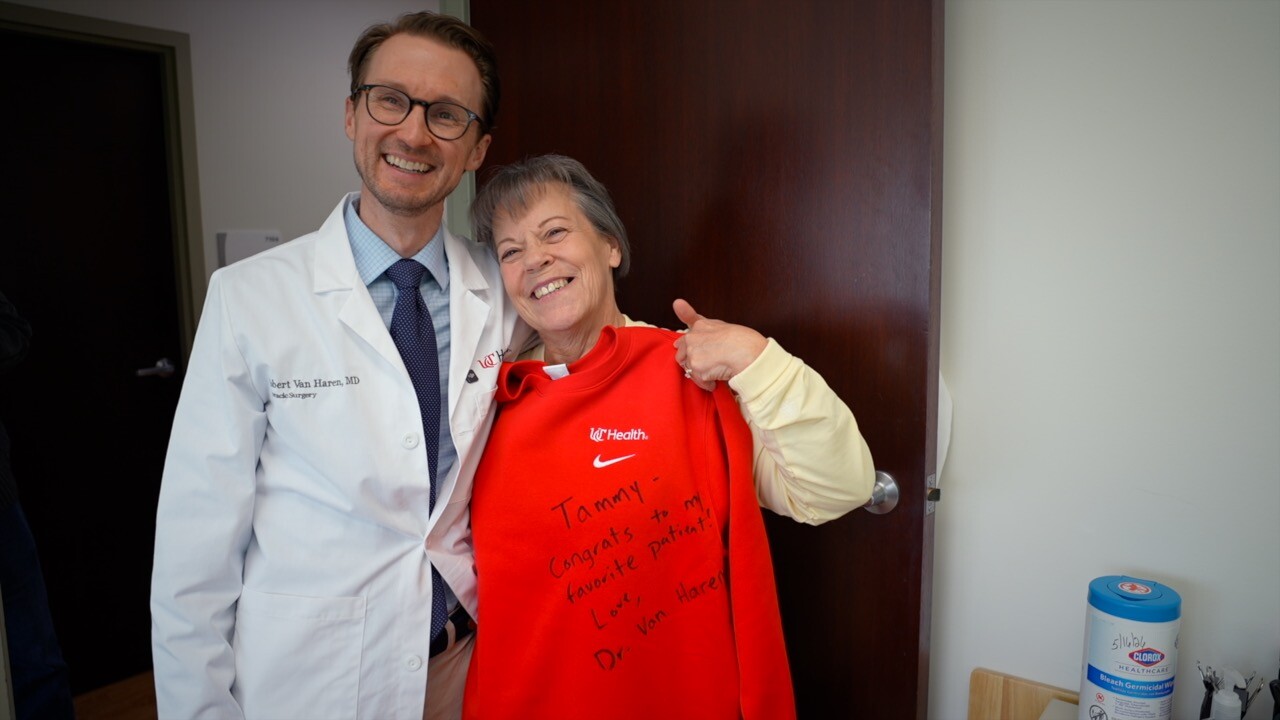
After their hug, Landis asks Van Haren to sign a sweatshirt for her.
“Congrats to my favorite patient,” he wrote.
“You just made my day,” Landis said.
On the way back to their car, Landis’ husband kisses her on the head.
“You know what’s nice? Not having to come here all the time.”
Instead, Landis takes her granddaughter to a baseball field down the street from their home. Landis even volunteers there now. A few years ago, she never would have been able to walk to the field.
But on this day, she sets a softball on a tee. And then, she even tries pitching.
Landis hits her granddaughter several times.
“You’re trying to kill me,” the 11-year-old said.
“I can breathe,” Landis said. “I didn’t say I could pitch.”
