

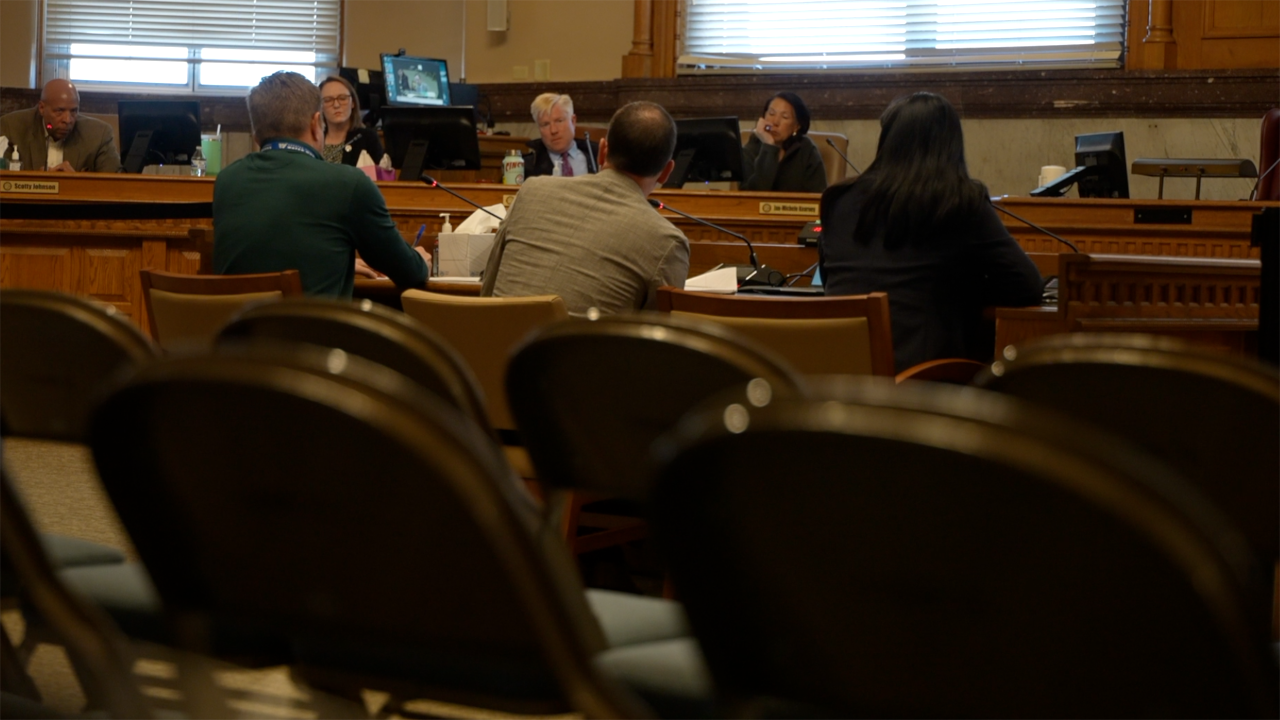


CINCINNATI — On Monday, Greater Cincinnati Water Works officials proposed a 9.5% annual rate increase for water utility customers between 2027 and 2031 to a City Council committee.
During the Budget, Finance and Governance Committee meeting, Andrea Yang, GCWW executive director, said a number of cost drivers are pushing up service expenses for the public water utility company.
"What's driving this is regulatory requirements from the federal government," Yang said. "Those are very high-cost mandates, and they're in a very compressed period."
WATCH: Council mulls over potential price hikes for water utility customers
According to a presentation shared by GCWW, average monthly increases under the price hike would go as follows:
- 2027: $3.14 average monthly increase
- 2028: $3.41 average monthly increase
- 2029: $3.74 average monthly increase
- 2030: $4.09 average monthly increase
- 2031: $4.50 average monthly increase
The combined cost of regulatory efforts for forever chemicals treatment and lead service line replacement over the next five years is estimated at approximately $178 million.
Under the lead service line replacement requirement, the utility must begin removing 10% of lead lines per year starting in November 2027, with complete removal by 2037. With 30,000 lead lines in the system, that amounts to 3,000 lines removed each year at a cost of $23 million annually.
For forever chemicals, a new maximum contaminant level set the threshold at four parts per trillion in finished water. The PFAS treatment is projected to cost $90 million to $120 million, according to GCWW.
"What we need to focus on now is we have a smaller treatment plant that's a groundwater plant in Fairfield, Ohio, and that has a slightly above the threshold level of six parts per trillion," Yang said. "So we are installing treatment to reduce that down below the four parts per trillion."
Another cost driver is the annual program replacing 1% of water mains. Yang said the program has dramatically reduced leaks and breaks, producing savings on repair crews, traffic disruptions and road repaving.
Councilman Mark Jeffreys and some other committee members were not fond of the 9.5% figure—given it outpaces the rate of inflation—and asked what could be done to lower the cost for residents.
"Not disputing the need for the investments because we do want to make sure that our water quality is best in class, but how we achieve that is the question," Jeffreys said.
Jeffreys pointed to potential alternatives, including examining whether large-volume discounts are needed and exploring other funding sources.
"How do we leverage rail dollars for some of the small pipe replacement, rather than going to ratepayers?" Jeffreys said. "I think we've got a lot more work to do in the next week or so before we vote on this."
Greater Cincinnati Water Works officials will be back to answer more questions before the Budget, Finance and Governance Committee votes on the price hike next week.
This story was reported on-air by a journalist and has been converted to this platform with the assistance of AI. Our editorial team verifies all reporting on all platforms for fairness and accuracy.
