



CINCINNATI — Before a 16-year-old was accused of fatally shooting a 14-year-old in East Price Hill, he had already entered the juvenile justice system, disappeared from a children’s services placement and missed a court hearing on pending drug and property-damage complaints.
His history comes as Hamilton County Juvenile Court records show weapons complaints involving young people remain higher than they were several years ago, despite declining from a 2023 peak.
The teen is now accused of purposely causing Rakeem Blair Jr.'s death on Aug. 18. Because he is a juvenile, WCPO is not identifying him.
He faces two murder counts, felonious assault and having a weapon while under disability. Each murder and felonious assault count includes firearm specifications.
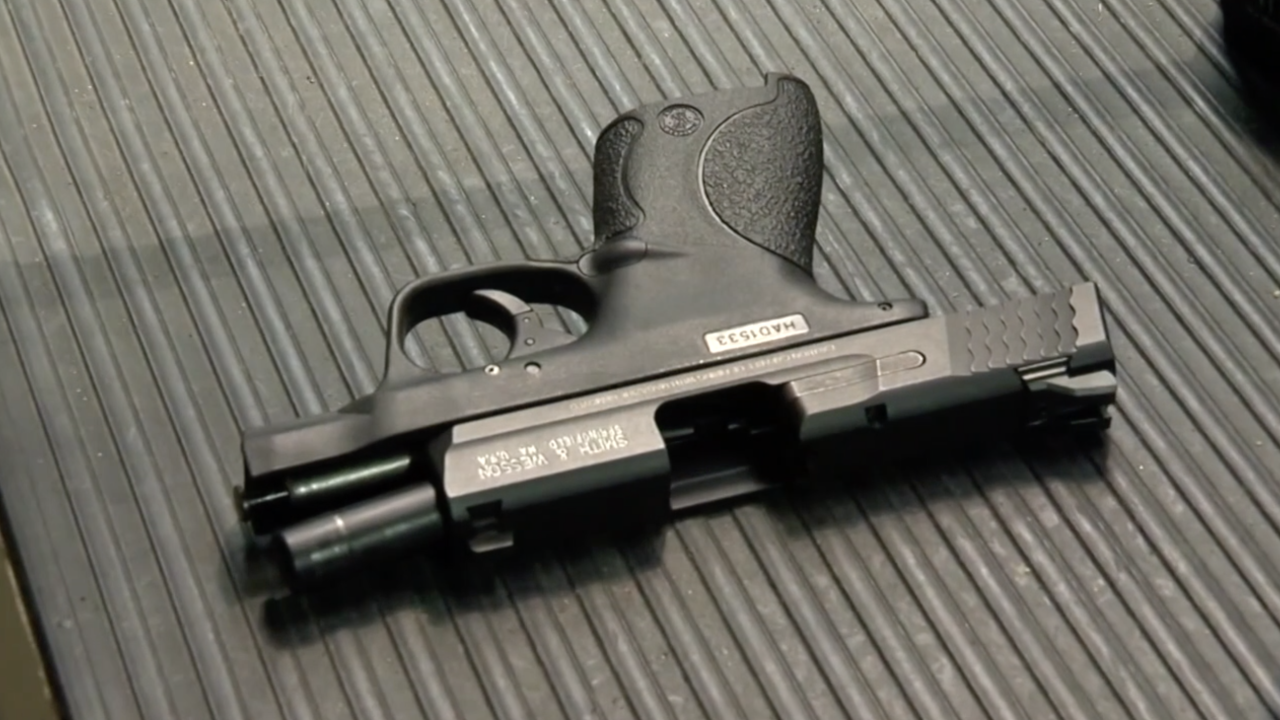
A separate criminal complaint alleges the teen had a loaded gun on him when Cincinnati police took him into custody Aug. 24.
WATCH: Teen charged in 14-year-old's murder was AWOL from children’s services placement
Prosecutors are now asking the Hamilton County Juvenile Court to relinquish jurisdiction, which could allow the murder case to move to adult court. The teen is being held at the Hamilton County Youth Center, commonly known as “2020.”
Teen had disappeared from placement
The teen has been and remains in the custody of Montgomery County Children’s Services.
He was reported missing from Dayton after last being seen July 21, according to the National Center for Missing & Exploited Children.
That disappearance came less than two weeks after Cincinnati authorities accused him of possessing cocaine and codeine without a prescription and damaging plastic desk chairs at a property on Ferguson Road.
The teen was scheduled to return to court Aug. 12 but did not appear.
A Hamilton County Juvenile Court magistrate issued a warrant and ordered him held in detention once he was located. A Montgomery County Children’s Services representative told the court the teen had been absent without leave from his placement, according to the court entry.
His first Hamilton County case dates to October 2024, when he was 14. He was initially accused of felony breaking and entering at an unoccupied building on Glenway Avenue.
That complaint was later reduced to misdemeanor attempted breaking and entering. The teen admitted to the amended complaint in May 2025 and was adjudicated delinquent.
A magistrate ordered him to stay away from all BP gas stations until December 2027 and pay $1,600 in restitution jointly with others.
It is his only adjudication in Hamilton County.
Juvenile weapons complaints peaked in 2023
The allegations against the teen are part of a much larger juvenile gun problem.
Hamilton County Juvenile Court recorded 203 weapons-control complaints in 2021. That number rose to 229 in 2022 before reaching 332 in 2023 — an increase of nearly 64% in two years.
The number has since declined, falling to 260 in 2024 and 212 in 2025. Despite that improvement, last year’s total remained slightly higher than in 2021.
Carrying a concealed weapon has consistently accounted for a significant portion of the total.
The court recorded 87 concealed-weapon complaints in 2021. That number increased to 99 in 2022 and 127 in 2023 before falling to 98 in 2024. It remained nearly unchanged at 99 last year.
Complaints involving weapons or dangerous ordnance in school safety zones reached 13 in both 2022 and 2023. The court recorded 12 in 2024 and seven in 2025.
Weapons under disability complaints have declined more consistently, dropping from 36 in 2021 and 2022 to 27 in 2023, 23 in 2024 and 16 last year.
The court’s annual reports also show that serious violent-crime complaints remain a concern.
Felonious assault complaints increased from 84 in 2021 to 121 in 2022. They then fell to 112 in 2023, 102 in 2024 and 79 in 2025.
Homicide-related complaints — a category that includes aggravated murder, attempted murder, murder and several forms of homicide — have fluctuated more sharply.
The court recorded 39 in 2021, 38 in 2022 and 16 in 2023. That number rose to 23 in 2024 and 25 last year.
Guns seen as protection
Educator and firearms instructor Rufus Johnson said fear is one of the most common reasons young people give for carrying guns.
“That’s my protector. That’s my go-to,” Johnson said, describing their thinking. “If I have problems, this is how I fix it. If I have problems, this is how I stay safe.”
Johnson has taught gun safety in schools and worked with adults convicted of first- and second-degree felony firearm offenses. He is now trying to expand his weapons-under-disability program beyond adult correctional facilities and into the community.
He said firearms have become increasingly accessible and normalized among children, while education and outreach remain limited.
“It’s just younger and younger,” Johnson said. “Kids just getting caught up in crossfires and incidents with firearms.”
Johnson believes enforcement is necessary but cannot address the problem on its own. Arresting or detaining a young person may temporarily remove a gun from the street, he said, but it does not explain why the child believed carrying it was necessary.
He wants juvenile facilities to offer structured instruction on gun laws, storage, safety and the consequences of carrying a weapon.
“Where is the education for the guys that’s being convicted and getting caught with firearms?” Johnson said. “We don’t have programming in place in these institutions.”
Hamilton County Juvenile Court confirmed that the detention center does not have a program dedicated specifically to gun safety.
Court officials said volunteers with firsthand experience in the justice system regularly speak with detained children about “the risks and consequences of carrying firearms and leading a life of crime, and the importance of getting on a better path.”
Johnson said those conversations can help, but he wants more consistent programming inside facilities and continued support once young people return to the community. He is also developing a martial arts program intended to teach discipline, self-control and alternatives to handling conflict with a weapon.
"They need to understand that you don’t have to have a firearm to solve problems,” Johnson said.
This story was reported on-air by a journalist and has been converted to this platform with the assistance of AI. Our editorial team verifies all reporting on all platforms for fairness and accuracy.
