

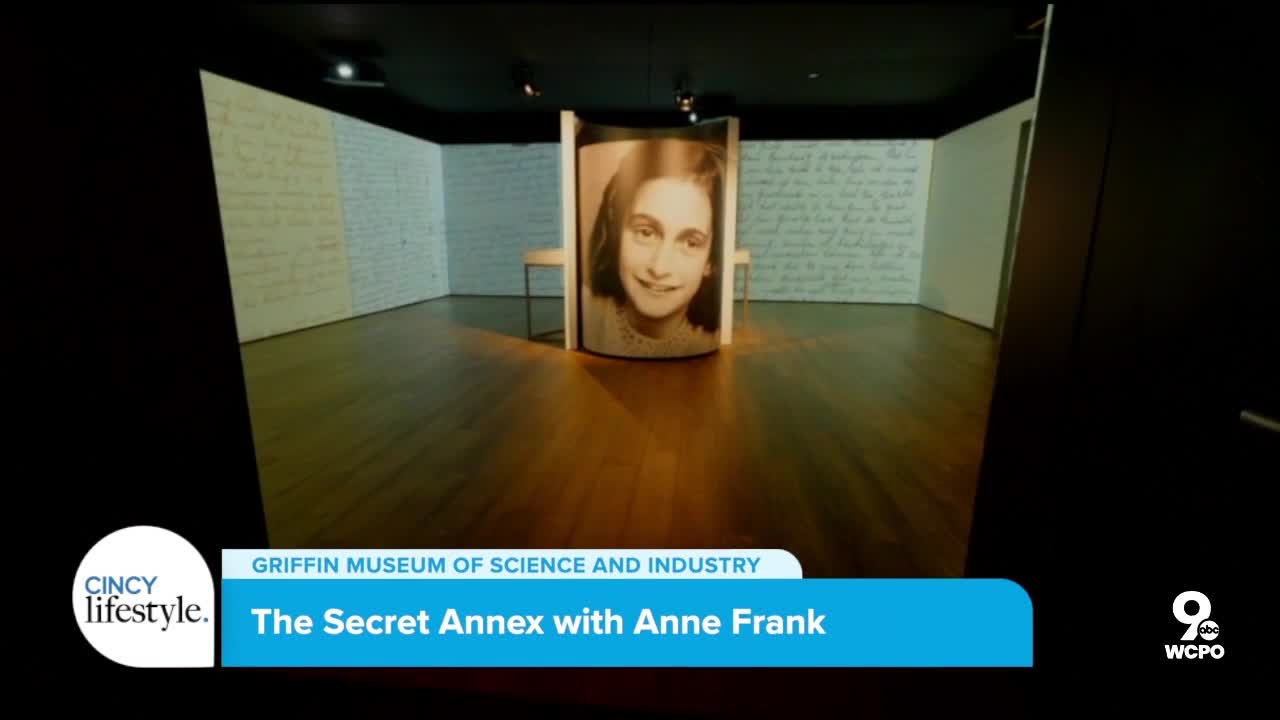

CHICAGO — Behind a hidden bookshelf door in Amsterdam, a teenage girl and seven others spent two years living in fear, afraid that one wrong sound could mean they were being discovered.
Now, visitors to the Griffin Museum of Science and Industry in Chicago can step inside a full-scale recreation of that hidden annex, walking through the same cramped rooms where Anne Frank wrote the diary that would later be read by millions around the world.
Dr. Chevy Humphrey, president and CEO of the Griffin Museum of Science and Industry, said the exhibition gives Chicago audiences access to a story they might not otherwise experience firsthand.
"We bring traveling exhibits to the museum that people would not otherwise be able to see, and many of our visitors may or may not have the opportunity to visit Amsterdam. And so we wanted to make sure we brought this opportunity to tell Anne's story to Chicago," Humphrey said.
Humphrey said the exhibition also speaks directly to young visitors trying to make sense of a complicated world.
"A number of our school children are trying to make sense of the world around them and that's simply what Anne was trying to do — she was trying to be a teenager and she was trying to figure out why were these horrible things happening around her. And so we wanted people, young people to understand that you can find hope and resilience in reflecting and writing, just as Anne did," Humphrey said.
The recreated annex differs significantly from the Anne Frank House in Amsterdam, where the rooms were left empty at the request of Anne's father, Otto Frank.
"The house is empty and Otto wanted it left exactly how the Nazis left it. And so in our exhibition each room in the annex is meticulously designed and it's based on Otto's recollection of what the rooms look like during that time and so you'll be able to see how they lived," Humphrey said. "And how they were able to come together in one room to play games, etc. and trying to keep a sense of how to be a family and how to come together but also under this horrendous environment."
The anniversaries of Anne Frank's final diary entry and the discovery of the annex give the exhibition added significance, Humphrey said.
"They're meaningful moments because it tells Anne's story of hope amid darkness and it also provides an opportunity for people to learn about Anne and her story and the journey, and the horrible outcome of what happened to Anne in her life," Humphrey said.
Humphrey said Anne Frank's own words serve as a guide for how the museum hopes young visitors will respond to the exhibition.
"Anne has a quote where it says, how wonderful it is to ensure that we make this world a better place," Humphrey said. "And one of the things that we really want for young people is to create their own agency of how they're going to create opportunities in this world to make it better and make it a better place and where there's no hate, where there's no anti-Semitism, where there's hope."
The museum is offering several resources for schools and educators. Educator guides will be provided to all teachers, and school field trips can visit the exhibition for free. Each school child will also receive their own diary to reflect on and write about their experience. The museum also provides scholarships for free buses.
More information about the Anne Frank exhibition is available at griffinmsi.org.
This segment, sponsored by the Griffin Museum of Science and Industry, aired on CINCY LIFESTYLE and has been converted to this platform with the assistance of AI.


