



COLUMBUS, Ohio — Ohio Republicans have reversed course after their proposal to restrict home healthcare under the state's Medicaid program received massive backlash.
On Monday, lawmakers removed the most controversial portion of House Bill 795, which would have banned family members of Medicaid recipients from being certified caregivers.
Family members who live with the qualifying Medicaid recipients can become caregivers. They will need to pass a background check, complete several hours of training and work with an already accredited Medicaid provider. The payment ranges, but some programs pay family caregivers $1,800 a month.
It's a program that Gov. Mike DeWine has been defending for weeks. At an unrelated event, we asked him what he thought about getting rid of home health care.
"No one wants to go to an institution; no one wants to go to a nursing home," DeWine said. "They want to stay in their own home."
National and state Republicans have become increasingly skeptical of it.
"We don't want everybody hiring their kids to carry the groceries up the stairs, nor driving everyone to the doctor's office for a visit," Federal Medicaid chief Dr. Mehmet Oz said while visiting Ohio in May.
Legislative leaders claim some providers paid by Medicaid are not doing their jobs. And now, some Republican lawmakers allege, without proof, that there is widespread fraud in the home healthcare system.
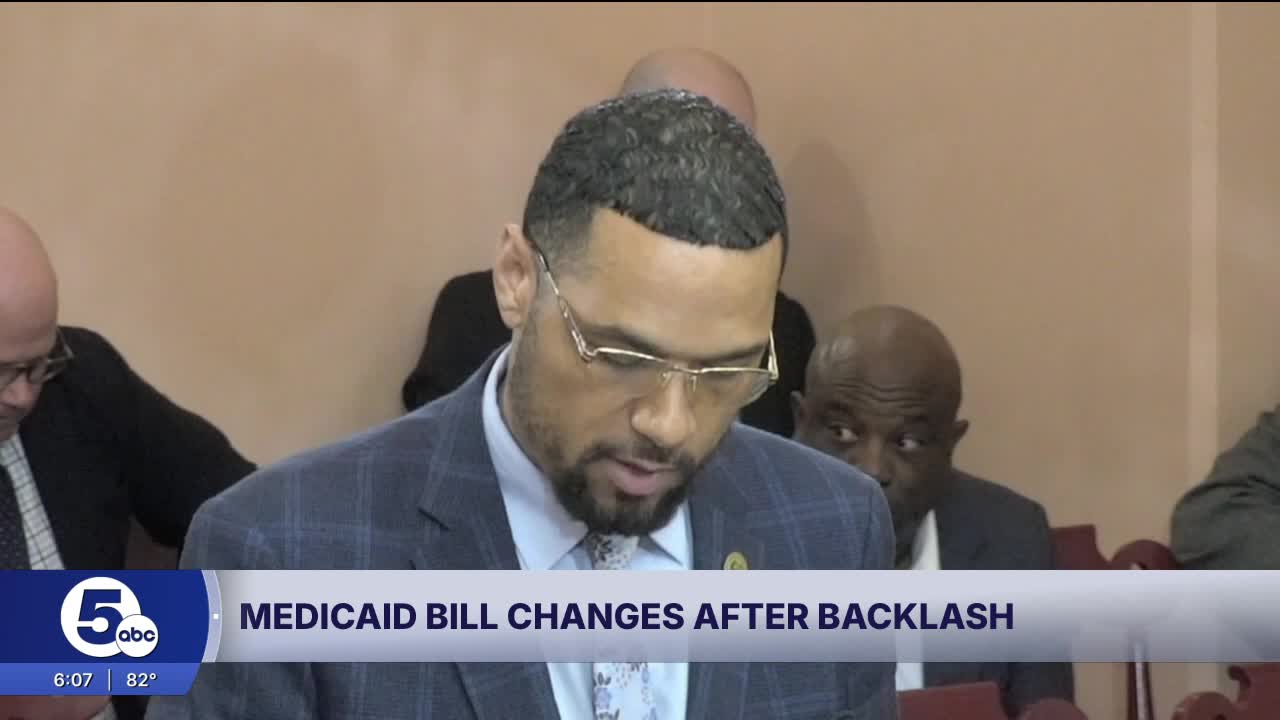
State Rep. Josh Williams (R-Sylvania Township) said that after mass backlash from residents, he decided to pull the provision from the legislation.
"That was a direct result of listening to interested parties and constituents," Williams said.
He had originally put the provision in not to impact people with developmental disabilities, he said, but to target "comfort care," a type of home healthcare that focuses on vulnerable individuals' mental health.
Democrats and some Republicans, like former Ohio House Speaker Jason Stephens (R-Kitts Hill) are happy with the outcome.
"It feels like we're moving in the right direction so far," Stephens said in an interview. "Hopefully, we can come up with a product that does enable to keep fraud, waste, and abuse at bay. But also, still, we aren't harming the things that do work in Medicaid."
Stephens expressed his anger at the party last week once that version of the bill came out, saying on social media that it would "totally blow up Medicaid in Ohio."
They were provisions that were "devastating," Stephens said, which was echoed by more than 200 people who testified against the bill.
Now, the bill is mainly focused on relatively noncontroversial policies, like giving the attorney general more authority to investigate allegations of fraud.
Still, Stephens wonders if the other lawmakers will attempt to put the policy back in. DeWine explained that it would be detrimental and expensive.
Even with allegations of fraud within the home healthcare system, the alternative is much more costly. I obtained state data showing that home health services cost at least four times less than nursing or long-term care facilities.
"To say that we're going to completely throw out home health care, we'll send a ton more people into our nursing homes. It will cost a whole lot more money, and quality of life will simply not be as good," DeWine said. "That could be your mom, your dad, your sibling, you, who now has to go to a nursing home."
The Republicans want to pass some kind of Medicaid reform by the end of the week.
Follow WEWS statehouse reporter Morgan Trau on Twitter and Facebook.
