



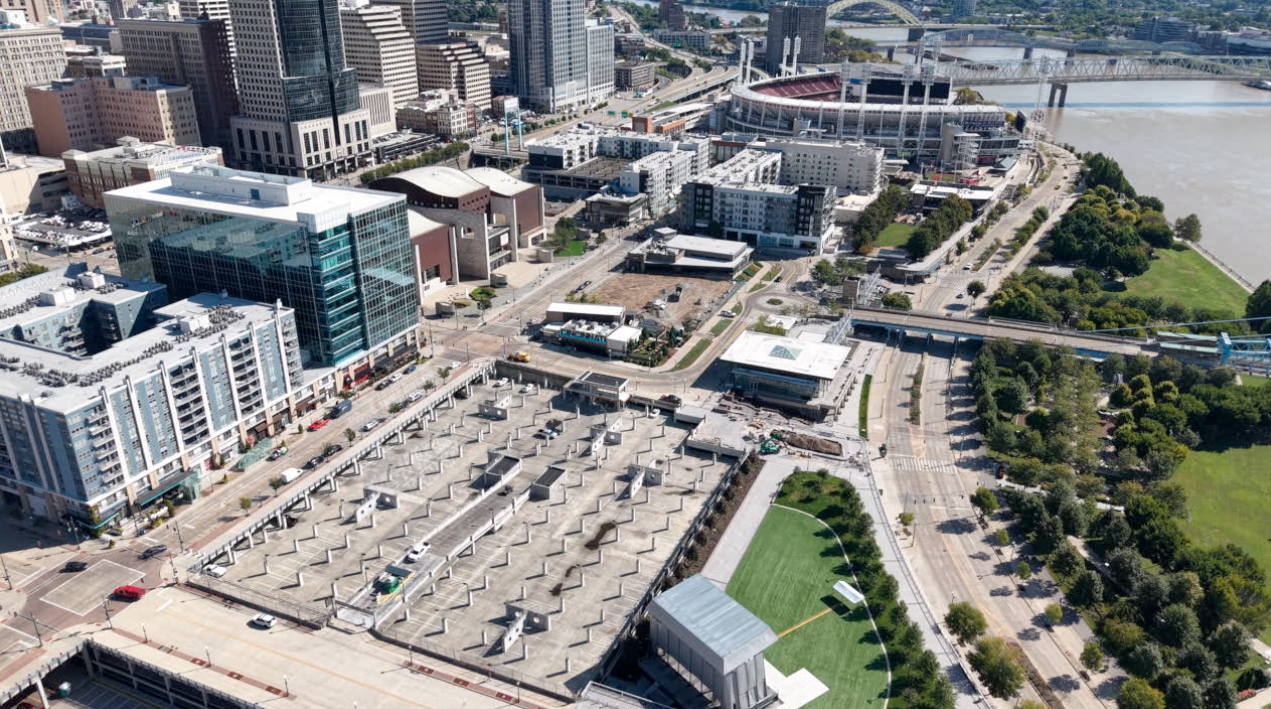
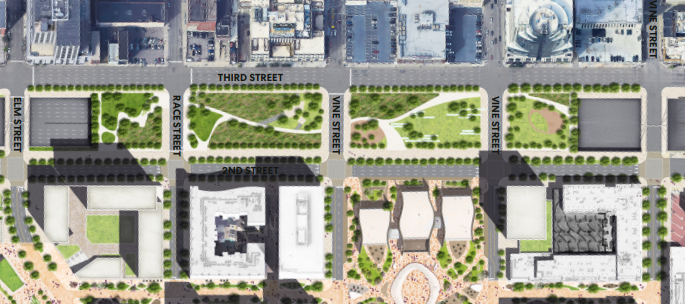
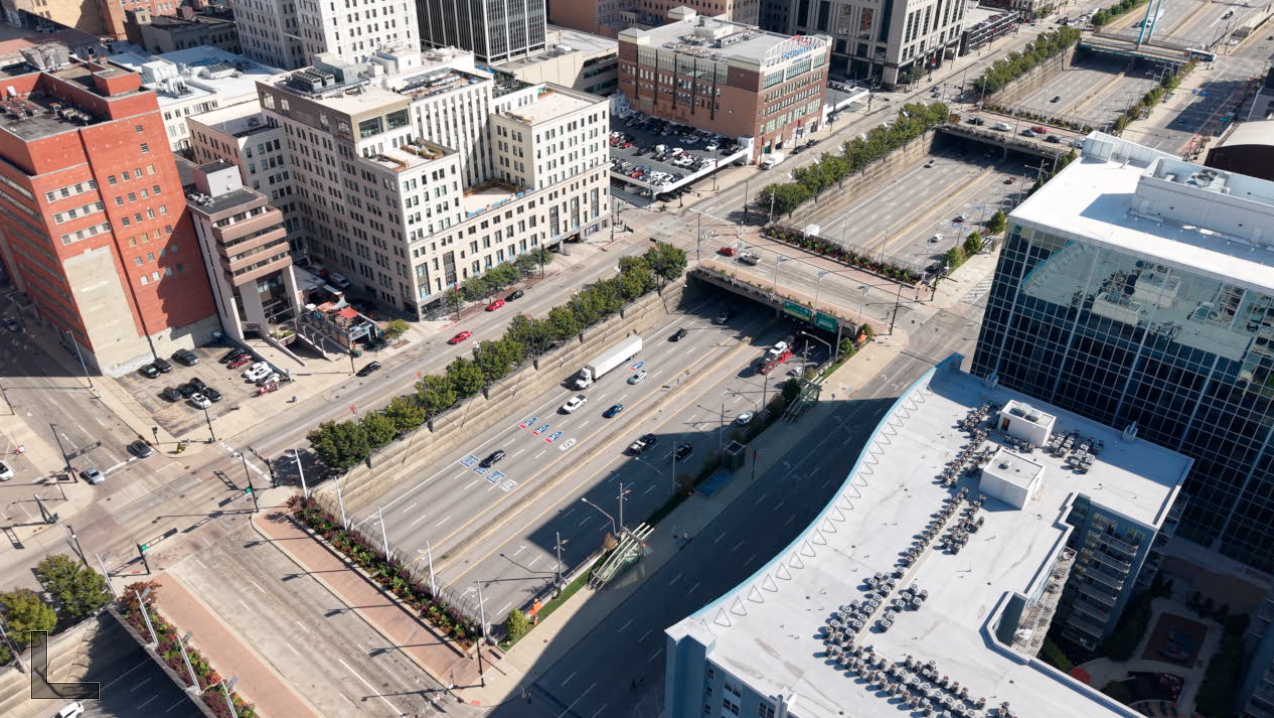
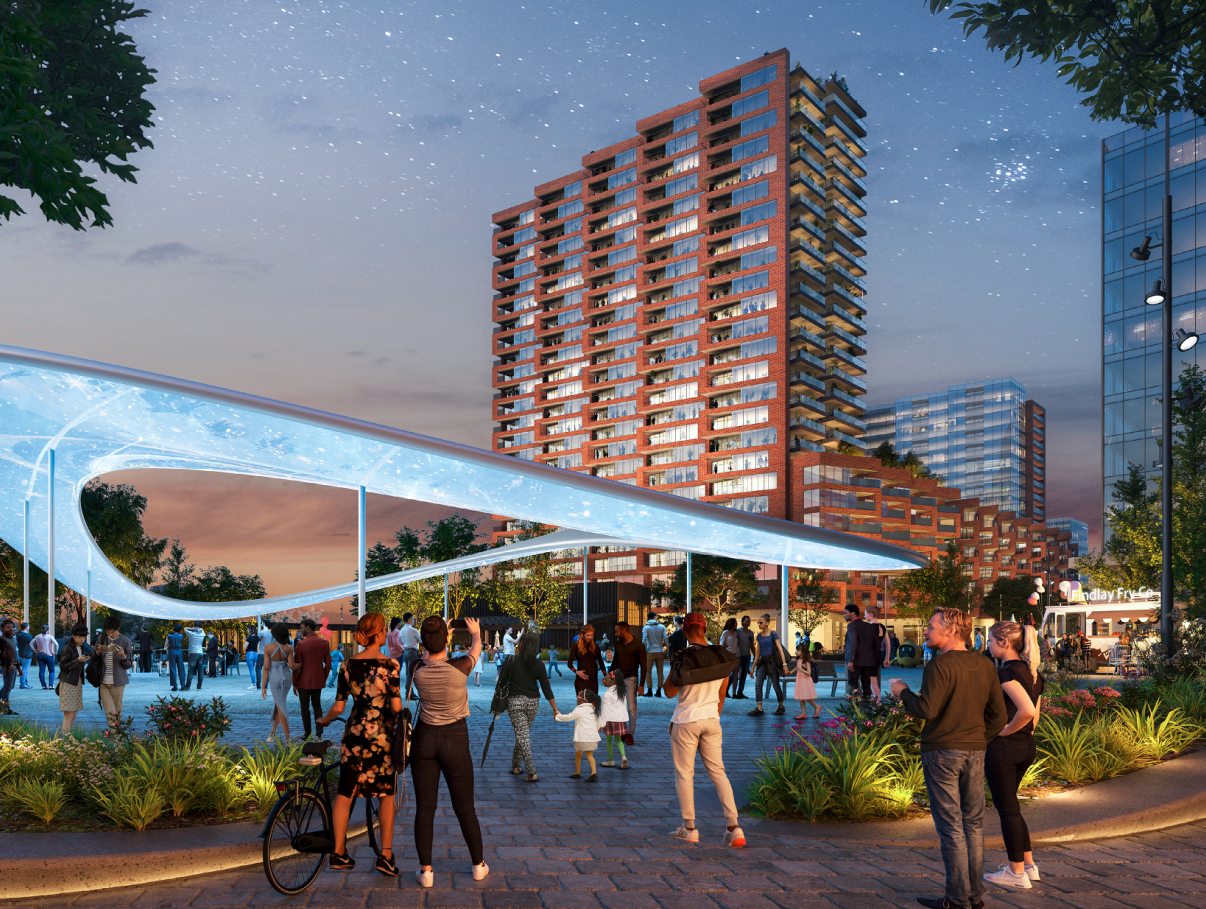
CINCINNATI — The Banks riverfront development now has a final design plan with high-rise residential towers, festival streets and plazas, and a new park over the sunken Fort Washington Way highway trench.
Now the city of Cincinnati and Hamilton County must figure out how to pay for these decades-in-the-making projects.
“There’s so much potential right now. The question is how do we fund all of it? And where do those priorities stack up?” Hamilton County Commissioner Denise Driehaus said.
Driehaus, Cincinnati Mayor Aftab Pureval, and The Banks Project Executive Phil Beck spoke to WCPO 9 I-Team reporter Paula Christian to discuss the riverfront development, once again, after a similar interview in 2025.
It was the culmination of a big year for The Banks. After four years of trying, the project won a $25 million federal grant in July to design decks on top of Fort Washington Way and build a 1.2-acre cap and public plaza between Vine and Walnut streets, directly north of the National Underground Railroad Freedom Center.
But the project requires a $25 million local match before construction can begin in 2027 or 2028.
“There is a certain expectation on this one particularly, with the Chamber of Commerce being a partner in this, that there will be some investment from the private side that we don’t generally see in some of these other projects,” Driehaus said. “The business community is 100 percent behind this project. It’s going to motivate them, I think, to invest in this project.”
Watch Mayor Pureval, Commissioner Driehaus, and The Banks Project Executive Beck talk about The Banks:
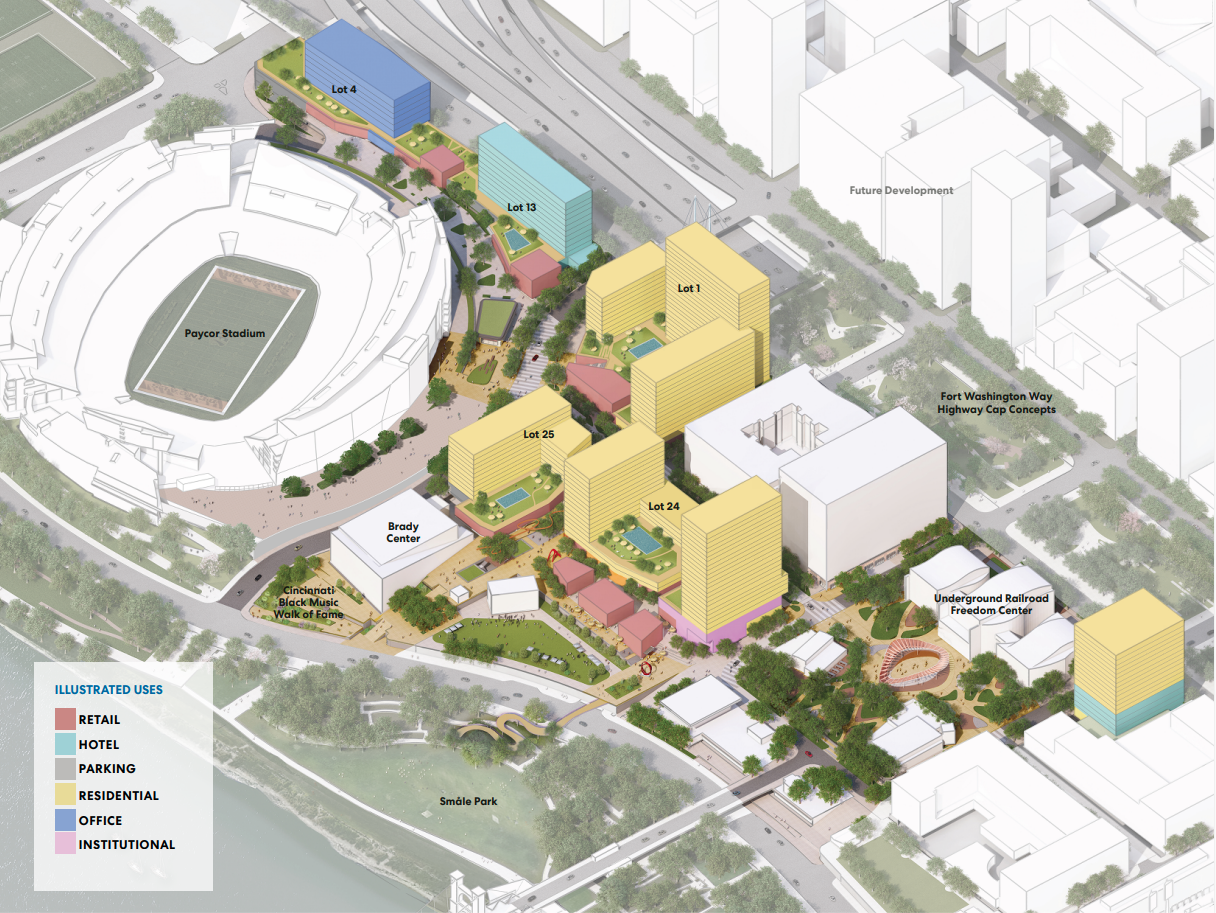
The city also approved a new urban design plan in June, a long-awaited blueprint to finally develop the remaining nine empty acres at The Banks after more than a decade. But public infrastructure is needed before shovels hit the ground, especially on the high-rise building potentially planned for the most desirable Lot 24.
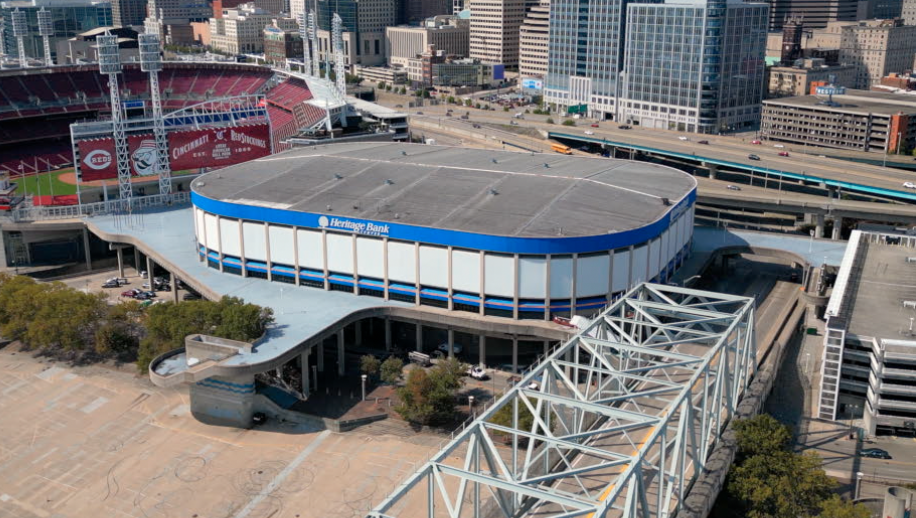
And finally, the looming question of the aging Heritage Bank Arena remains. Business owners at The Banks want a new arena here. Others want a new arena built either south of TQL Stadium in the West End or near the newly renovated First Financial Center.
Although city and county leaders expect state and private funding to help with a new arena, there will likely be some local public cost.
In a Sept. 14 interview, Beck, Driehaus, and Pureval discussed the future of The Banks and where they hope to find the funding to finish these projects.
Why is the federal grant for the Fort Washington Way cap so important?
Pureval: This was really a two-decades-in-the-making infrastructure investment. When Ft. Washington was made, it was made with the anticipation that sometime in the future we would cap it for more developable areas and have a better connection between downtown and The Banks. With this $25 million grant, after 20 years of waiting, that is finally going to happen.
It’s important to understand that this grant allows us to design this entire space and provide capital funding for one of the lots, one of the caps …it’s more than just a park or a public space; it’s an area where we can activate and have programming, where we can potentially do concerts or movie showings … Other cities that have done this, like Dallas, have shown that it can be really, really transformational.
Beck: The mayor mentioned Dallas; Klyde Warren Park is absolutely stunning. It is like Smale Park over the highway; it is truly amazing, and it just happens to be four blocks long, just like us. It has the same number of highway lanes down below. It is really a wonderful template.
It requires a local match, $25 million; where would that come from?
Driehaus: TBD from the county’s perspective. We’ve got a lot of financial constraints right now. We’ve got a levy on the ballot … so TBD on where those dollars might come from, but I have heard the private side talk very enthusiastically about this project. The connectedness from the business community to The Banks, and so the expectation is with the chamber being our partner on this … the private side will help with that match.
Pureval: The city and the county will be there. I expect the private community will be there with substantial resources. My understanding is that the city manager and the county administrator have been talking about various sources, and from the city’s perspective this is a high priority from an infrastructure investment strategy.
The application stated that construction could start in 2027 or 2028 with a possible completion in 2029; is that right?
Pureval: That’s right, that’s the time frame as laid out in the application … so much of it depends on how quickly we can put the dollars together to actually find the match. But once we do, and put shovels in the ground, that timeline is accurate.
Driehaus: Don’t forget we’ve got the bridge project nearby. Hopefully we’ll be able to sync up with some of the other infrastructure work that’s going on when we are finally ready to do the caps. We want to make sure that we’re syncing those things up to not be so disruptive when it comes to transit coming in and out of the city.
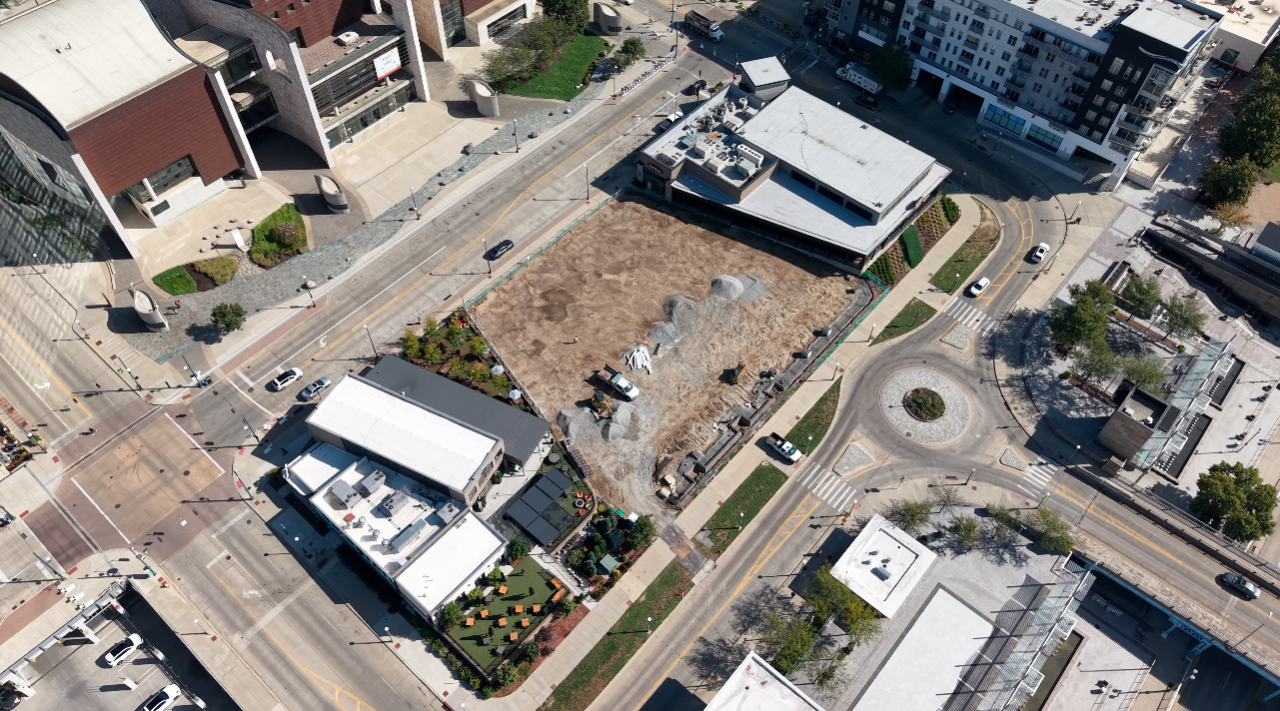
Last year we talked about the activation of Lot 18, and bringing back the Ferris Wheel. Instead, you went with mini golf, so explain the thinking behind that.
Pureval: As we talked about last time, Denise and I were really focused on driving some urgency behind the larger plan and having some quick wins. Obviously, the Ferris wheel and some other ideas came up. What we were hearing from businesses here at The Banks is … we need more family-friendly activities.
When I met with the owner of Filson, he really pitched this idea of this modern putt-putt experience that is really popular in other parts of the country, a concept that’s really been proven. Given that it’s a short-term lease, and given that Filson is all in on it ... you can see the construction is happening already.
Driehaus: The Ferris wheel was great for a while, but it was not embraced by all. The Freedom Center is right there, and so we wanted something that had a lower profile. That was just not as intrusive when it comes to the connectedness between the river and the Freedom Center. We wanted to be sensitive to that … the Ferris wheel was not the best fit, but the mini golf is. With the local operator and owner right here across the way, the expectation is he has a vested interest.
Beck: You’re not going to see windmills or concrete rabbits at our putt-putt; you’re going to see the river, the skyline; you’re going to be in the middle, the heart of The Banks project. It’s going to be a wonderful attraction.
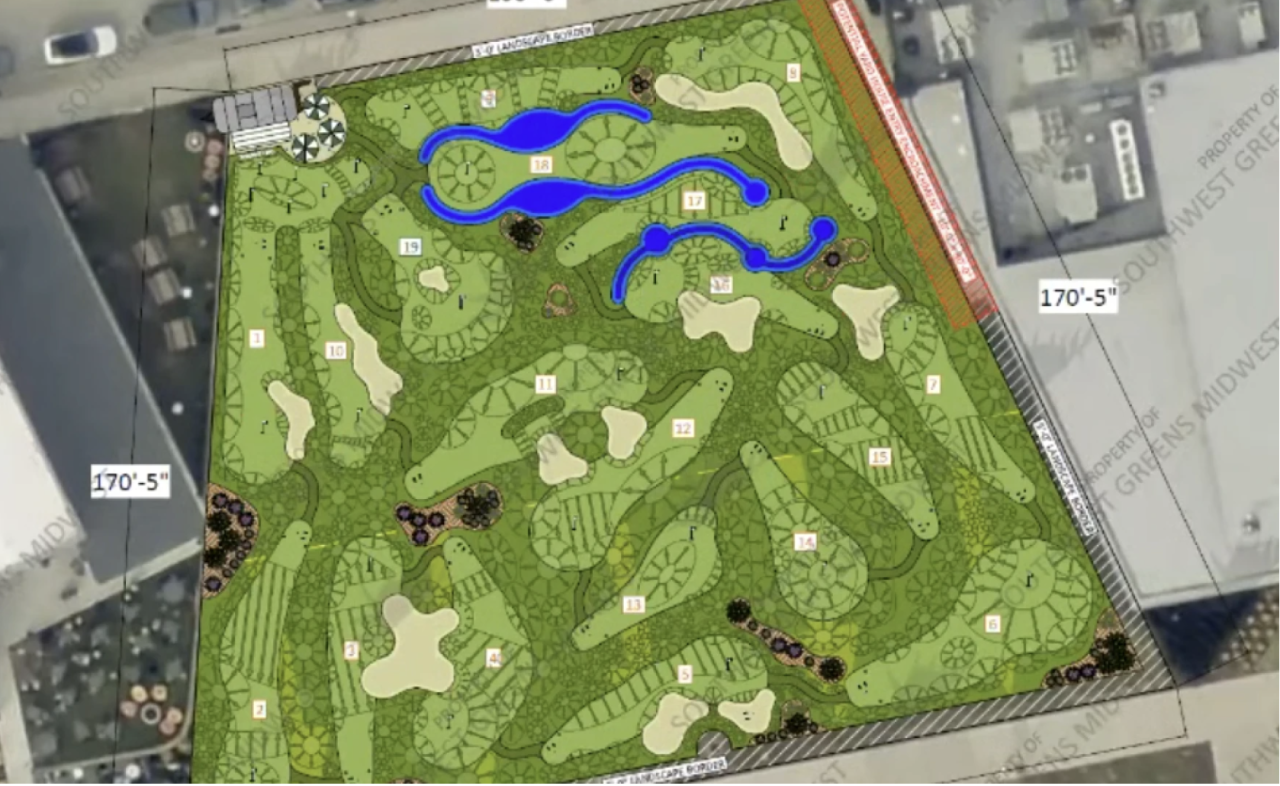
Is that going to be year-round?
Beck: That’s the intent; we’ll see how that works this winter. It’s astroturf.
The new urban design plan passed a few months ago; what is the next step now?
Pureval: I think the next step is infrastructure … Now we are turnkey ready once the market improves to be able to go out to bid and see what the private industry can invest in. But to make it more attractive and ready to go to market, we’ve got to have the partnerships between the city and county, and the state and federal governments, to be able to invest in the infrastructure, particularly around Lot 24, finishing the rest of the build and making the pads ready for that future development.
Driehaus: It’s raising everything out of the floodplain; it’s also building everything underneath to support those businesses … For instance, Lot 24, which is the big one, the most developable, as I like to say … that is right now able to support about 12 to 14 stories on that location. If the expectation is that we’re going to move higher than that, we have to know that ... you can’t build 24 stories on something that was built to hold 14.
How are you going to prioritize and pay for these projects?
Pureval: It’s going to need to be a strong partnership between the city and the county, which we have, but we’re also going to need the federal government and the state government to help us with this heavy lift. Based on our budgets, we don’t have the resources necessary to do all the things that we want to do.
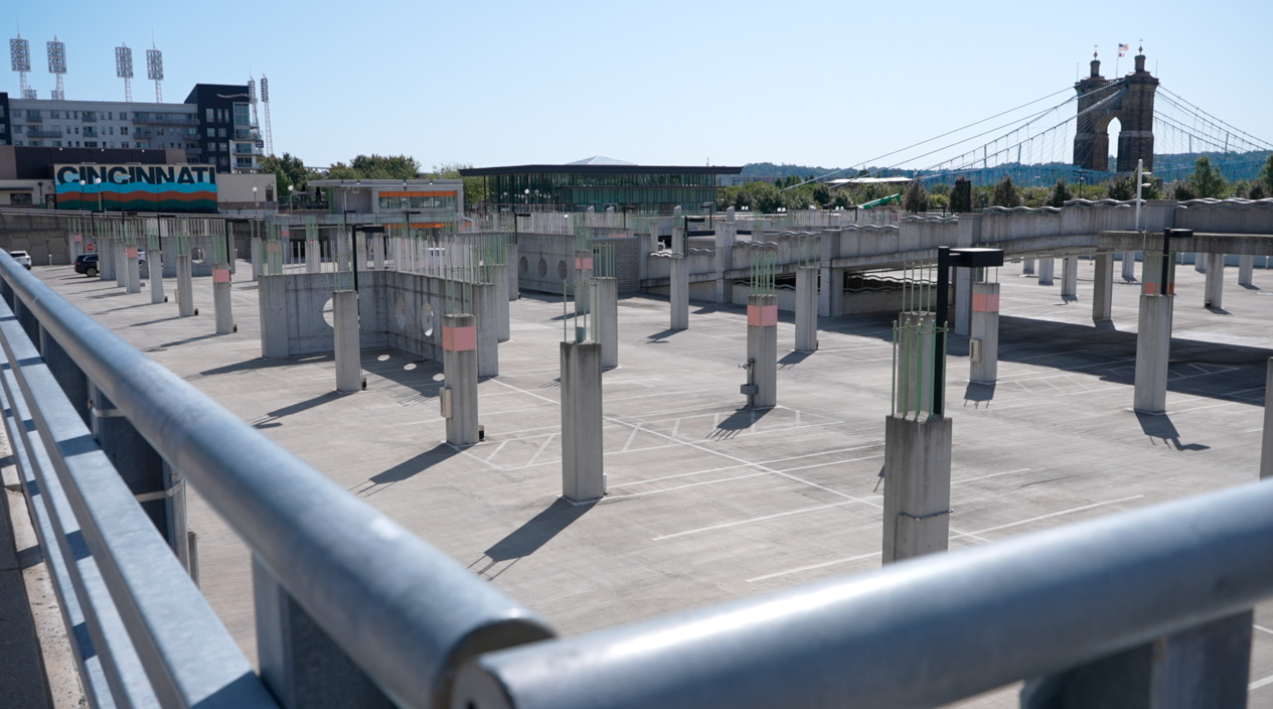
I’m not discounting the progress, but to the average person who comes down to The Banks, it still looks the same.
Pureval: That’s why we moved so quickly on Lot 18. That’s why it was so important for us to show progress. Of course, all the work that we’re doing is important, but it’s not very visible. So, for our residents to look, feel, and touch something new, we’re hoping that shows some momentum. But you’re right, the reason we’re working with so much urgency is that these mega projects take much longer than I think people realize.
After what happened on Reds Opening Day, it’s been a quieter summer at The Banks; there has not been as much high-profile crime.
Pureval: Public safety is always top of mind whether we have high-profile incidents or not. It’s what we invest in; it’s what we spend most of our time on. But to the extent there is any credit due, it’s to Chief Hennie and all the incredible work that he’s done since he’s been in office. Getting full buy-in from CPD on the visibility, on increasing the details, on the walking patrols, on the bike patrols, his work to fully bring to scale our drones as the first responder, the fact that he has a 24/7 crime center now that’s being monitored. All of those things that we were struggling to get going last year have been fully implemented, and you see the results.
Beck: I think the curfew has also helped. It seems very noticeable. It’s not my professional space, but from an outsider looking in, I think it’s made a difference.
What is the status of the Heritage Bank Center?
Driehaus: There are two conversations going on related to the arena. One is where it should be; the other is how do we pay for it. I know there is still some debate about where it should go, whether it’s down here on the riverfront, next to the convention center, or up in the West End. Those conversations continue. People have strong feelings about them. From my vantage point, I just want to make sure that whatever is built in the future takes advantage of current infrastructure, so we don’t have to repeat that and make even more investments in infrastructure. I feel like we should use what we already have, so my preference obviously is the location down here.
The financial side is a little more challenging because right now the arena is owned privately and programmed privately, so there are no public dollars in there. So, to switch our vantage point on that and say the public is going to participate with the private side with the arena is a change. We’re invested in two stadiums right now. That feels like a big lift to me, but we’re happy to continue having conversations.
When I interviewed the interim head of Visit Cincy, she said the lack of a large, modern arena makes it more difficult for the city to win the biggest, best conventions.
Driehaus: Years ago, when we were talking about the convention center, there was a lot of conversation about expanding the exhibit space. So, the exhibit space is still on my radar as an investment that would also help bring in larger conventions … we are now going to gain space to the west of the convention center, space that will be available for some kind of development because the highway is being narrowed. That provides a great opportunity … to expand what we know will increase conventions coming here. Whether that’s an expansion of exhibit space or an arena space, but you’re right, they’re all interconnected, and we kind of have to juggle all the balls at the same time.
Pureval: We need a new arena. We are losing out on huge economic benefits to Louisville, Indianapolis, and Columbus because of a lack of a world-class arena. It’s a problem … It’s a really big hole in our ecosystem. I think the commissioner is exactly right. There have been two conversations going on: where should it be built, and how do you pay for it? Unfortunately, too much oxygen has been spent on where it should be built. We have to figure out how to pay for it, if we can pay for it. To do that, it’s going to need a substantial private investment; it’s going to need a substantial state investment … We have to sit down and prioritize everything … We absolutely do need an arena; how we pay for it is a much harder decision.

So when you say new arena, do you mean not renovating the Heritage Bank Center?
Pureval: That’s semantics; I’m less concerned about the location. I think all the locations have positives and negatives. The West End location has more public control, but it’s a smaller footprint. The two blocks directly west of the convention center are publicly owned, but the construction of … the Brent Spence may throw off the timing of that … and with The Banks, because it’s privately owned, that would require more of a capital stack to acquire it and then also change some roads and infrastructure around it. But the positive, to the commissioner's point, is that there’s already built-in infrastructure, particularly around parking, and there’s all this investment that’s happening at The Banks.
There are pros and cons to all. I think what’s going to differentiate the decision, frankly, from my perspective, is the capital stack. Who is putting in the most money, and what lots will need the least amount of infrastructure investment in order to be turnkey ready.
What would happen to The Banks if the Heritage Bank Center closed?
Beck: It’s prime real estate, no matter how you slice and dice it. I hope the arena is able to stay, but it’s a great spot for all kinds of development options.
Why not bring in 3CDC to finish The Banks?
Pureval: Look, 3CDC is very successful because they have been very specific about the geographic area that they can and want to work in. They have made it very clear since their founding that the urban core, downtown, and OTR are those two areas. Asking them to come into the convention center in the way that we did was a big lift for them; they were, of course, incredibly successful … but they only have so much bandwidth.
Because of the history of the Banks, because of the relationships that are preexisting here, I think it’s a better opportunity for an outside master developer to come in and also share some talent from outside Cincinnati to better understand the national landscape and allow 3CDC the space and time to do the things that they are focused on and are really good at.
But I’ve heard residents say if we had brought 3CDC into The Banks, it would be done by now.
Driehaus: Well, it wouldn’t be done by now because we don’t have the infrastructure built. So that is certainly not the case. But to the mayor’s point, 3CDC has been a fantastic resource for this community, and I feel very confident that we will hear from 3CDC as to how we move forward on some of these things.
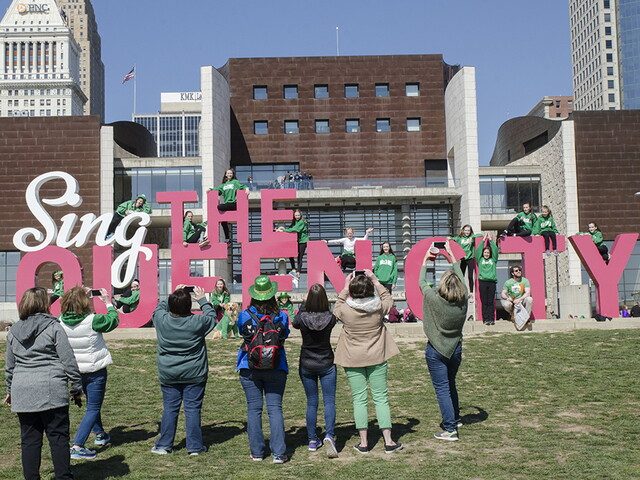
The Sing the Queen City Sign—what’s going to happen to that?
Pureval: We are excited to find a new public space for it; it’s not going away. We’re looking at a few different locations, and once the short-term lease of the mini golf runs its course, my hope is that we have a new Queen City-branded, similar-style sign. Because I know how important it is to the community and how disappointed people are about the Sing the Queen City sign, but it will be back; we’re just figuring out where to put it.
Where are you looking?
Pureval: Washington Park, near Music Hall, is a location; other Cincinnati parks or other heavily trafficked areas. It was a great opportunity back in 2008 during the World Choir Games to really deploy that sign, and so we’ll find it a new home.
Note: Some answers were shortened for brevity.
