



CINCINNATI — The Hamilton County Sheriff’s Office has taken a much larger role in fighting crime downtown over the past year, regularly patrolling several blocks around the courthouse and helping Cincinnati police with larger investigations and unruly crowds.
Heading into the summer, Sheriff Charmaine McGuffey expects that presence to continue and perhaps expand.
“We’re collaborating now more than we ever have,” McGuffey said. “I would like to grow what the Hamilton County Sheriff’s Office can help with and do in Over-the-Rhine.”
In January, McGuffey created a 10-person team of deputies pulled from highly-skilled units within the sheriff’s office to work with Cincinnati police on investigations, mostly in the Over-the-Rhine neighborhood.
“We’ve also gone out with Cincinnati police when they’ve served search warrants, and we have guarded the perimeter,” McGuffey said. “One of the things that Cincinnati is burdened with is that they have to respond to radio calls, so they don’t just have a full night where my attention is ‘here.’ What we’re able to do is … crime prevention, crime enforcement, law enforcement all night long and we don’t have to respond to radio calls.”
WATCH: Are sheriff's deputies returning to Over-the-Rhine?
It has been 20 years since deputies had a regular presence in Over-the-Rhine, when Sheriff Simon Leis assigned 19 deputies to patrol the neighborhood in 2006, when crime was out of control. That lasted until late 2007, when funding for the $1.5 million patrol cost ran out.
But many who live and work in Over-the-Rhine fondly remember those sheriff patrols and want them to return this summer.
“I would love to see their presence here,” said Greg Olson, CEO of Urban Sites, which was one of the earliest developers in Over-the-Rhine. “I voice it, I share that, but it’s not my call for sure.”
So would John Donaldson, who has lived there since 1999 and owns property near Grant Park. He spearheaded the citizens on patrol after the 2001 riots and advocated for bringing sheriff’s patrols to the neighborhood.
“I look at the crime in the area, and I would say it’s gotten worse,” Donaldson said.
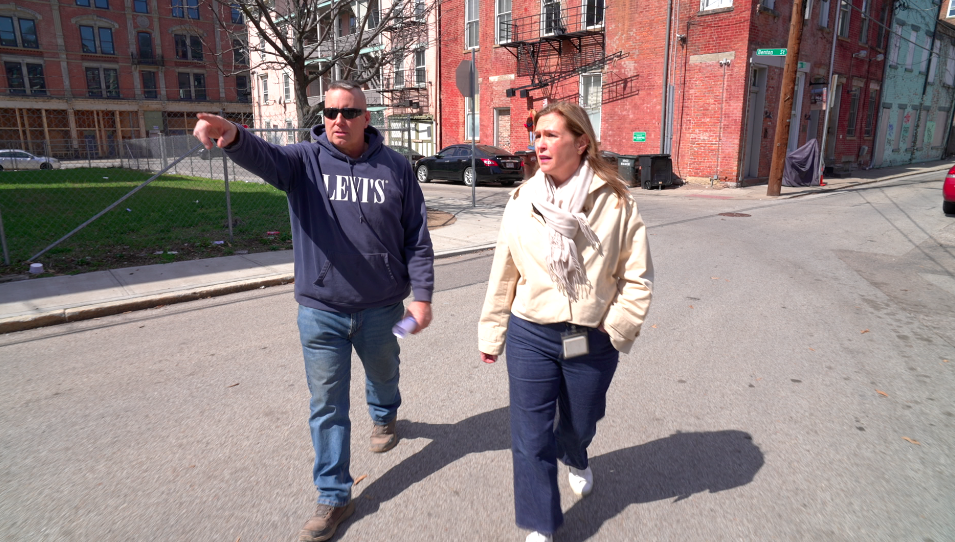
The WCPO 9 I-Team brought their request directly to McGuffey to see if restoring those patrols to Over-the-Rhine was realistic.
“I cannot say they are coming back in the manner that they were way back in 2006,” McGuffey said. “I can say that my intent is to build. The cues I’ve gotten from Cincinnati leadership and Cincinnati PD are very good … and we’re going to continue that.”
The special Over-the-Rhine team consists of four deputies and a supervisor, plus support from the sheriff’s intelligence unit for monitoring, facial recognition and additional information. They are based at the Hard Rock Casino, where supervisors have a place to do their paperwork, McGuffey said.
“We have a drone operator that’s there, also making sure our deputies are safe,” McGuffey said. “So, 10 people in that shift that go out, and we do an 8-hour or a 12-hour shift.”
The deputies on that special Over-the-Rhine team are not pulled from road patrols in outlying townships and municipalities, she reiterated, but instead come from internal teams.

McGuffey said she would like to grow that team, but “money does hold us back. Some of those recruiting issues have to continue to be solved for us to do that.”
If the sheriff’s department resurrected those regular patrols in Over-the-Rhine, the annual cost for 20 additional deputies, plus training and equipment, would be $2.8 million, a sheriff’s department spokesperson said.
If deputies grew their collaboration with police, McGuffey envisioned the two departments training together, building camaraderie and using their connections, “to all row in the same direction.”

“We would have to convince the taxpayers of Hamilton County that it was valuable, that it was something that they want to fund. The county commissioners would certainly have to appropriate that money,” McGuffey said. “Unfortunately, they make tough decisions over there on the budget. But as you ask people to fund things, people find ways to do that because we are delivering a product to them that they know is very valuable.”
County Administrator Jeff Aluotto indicated in last year’s budget meetings that things could get worse this year with the expiration of pandemic relief funds and uncertainty at the state and federal levels. There is a push in Ohio to eliminate property taxes, which could have a substantial impact on funding for schools and law enforcement.
“In all fairness to the county commissioners, this was an endeavor that I did very spontaneously,” McGuffey said. “I didn’t go to the budget meeting and say, ‘Hey, we want to stand up patrol in Over-the-Rhine.’ So, in fairness to them, they weren’t even asked yet.”

A county spokesperson said commissioners set department budgets but do not dictate how independently elected officials run their operations. When the county patrols within the Cincinnati jurisdiction, it is done in coordination with the city and police.
“What we did is we made a concerted effort to clean that up,” McGuffey said. “When I say that, I mean you literally had people standing around the Kroger who would reach out and grab women as they’re walking in. You had open-air drug deals.”

The sheriff billed the city $168,370 for those expanded patrols around Court Street from Aug. 6 to Sept. 5, 2025, “pursuant to Mayor Pureval’s request,” according to a Sept. 17 invoice.
During that month, deputies made 116 arrests on outstanding warrants and 44 stops where drugs were recovered. They confiscated 10 guns and three stolen vehicles. They issued 114 traffic citations and made 38 original misdemeanor and 36 felony arrests, plus 3 OVI arrests.
“One man we stopped, he had an AR-14 on his back seat just lying there on the back seat, plus he had a weapon on him. He’s driving through the area, and he’s DUI, and he’s from Indiana,” McGuffey said. “We stopped people who were driving without a license. We stopped people who were driving without license plates … and we let people know we are going to continue to address it. It’s not a one-time thing.”
The Court Street patrols are continuing, but not daily, McGuffey said.
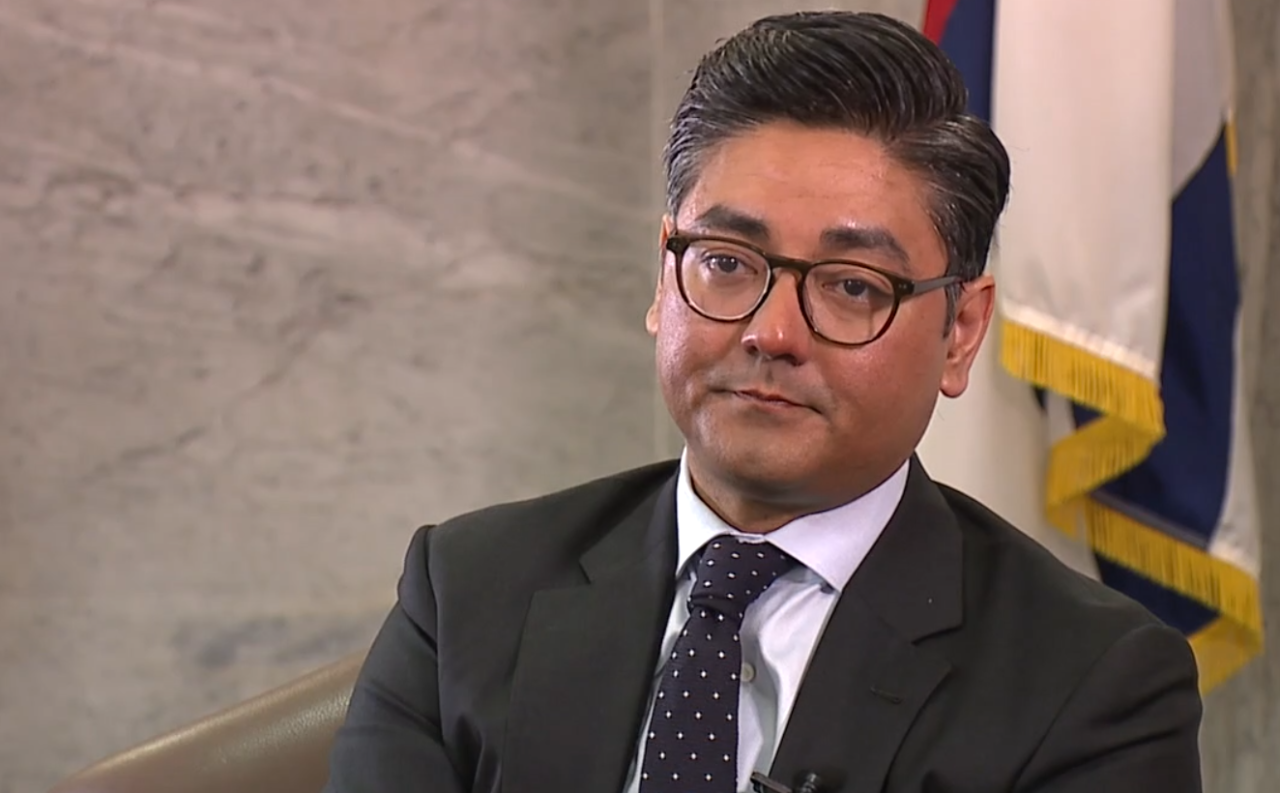
In that Sept. 17 letter and invoice to city leaders, McGuffey suggested using sustained impact patrols, “to reinforce the progress made over the past month, we recommend deploying a sheriff’s patrol team twice monthly … on a rotational schedule. Personnel costs would be billed to the city.”
“We do it in a way that is very staggered, so we don’t create an anticipation of when we are going to be there, but we are actively watching,” McGuffey said. “We have Flock cameras that are there to help us when a crime is committed. We have drones. We have drone operators. We have dogs. We have personnel. We have state-of-the-art technology that we’re using to identify people, and we’re doing quite well.”
Her officers are actively targeting what she described as quality-of-life crimes, such as smoking marijuana openly on city streets.
“You can have police presence all day long but … if you’re not paying attention to those little things and you’re letting all of those things slide … the people that want to create disruption come to know that the police presence means nothing,” McGuffey said.

McGuffey acknowledged that this summer, which typically brings a spike in crime downtown, could be challenging.
“But the residents downtown, and they’ve already told me, people stop me, residents downtown stop me and say, ‘Hey, since you all have teamed up and joined up, things are better, they’re getting better,’” McGuffey said.
An example of that teamwork occurred on Reds Opening Day on March 26, when Cincinnati police requested help from the sheriff’s office to manage large, unruly crowds and fights at The Banks, Over-the-Rhine and downtown.
“Because of that collaboration, our men and women were familiar with supervision and where they needed to go, and what that looked like. They weren’t starting off at the starting block cold,” McGuffey said. “Between our two departments, we pushed those crowds out, and we had minimal arrests. The people who were arrested were super bad actors, and they stayed in jail, and that is something we’re going to reduplicate.”
In that Sept. 17 letter, McGuffey recommended a new quick response team (QRT) to Pureval and City Manager Sheryl Long.
“We remain committed to further discussions regarding a multi-agency QRT composed of four HCSO deputies, one HCSO supervisor, four CPD officers, and four OSHP (Ohio State Highway Patrol) officers. This team would be activated to address urgent public safety concerns across city and county boundaries,” McGuffey wrote.
McGuffey has pledged to help Cincinnati police in any way she can, and said, “Their leadership is absolutely on board.”
“They’ve already dictated to us some of the things we can help them with, and we are creating teams, I can’t tell you everything … but we are anticipating the big events that are going to happen down here,” McGuffey said. “I can’t say enough good things about the Cincinnati police department. They’re on it. They have low numbers too, and we’re going to help them out, and we’re doing that now.”
“We’re transparent, so I hope to get a report card after a few months have passed in the summer season,” said McGuffey. “Let’s see how we’re doing, and then we’ll continue to build on that.”
