



WASHINGTON TOWNSHIP, Ohio — Neighbors of a coal ash landfill near Moscow insist that a foul smell continues to make them sick, despite claims from state and local agencies that the odor poses no health risk.
Now Clermont County officials are set to hire an independent firm to conduct air and water testing near the Washington Township landfill to get answers.
Meanwhile, attorneys for the nation’s leading legal nonprofit, Earthjustice, have spoken to residents about their symptoms and are investigating whether pollution is to blame.
“We do have a lot of friends that have cancer now that we don’t know if it’s related to this because no one will test anything to tell them where it's coming from,” resident Rhonda Brittain said. “So, we don’t know if it’s in our water supply.”
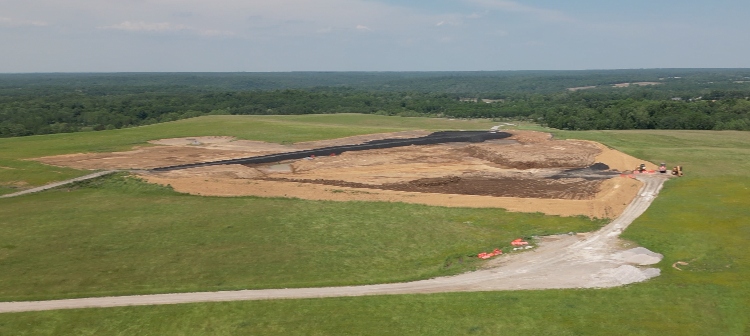
Rhonda Brittain and her husband Brian live across the street from the landfill site, which is owned by Texas-based Vistra Corp.
Coal waste from the now-retired William H. Zimmer plant on the Ohio River is buried at the landfill. It also accepts truckloads of scrubber sludge from the Miami Fort plant in Hamilton County, which Vistra also owns.
The landfill was once a dairy farm. In the mid-1980s, then Cincinnati Gas & Electric Co. converted the Zimmer plant from nuclear power to coal. It began buying up family farms a few miles away to build a landfill for leftover coal ash with a large perimeter around it.
WATCH: Neighbors blame sickness on air, water near coal ash landfill
The Clermont County auditor’s site lists the total parcel size at 1,453 acres, with the landfill surrounded by deep tree cover, which residents and local officials say makes it difficult to know what is happening there.
“When a power plant burns coal to generate electricity, it creates a lot of pollution from what’s in the coal and the burning process ... they have to strip out a lot of that waste, the sulphur, and other heavy metals,” Earthjustice deputy managing attorney for the Midwest Thom Cmar said. “It ends up in this sludge … and in recent years (Vistra Corp.) Dynegy has been dumping that scrubber sludge at the Zimmer landfill site.”
Residents describe the hydrogen sulfide odor from the landfill as a rotten-egg or sewage smell, which is often worse in the mornings and evenings, on weekends, and during rain, humidity and fog.

It can be toxic at high levels, and exposure to low concentrations may irritate the eyes, nose or throat, cause difficulty breathing, headaches, tiredness and balance problems, according to the U.S. EPA website.
“All we can do is follow the evidence and see where it goes, but there are reasons to be concerned that the waste that is being dumped at the Zimmer site is not being handled up to the higher standards,” Cmar said. “Moscow is a rural area. It’s not a high-income area. The people who live there are not people who have a lot of political or socioeconomic power, and I don’t think that’s a coincidence.”
Residents have complained about the smell for years and believe it causes them to have intense nausea, diarrhea, stomach problems, headaches, breathing issues and rashes.
The WCPO 9 I-Team first reported on the stench in 2023, after residents closed house windows, abandoned porch sitting and avoided driving past the landfill.

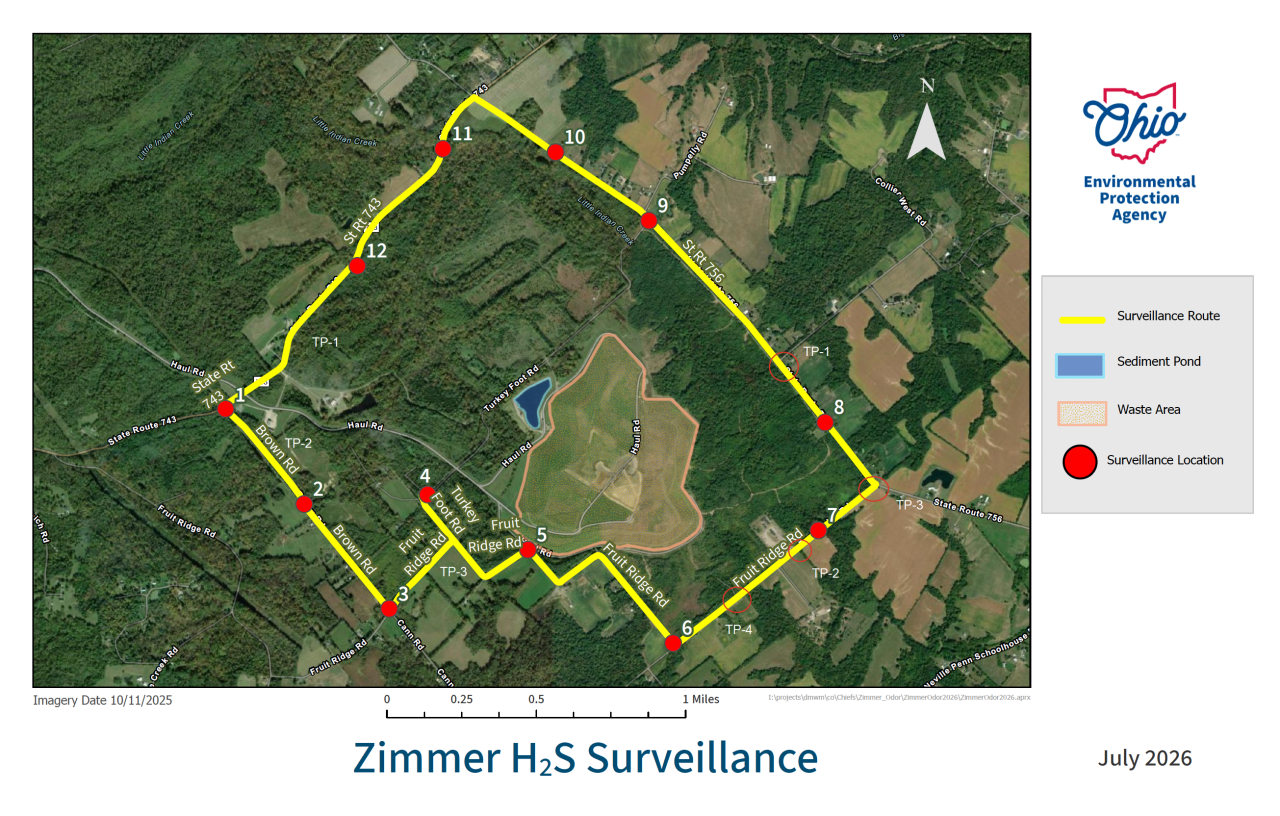
The I-Team reported on the odor again last May, after residents complained the smell had worsened. That prompted the Ohio EPA and Southwest Ohio Air Quality Agency to conduct testing around the landfill this summer and fall.
Air testers drove around the perimeter of the site during weekday work hours to monitor for hydrogen sulfide and noted occasional faint sulfur odors, according to their reports.
Afterward, the Ohio EPA consulted with the Ohio Department of Health, which determined the odor did not pose a health concern.
But many complained the testing wasn’t done properly.
"They are coming at the exact opposite time that any of us have told them that the smell is so overwhelming,” Rhonda Brittain said. “And where they’re going to is not where anyone ever smells it.”
Cmar agreed and questioned whether the state and local agencies had tested properly.
“They’re sending people out during the day to essentially just drive around the perimeter of the landfill … and they’ve been testing in the middle of the day despite the fact that a lot of the local residents have been saying that on nights and weekends and other times is when the smell is the worst, and when they experience the worst health effects," Cmar said.
Even local officials appeared to be unsatisfied with these test results.
Clermont County Commissioner David Painter said the county’s air quality team met last Friday and decided to hire an independent contractor to do “more robust” air and water testing near the landfill.
“We’ll try to gain samples obviously late in the evening and through the night and during the morning hours and afternoons. We’ll take samples … so we can get a better represented look at what those levels really are,” Painter said. “I want to get to the bottom of it too; this has been a long time.”
But residents want the air and water testing done at the landfill site.
The Washington Township Board of Trustees sent Vistra a letter in September requesting access to the landfill to take water samples, but a Vistra spokesperson declined.
“While we understand the request, the property is an active, working landfill, with ongoing operations and protocols designed to maintain safety and compliance. Therefore, we cannot provide third-party access to the landfill property for independent sampling,” corporate affairs manager Caroline Atkins wrote on Sept. 21 to the township.
The Ohio EPA took a water sample from Little Indian Creek near the Brittain’s property in September, and a spokesperson said, “All results show water in the creek meeting state and federal water standards.”
But Cmar questioned why the OEPA tested so far downstream, roughly one mile away from the potential source of contamination.

“Even that test showed slightly elevated levels of sulfates, magnesium, and calcium. These are chemicals that we would associate with scrubber waste,” Cmar said. “By the time it’s gotten a mile downstream, and gotten to that point, it’s probably been pretty heavily diluted.”
Cmar would like to see the Ohio EPA do additional testing, much closer or at the landfill.
“That would be our primary area of concern ... testing that creek and getting a better picture much closer to the source. Is there evidence of pollution getting into the water?” Cmar said. “At high enough levels it certainly could be dangerous to aquatic life and to people for sure.”
The Zimmer landfill was originally constructed on top of Little Indian Creek, at the headwaters, where it flows downstream into the community, Cmar said.

“If there aren’t adequate protections in place to keep the waste away from the groundwater near the creek or if there are spills directly into the creek itself, that could mean pollution is entering that creek and heading downstream,” Cmar said.
The Brittains also discovered, through making public records requests to Washington Township, a monitoring test conducted by the U.S. EPA at the landfill in 2017.
The U.S. EPA found hydrogen sulfide at the Zimmer landfill at levels high enough to create a potential “acute human health hazard.” According to an email with the study, those high levels were not present off-site; however, the U.S. EPA noted it was only a snapshot and could change under different conditions.
Cmar is not aware of any action taken by the state or federal EPA following those 2017 findings, or subsequent monitoring studies.
“Look at their 2017 air testing; it was high, and then they just did nothing,” Brian Brittain said.

A Vistra spokesperson said the company is continuing to manage and mitigate odors at the site. It has made many upgrades to pond aeration systems, carbon filtration systems and perimeter air neutralization.
Ohio EPA inspectors visited the Zimmer landfill May 12. They said the company had isolated the odor source to a pipe that carries leachate from an older section of the landfill where the material includes flue gas desulfurization waste, and the smell is not coming from the Miami Fort material.
Vistra also created a website with more information about the Zimmer landfill, including a section about what material is being transported from Miami Fort.
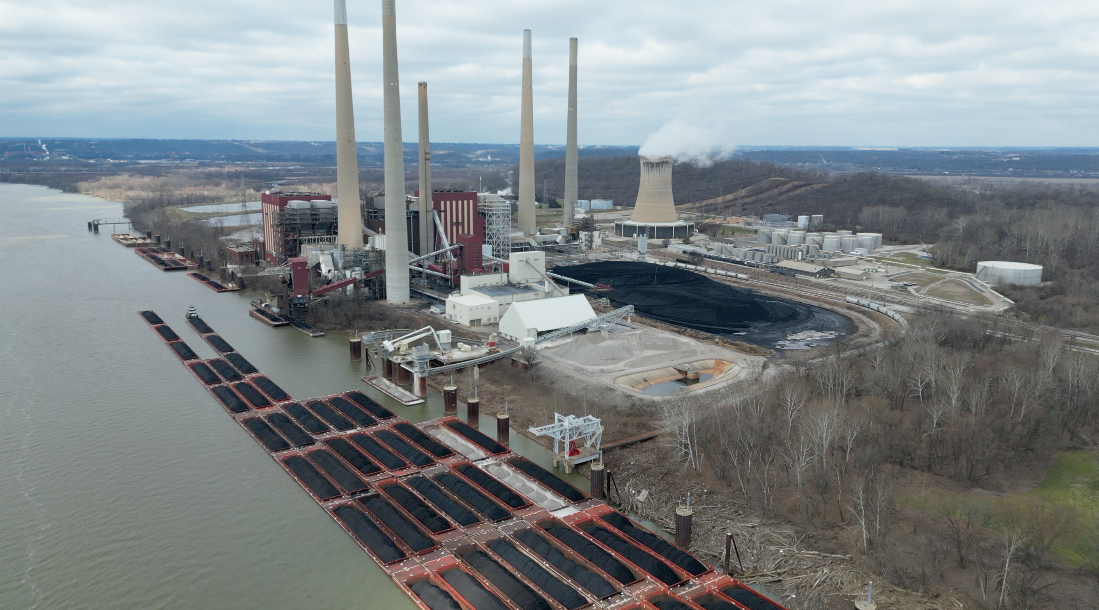
“Older landfill sections include a mixture of fly ash, bottom ash, and stabilized FGD byproducts, among other materials associated with coal-fired power generation. Newer landfill sections include stabilized FGD byproducts, along with inert (non-hazardous and odorless) material from the nearby operational Miami Fort Power Plant … No coal ash is currently transported from the Miami Fort facility to the landfill,” according to the website.
Vistra’s subsidiary, Luminant, also has a website with groundwater testing reports. It shows that lithium was most recently detected at significant levels above groundwater standards during monitoring in August and February 2026.
“They have no financial interest, they have no stake in this community … and no particular reason why they will do more than the bare minimum unless someone tells them that they have to do more,” Cmar said. “There is certainly a potential for folks who live near the facility to be considering a lawsuit if the evidence shows there are high levels of pollution that are entering the water and the air at the site.”
Painter, who recently toured the landfill with Ohio Rep. Adam Bird, also believes that Vistra could do more to mitigate the odor.
“I believe that smell could be engineered away and not be nearly as detrimental to the citizens that are around. In fact, Rep. Bird asked Vistra and the engineers that were on site at the time to actually prepare a cost for a project like that, but I’ve talked to him recently, within the last week, and he has not heard back from them,” Painter said. “So he is willing to take a look at that for possible capital funding if they bring that forward.”
