

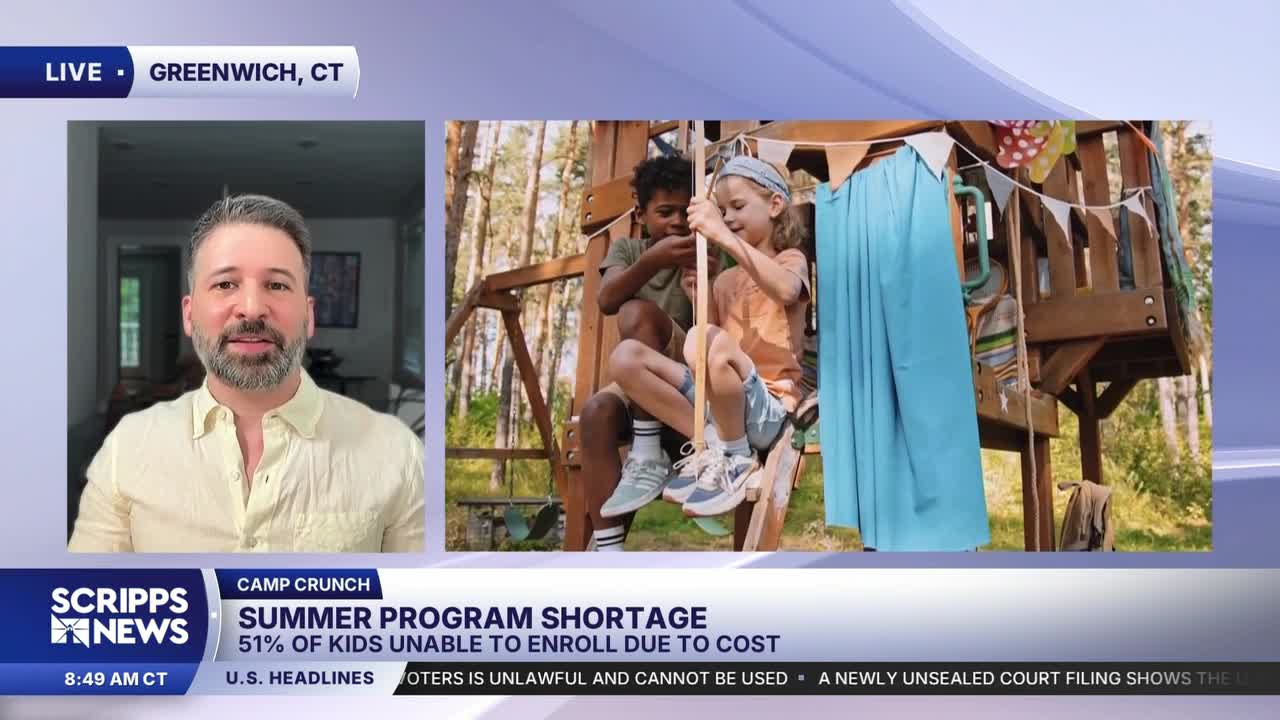


For many students, summer break can mean falling behind academically and missing out on other opportunities that help build confidence and social skills.
Aron Boxer, founder and CEO of Diversified Education Services, said transportation and cost are among the biggest barriers keeping families from accessing summer learning programs.
“The summer learning gap really does happen because there is, as you mentioned, there's a transportation problem, there's a cost problem, and basically the affordability comes down to the cost of things,” Boxer told Scripps News.
IN CASE YOU MISSED IT | How to stay healthy while traveling this summer
Boxer said the issue disproportionately affects lower-income families, even though many parents want the same opportunities for their children.
“There are 24 million children, and many of those parents want a summer program, but only about half will actually be able to go,” Boxer said. “And it's not random. It does track along income lines.”
Boxer said about 1 in 4 children from middle-income families participate in summer programs, compared with about 13% of children from lower-income families.
RELATED STORY | Summer vacation feels out of reach for many Americans. Here's how to save
Educators often refer to summer learning loss as the “summer slide,” when students lose some of the academic progress they made during the school year. Boxer said summer also plays an important role in helping children develop outside the classroom.
“It's where the school year teaches kids what to know, and then the summer then teaches them who they are,” Boxer said.
For families who cannot afford traditional summer camps, Boxer recommended starting with local and nonprofit options, including YMCAs, YWCAs, Boys & Girls Clubs and parks and recreation programs. Many offer sliding-scale pricing or financial aid.
