



CINCINNATI — For generations, the twin spires of St. Francis Seraph Catholic Church have been a landmark on the corner of Vine and Liberty streets. But this historic Over-the-Rhine church is set to close with a last Mass on June 28.
“I think there will be a real void in people’s lives here in the neighborhood, whether they are Catholic or not. Even the people on the streets, when they heard this church was closing, they just couldn’t believe it,” said Brother Tim Sucher, who has been at St. Francis Seraph for 21 years. “It’s extremely sad when you think the Franciscans have been on this corner for 166 years.”
St. Francis Seraph Church, with its basement crypt and adjoining friary where 40 friars once lived in dormitory-style rooms cloistered from the outside world, will be sold.
WATCH: The history of St. Francis Seraph
But the St. Anthony Center next door to the church will remain open to provide meals, foot care and other services to the homeless, according to a Franciscan province spokesperson.
Across the street from the church, the St. Francis Seraph School will stay open as an elementary school and is accepting students for the 2026-27 school year, according to its website.
“The Franciscans are not giving up on Over-the-Rhine, and we will continue to support the ministries that are here that reach out to the people in the neighborhood,” Sucher said. “We are not leaving here because of the neighborhood or the people around here.”

The WCPO 9 I-Team previously reported on extensive issues surrounding the church, including large crowds gathering outside, violent crime and open-air drug dealing. Its tree-shaded plaza became synonymous with parties, huge crowds and free food giveaways — especially in the summer months.
In response, the church put up ‘no trespassing’ signs, surveillance cameras, and hired security guards to clear out crowds before visitors arrived to see the Christmas displays last year.
But the crowds and the crime are not the reasons for the church’s closure, Sucher said.

“Probably the number one reason is that we do not have the friars to staff the place anymore,” Sucher said. “The secondary reason is we don’t have the funds anymore, the resources, to keep up the maintenance of such large buildings anymore. It’s not only happening here, it’s happening with the Franciscans across the country, where places are closing.”
The friary has been largely vacant for two years, with Sucher the last to live in the building, alone for six months before he moved.
But parishioners said their beloved St. Francis Seraph Church didn’t suffer from a lack of attendance, and was a growing, vibrant parish with full pews on Sundays.
“On a Sunday, any given Sunday, there are folks from all over the city that drive past numerous churches to get here to worship as a part of this community,” said parishioner Jill Collet-Riester. “For me this isn’t just a place, this is place where church becomes a verb.”

She described a church with preaching related to real-life topics, where parishioners knew one another intimately and had “an element of radical hospitality,” while practicing their faith and commitment to social justice issues.
“They’re welcoming, but in like an aggressive way … They’re worried about you and how are you doing. Celebrating your birthday. How was your week? Really curious about your life, day to day, and making sure that you’re doing okay,” said parishioner Gregory Hyland.
Both Hyland and Collet-Riester said they will attend St. Clement Catholic Church in St. Bernard, where the two friars from St. Francis Seraph, Sucher and Fr. Al Hirt, will be reassigned, and where Hirt is now pastor.

But others will switch to different churches, such as Greta Benton, who has been a parishioner for 62 years. She plans to attend the Cathedral Basilica of St. Peter in Chains downtown because it is closer to her home, and at age 90, she no longer drives.
“When we first started coming to St. Francis, women when they came in the door, had to have their heads covered. That’s a long time ago,” Benton said. “Leaving this building is going to be like losing a very good friend.”

The history of St. Francis Seraph
In many ways, the history of this church is the history of Cincinnati.
St. Francis Seraph Church was erected on the site of the oldest Catholic Church in Greater Cincinnati. It was a simple clapboard church built by Irish immigrants in 1819 in honor of St. Patrick, when north of Liberty Street was considered outside of the city limits.
Parishioners later moved that church, known as Christ Church, several blocks, but the cemetery remained.

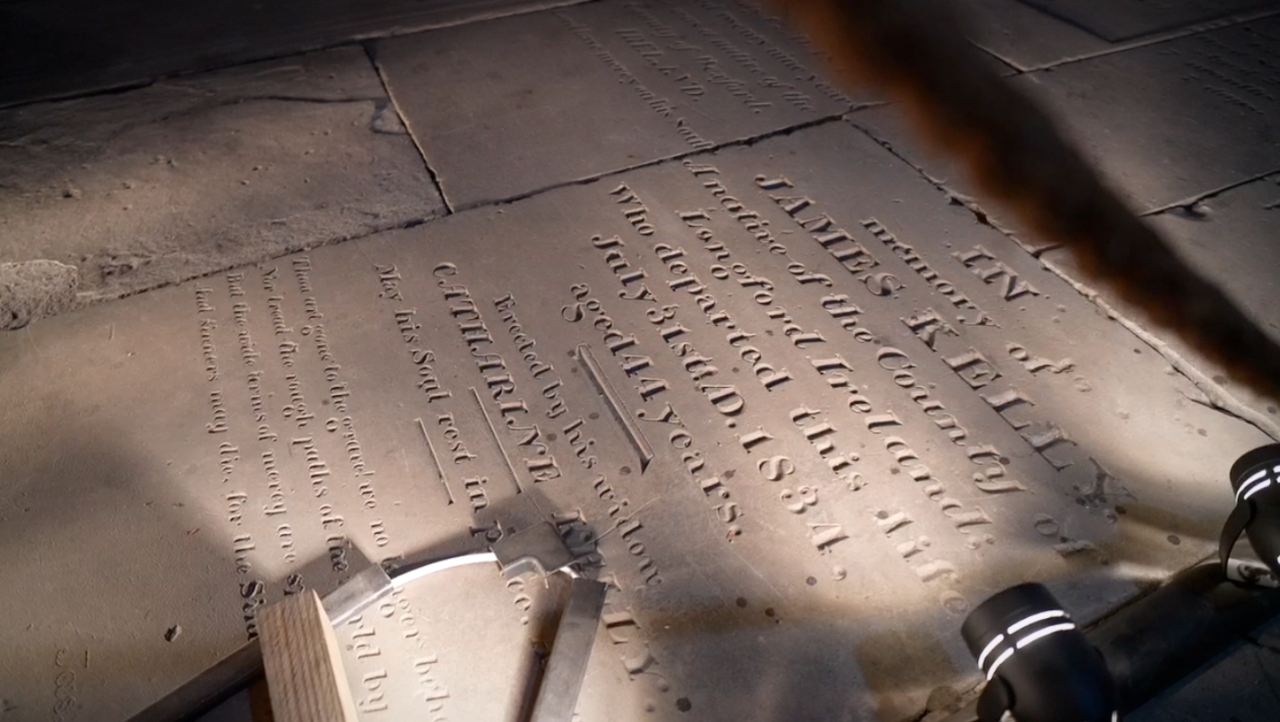
Decades later, when the Franciscans chose that site for the location of St. Francis Seraph, the burials in the cemetery had to be removed. Some chose to have their loved ones reburied under the altar of the new church and their gravestones were laid on the floor of the burial crypt.
That crypt was hidden from the public for more than 100 years while the friary was cloistered until the 1970’s. It later became a popular stop on the American Legacy underground tour of historic downtown sites.
“We have evidence of the tombstones we can see down there of 41 individuals,” Sucher said. “Now it’s my belief that we’re going to find more, because some of the tombstones are facing downward and when we start bringing them up, I think we’ll find more.”
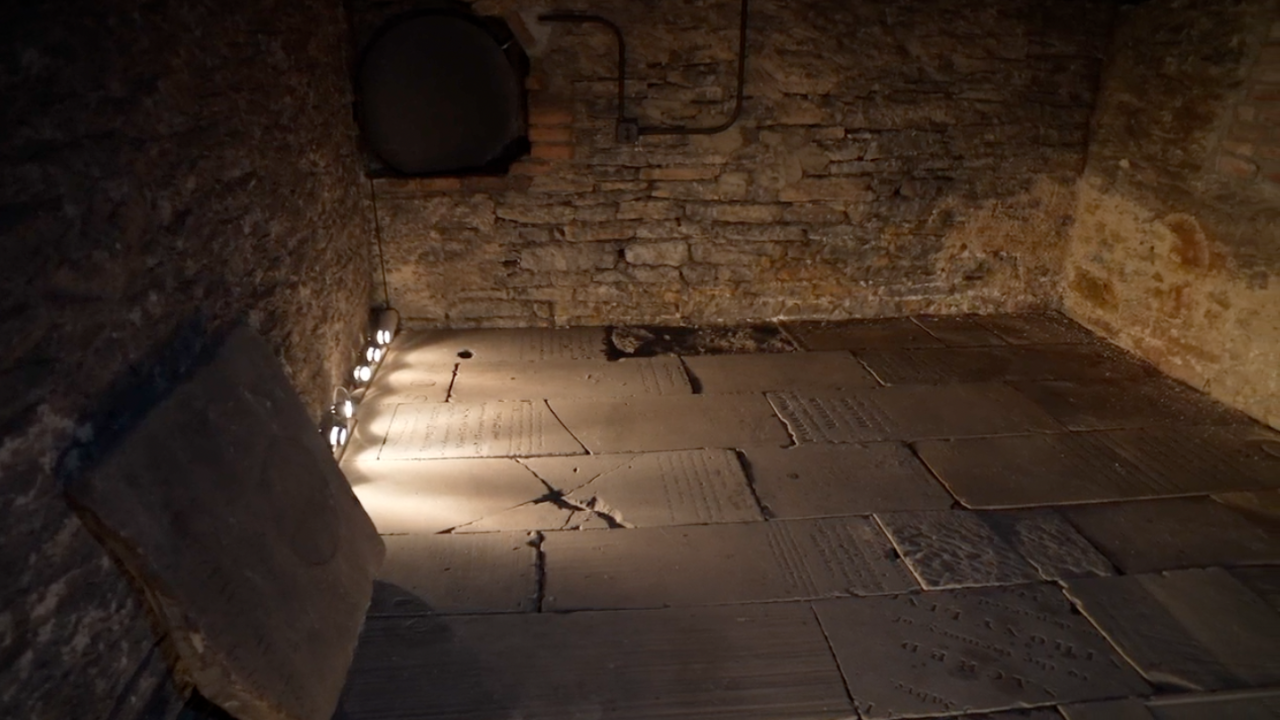
Sucher is overseeing the removal of the burials inside that crypt with a team of historians, anthropologists and Archdiocese of Cincinnati leaders. The remains will be reburied in local Catholic cemeteries.
He’s also overseeing the removal of historic artwork and sacred relics. The church has its original painted glass windows and a large pipe organ in the choir loft. Some paintings of Franciscan saints date back to the Civil War. Sucher discovered them in the attic and raised enough money to have them cleaned and repaired, and they now hang in the church.
The Franciscan friars arrived from Austria to minister to the growing German population in Over-the-Rhine when German-speaking priests were needed. In November 1858, they laid the cornerstone and then consecrated St. Francis Seraph Church a year later in December 1859.
Sucher said the Franciscans spent generations serving the people who lived here: first German immigrants, then Appalachians who moved here when the coal mines closed, and now the neighborhood is predominantly African American.
“They started a school. They started a publication, the St. Anthony Messenger, which was originally in German,” Sucher said. “They reached out to the needs of the people, and the people that were living in this area were generally poor.”
Baptismal, marriage, and death records dating back to the mid 1800s are still stored in a walk-in safe in the friary. Many were handwritten in German.
Sucher gave WCPO a tour of the church, including the attic where German workers installed massive wooden beams without the aid of modern machinery, and where the circular skylight above the altar is visible from its highest point.
“The entire building is poured concrete, including the roof,” Sucher said. “It’s built to last, so those old Germans knew what they were doing back then.”
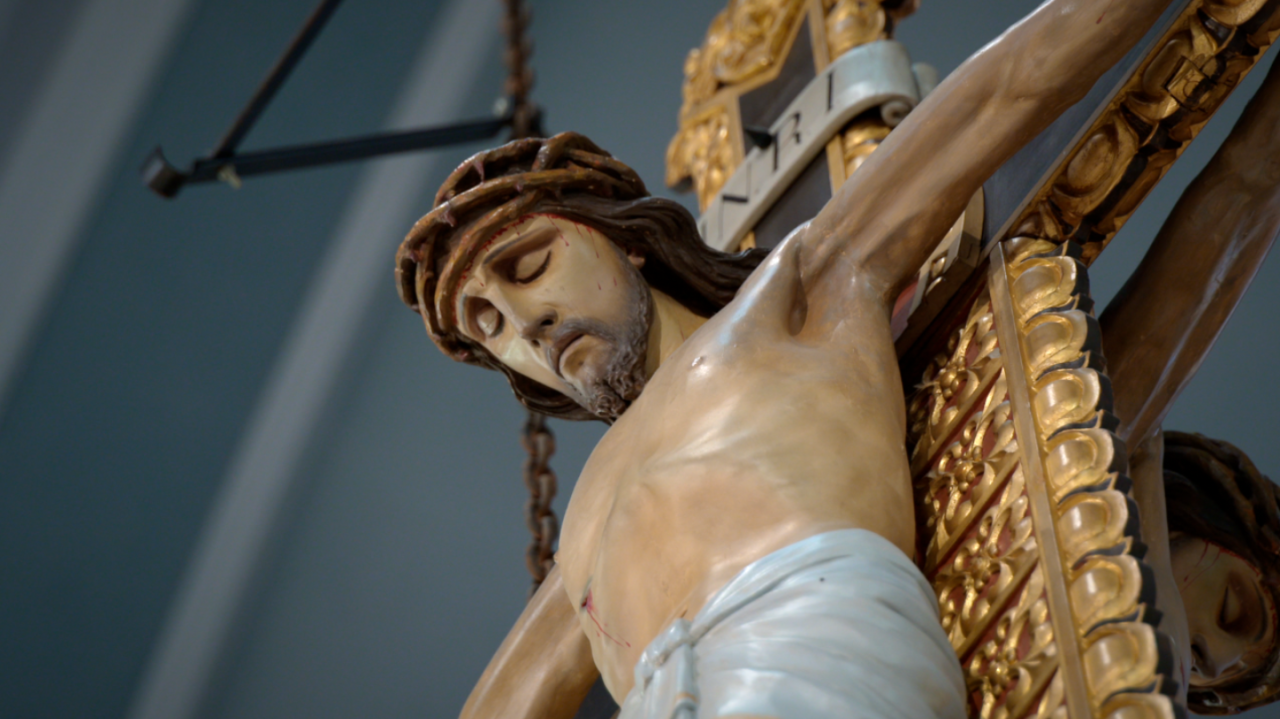
He pointed out the double-sided cross on the altar, so it could be visible to parishioners in the front of the church and to friars who once prayed in wooden seats behind the altar in a hidden friar’s choir.
“This wasn’t for a singing choir; this is for the friars to come together and pray to the divine office together several times a day,” Sucher said. “Up until probably the mid to late 70s, nobody ever, none of the congregation ever got back here. Because our houses were cloistered.”

The friary was added in 1906, and the building was connected directly to the church. Sucher showed WCPO the floors of empty rooms and community spaces, including a large dining room with long wooden benches that reminded him of a Harry Potter movie.
“See these benches around, they only sat on one side of the table,” Sucher said. “You started with the superior up there and it went down to the lowliest person in the house, and they all sat on one side of the table.”
One courtyard is hidden within the friary, and the second is open at the front of the church. Both are filled with large trees, goldfish ponds, mulched flower beds, and peaceful sitting areas. Sucher spent years transforming these once-ignored spaces into beautiful gardens, and he joked that he was getting too old to spread mulch anymore, so it must be time for him to move to a new church.

“This front courtyard, I wish you could have seen it when I first came here, it was like a desert out there. Nobody had maintained it. Over the years, I’ve worked really hard to make it a lovely garden,” Sucher said. “I sit out there every morning and have coffee during the summer months and just enjoy the beauty that’s out there.”
The front courtyard is where the parish hosted a life-sized nativity scene with live animals during the Christmas season.

Sucher is unsure about the fate of those traditions when he moves to St. Clement Church.
“They’re all packed up, ready to go, but I don’t have a space yet,” Sucher said. “I’m going to a new place, and the last thing I want to do is demand anything. So this next year I’m taking a break, or maybe a break.”
“It will be displayed again, just maybe not this year,” Sucher added.

What will happen to the church?
A spokesperson for the Franciscan order did not answer questions from WCPO about a potential buyer for the church and friary, its possible future uses, or a sale price. But did provide a written statement about the church history and role in the city.
“We recognize that this transition may be difficult for many in the Cincinnati community, given the deep and cherished history of St. Francis Seraph Catholic Church and the longstanding presence of our friars. While this transition marks a change, it does not diminish the friars’ ongoing commitment to the people of Cincinnati,” spokesperson Kerting Baldwin wrote in an email to WCPO.
The Franciscans nearly sold the friary in 2024. The nonprofit Tender Mercies and Urban Sites wanted to convert the friary into affordable housing for homeless adults with mental illnesses.

Many neighbors opposed the controversial project, and it fell through after the Ohio Housing Finance Agency denied its application for low-income housing tax credits.
Sucher and others would still like to see the friary used for a similar purpose.
“I would like to see something that is in keeping with our Franciscan charisma. It would be great if the friary could be turned into low-cost housing, or housing for senior citizens,” Sucher said. “What you would do with the church building, I don’t know. Not a brewery. I would like to see it used for the good of the people. I don’t want to see it sit here and just decay.”

Some parishioners originally thought the friary would be sold, but not the church. But Sucher said that could have been difficult.
“One of the difficulties here is that the utilities of the church are so intermingled with the friary that it is almost next to impossible to separate the two,” Sucher said.
Whatever happens to the church and friary, parishioners want them to remain a landmark in Over-the-Rhine and not be demolished or left vacant.
“I hope that they put something in here that’s important to the area,” such as a museum, suggested parishioner Greta Benton.
“We hope for the best for the buildings themselves, that they continue to stand as a testament and a memory to all that happened here,” said parishioner Jill Collet-Riester.
Note: Archbishop Robert Casey is set to preside over a homecoming Mass at 10 a.m. on Sunday, June 21, to welcome those who would like to celebrate before St. Francis Seraph Catholic Church closes. A final Mass for parishioners is set for June 28.
