



CINCINNATI — Honeybee enthusiasts are concerned about hives in Hamilton County, which is one of only five counties in Ohio that has refused to appoint an apiary inspector for more than a decade.
Commissioners cut the part-time job many years ago and have declined to bring it back, despite having 204 registered apiaries in Hamilton County. That means there is no paid local inspector to ensure that hives are free from diseases, pests, and parasites and that queen bees are healthy enough to sell.
“The most important thing is monitoring the health of the colonies in the county because we have some very contagious diseases that can be passed around very quickly that can kill colonies very quickly,” said Robin Sizemore, the apiary inspector for Brown and Clermont counties, who said some of the biggest worries are the parasitic Varroa mite and the highly contagious American foulbrood disease that spreads by spores.

“Bees can fly two miles … so if somebody is carrying that spore and they go two miles away to another colony, then you’ve just infected another apiary,” Sizemore said. “Having someone trained and knowing what those diseases look like … but also how to get rid of pests, tips you can do to prevent pests and other secondary pests from getting into your beehives.”
Apiary inspectors are appointed and paid by county commissions. They share inspection reports with the Ohio Department of Agriculture, which described them as "a crucial component of the current program by providing hands-on interaction with beekeepers ... County apiary inspectors increase the likelihood that the bees required for pollination are disease and pest free."
WATCH: Why doesn't Hamilton County have an apiary inspector?
Sizemore said Clermont County is very clean of mites, diseases, parasites and infections because it’s had an active apiary inspector for more than 20 years.
Not only has Hamilton County lacked an apiary inspector since at least 2015, but bee enthusiasts there also worried about a decreasing bee population.

“We were down on our count for the population of bees in Hamilton County and in this area, so that’s why they were encouraging people like me to say ‘yes’ and put a hive in their yard, and then to take care of it,” said Hamilton County Commissioner Denise Driehaus. “People are worried about this — the bee population in decline — and what that means for our food source.”
Driehaus is a licensed beekeeper and as part of the Queen City Pollinator Project, she has kept a beehive in the backyard of her CUF neighborhood home for several years. Her neighbors have planted pollinating flowers and put out water sources to help support the bees.
“We’re in a community here raising these bees together,” Driehaus said.
Driehaus has tried to get county funding for an apiary inspector since she took office in 2017. She said the part-time position would cost the county as little as $10,000 a year, and she plans to ask for funding again this year.
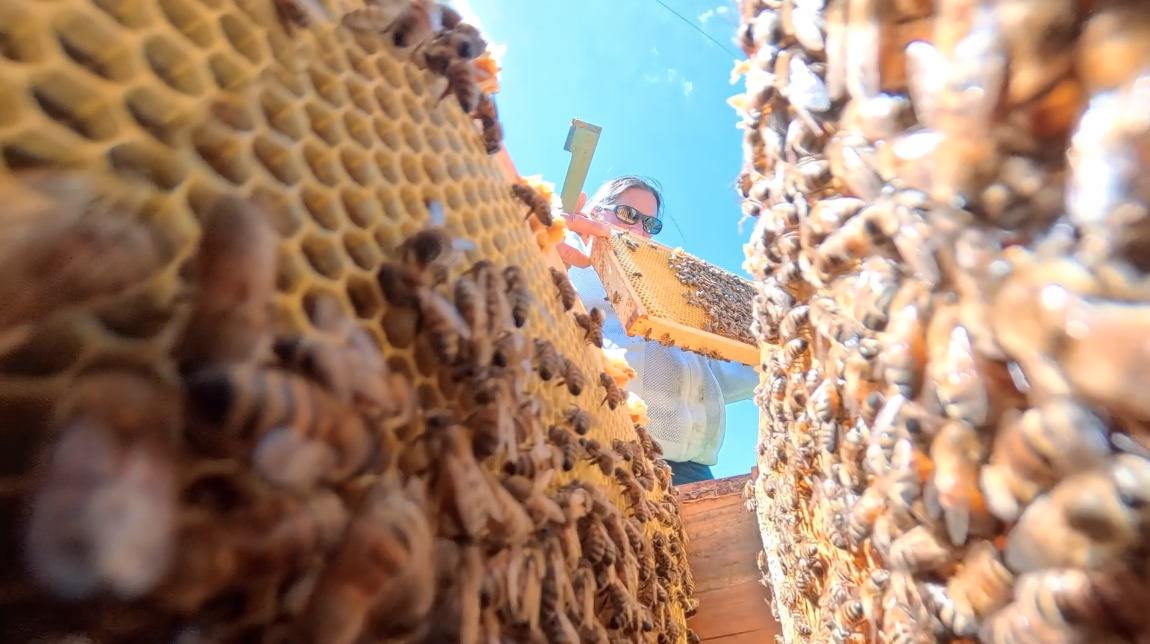
“I realized we didn’t have an apiary inspector, and so I went to the administrator and said, ‘Hey, what’s going on here?’ and he said it was a budget cut. Not so long ago, we were in really tight circumstances … and so they cut this,” Driehaus said. “This is such a small expense that I feel like we should support that. So, I offered it a couple times in the budget cycle. I didn’t get support for it, and that’s why we don’t have one.”
Sizemore earns $20 to $25 per hour, depending on whether she’s working for Clermont or Brown counties. She expects to inspect more than 500 colonies in Clermont County this year, which has a $7,000 annual budget for its apiary inspector. She’ll also travel across Brown County to meet new beekeepers since it is her first year working for her home county as an inspector.
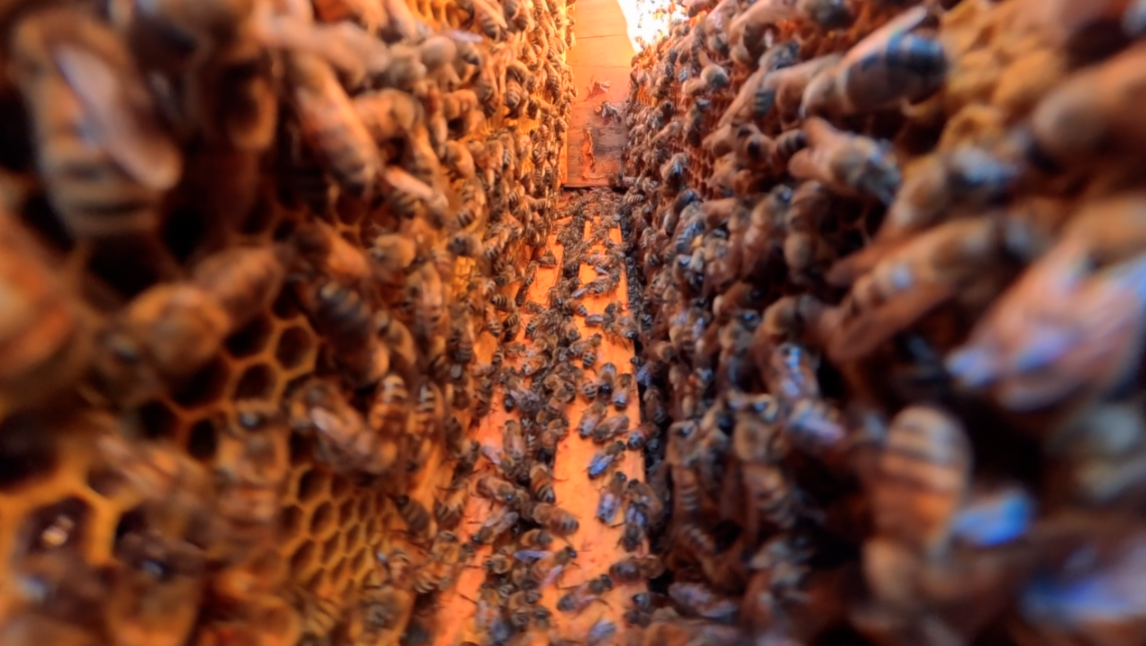
Sizemore lives on a Sardinia farm and has 14 bee colonies. She also sells honey and breeds queen bees for peaceful personalities that translate into calm hives.
“I enjoy meeting and talking to the beekeepers and helping as much as I can,” Sizemore said. "So many people, especially beginner beekeepers, they have so many great questions … so when I come out or when any apiary inspector comes out, it may be the only time throughout the year they get to speak with someone with knowledge to help them.”
Only one colony, or family of bees, was inspected in Hamilton County in 2025, despite having more than 200 registered apiaries, or bee yards, according to the Ohio Department of Agriculture.
Ohio law requires queens and bees to be inspected before being sold. In a county without a designated inspector like Hamilton, those inspections would have to be done by the state apiary inspector or one from a neighboring county, despite their own heavy workloads, Sizemore said.

The honey industry is substantial in Ohio, with 1.25 million pounds of honey produced in 2024, according to the U.S. Department of Agriculture.
The texture and flavor of honey change throughout the year, becoming deeper and richer in the late summer and fall. The types of pollen also impact the flavor. During one season, Driehaus said her honey had a slight mint taste because her bees spent so much time at flowering mint plants.
Jenny O’Donnell co-founded the Queen City Pollinator Project in 2019, in part to encourage more beehives in urban areas, such as the two hives now located on the grounds of the Cincinnati Art Museum.
O'Donnell is working with the city of Wyoming to plant native pollinating flowers and bushes in a public park and encouraged College Hill to add flowers to their public planters and hanging baskets that would attract bees.

“I think it’s the right thing to do, I think it’s the smart thing to do,” O’Donnell said about restoring the apiary inspector position to Hamilton County. “You could infect the whole industry quickly … we could wipe out the honeybee population and our native bees in the same way … to get our own apiary inspector would really help.”
If the Hamilton County Commission agreed to fund an apiary inspector, O’Donnell said it would be easy to find someone locally to take the job.
The bee season in Ohio began early this spring and will ramp up as more flowers, trees and bushes start to bloom. Queen bee inspections are usually done in the spring, and hive inspections occur mostly in July and August. The season ends here on Nov. 1.
“They’re just so fascinating, so relaxing and calm,” Sizemore said. “Watching them and learning about them and seeing what’s going on inside the boxes ... once you get them big and healthy, you start being able to harvest your own honey, which is sweet goodness.”
