



CINCINNATI — Cincinnati has the best-tasting water in Ohio, and perhaps the nation.
The Greater Cincinnati Water Works won the American Water Works Association statewide competition last August and is set to compete nationally in June before a panel of skilled water tasters.
The WCPO I-Team toured the water treatment facility and historic pump station with Jeff Swertfeger, superintendent of the Water Quality and Treatment Division. He leads a team that produces and delivers award-winning drinking water for over 1.1 million people in the Cincinnati region.
WATCH: We learned how Greater Cincinnati Water Works makes the best-tasting water in Ohio
After 33 years, Swertfeger is set to retire Jan. 16. The following is an excerpt from our Dec. 4 interview. Some answers were shortened for brevity.

Q: Describe the water that Cincinnatians drank back in the 1800s before this treatment plant.
A: As we grew up as a city in the 1800s, we didn’t do anything to treat our water. We brought the water in directly from the Ohio River. There was a pump station, you can still see the shell of it … near the Montgomery Inn. We were bringing the water in from the river, not doing anything with treatment, and we’d pump the water up to some reservoirs and let it flow by gravity down to the city.
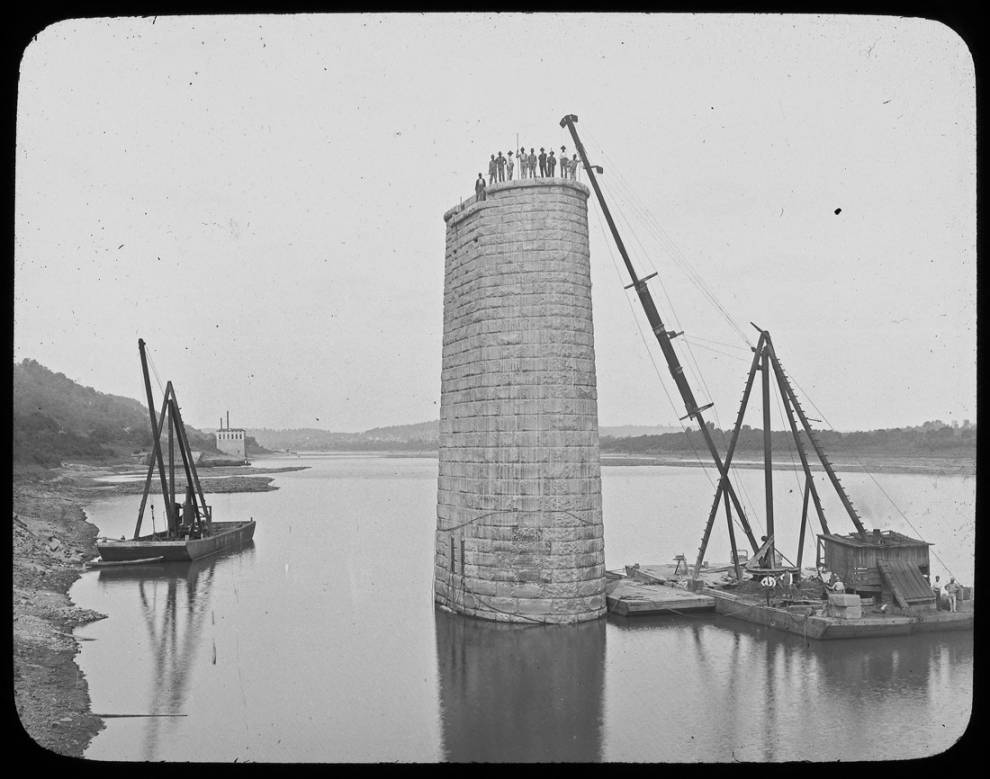
At the same time, you had cities like Pittsburgh upstream from us that didn’t do anything to treat their sewage. So essentially, their raw sewage was going into the river, and then two weeks later, we were drinking it ... As a result of that, we had a lot of water-borne disease around the city … in the early 1900s up until about 1907, we saw thousands of cases of typhoid and hundreds of people dying from this one water-borne disease every year. Then, as soon as we opened up our treatment plant in 1907, we saw the impact … where the cases dropped dramatically and so did the number of deaths. Then, when we started disinfecting the water, we really eliminated water-borne disease here in Cincinnati … we also had cholera, dysentery ... before we started treating our water.

Q: How is this water treatment plant different from others across the country?
A: First, this is probably bigger than most of the treatment plants in the country. Most of the treatment plants in the country will do something like the filtration, and then they’ll stop treatment … In the 1970s, here in Cincinnati, we were affected by a couple of very large spills of chemicals on the Ohio River. These spills made their way down the Ohio River, got into our drinking water and made us realize how vulnerable we were.
That put us on a decade-long search for the best technology to use to address chemicals ... we came up with the best solution … activated carbon … this is a coal that’s been crushed up and then baked up to about 1,600 degrees. What that does is make this material very sticky to chemicals. We take that activated carbon, put it into a filter and run water over it. The chemicals will stick to the activated carbon. When you get the water out of these filters, the chemicals will be gone.

Q: How do you disinfect the water?
A: One of our first disinfection steps is actually using UV lights … we designed this specifically for a very hard organism to kill, which is called cryptosporidium. The UV goes in and hits its DNA, and it kills it, or hurts it enough so it won’t cause any disease anymore … and there’s another one called Giardia.

Q: Is this unique to Cincinnati?
A: Other plants are starting to use this; we’re one of the largest installations of this, though.
Q: Do other cities look to your operation for ideas or as a model?
A: Yes, absolutely. In fact, this week we had two other utilities, one from Colorado and one from Miami, come through this plant to look at our activated carbon. They’re thinking of doing something like that; they wanted to see how we do it here ... Just recently, we hosted a group from Korea as well.
Q: How do you monitor what’s in the Ohio River?
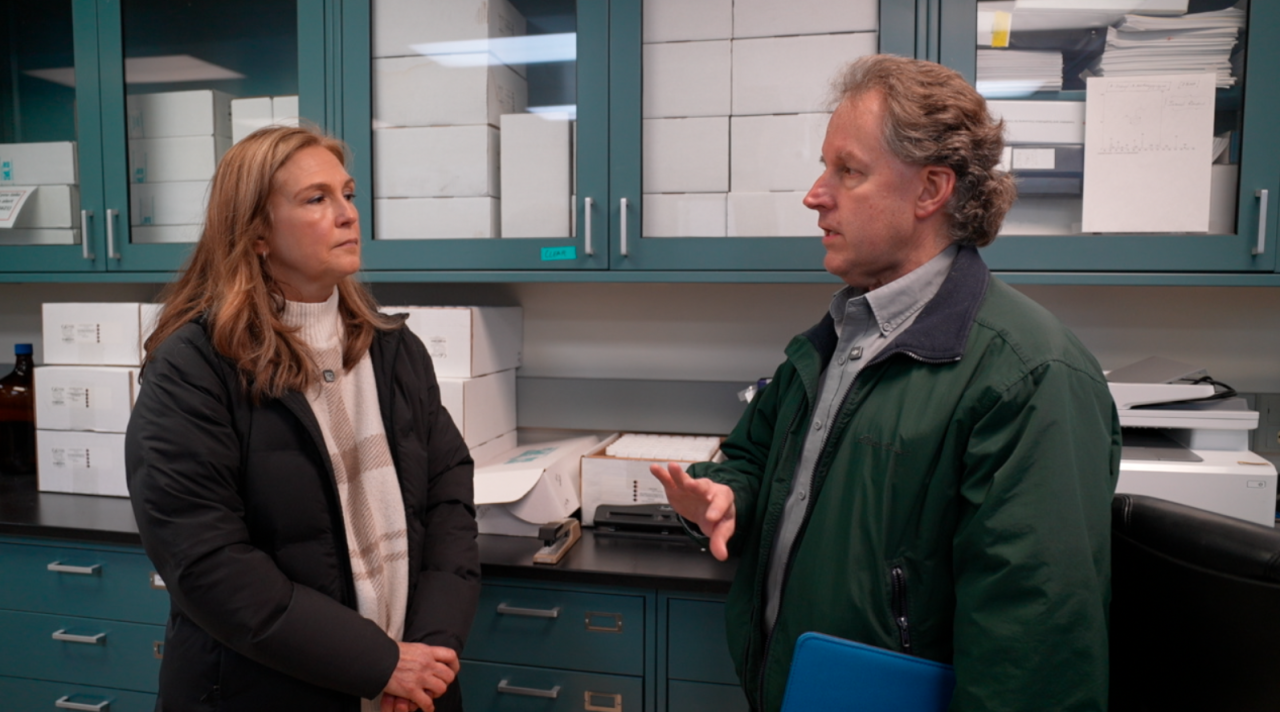
A: We have a world-class drinking water laboratory. When something happens on the Ohio River, they look to us to help out and figure out what’s going on. In one of our laboratories, we do what is called organic analysis ... for the industrial chemicals and spills. That machine over there is what we use to look at the PFAs or the forever chemicals … one of these machines is hooked up to the Ohio River directly, so every couple of hours, it takes a sample. It’s easy if we know that there is a spill in the river, somebody has reported it or somebody has detected it, and we can take action. But ... if something is not reported and we don’t know about it, we need to be able to catch it.
Q: You were here during the diesel spill up at (Duke Energy) Beckjord (in 2014). What was that like?
A: It was very early in the morning, there was about 10,000 gallons of diesel fuel spilled into the Ohio River … we had been working with industries very close to us on the river, and they were one of them, and we told them if you ever have a spill, give us a call so we can take action. They did exactly that … We immediately jumped into action and shut our intakes down. We have storage here at the plant, and we can run for a few days without bringing any water in from the Ohio River. One of our first actions when we know there is a spill is to shut down, let the water go by us, and then open up when the water is clean again. That’s exactly what we did ... we did a whole bunch of sampling of the river, went out to see it as it was happening, to make sure it was absolutely safe before we opened up the river intakes again.

Q. And you did that again for the East Palestine (train derailment and chemical spill in 2023)?
A. Yes, that’s exactly what we did there. But that spill was a lot further up, so we had a lot more notice. We were able to sample the Ohio River, bring the samples back, and analyze them here. We were able to track the spill as it was getting closer and closer to us. Then we could shut down, let the spill go and once our sampling showed that the chemicals were gone, we opened back up again.
Q. How long was the intake closed for?
A. That one was closed for about a day and a half or so with East Palestine… and for the diesel, it was almost a day that it was closed down.
Q. What if there were a spill of the coal ash ponds at Beckjord?
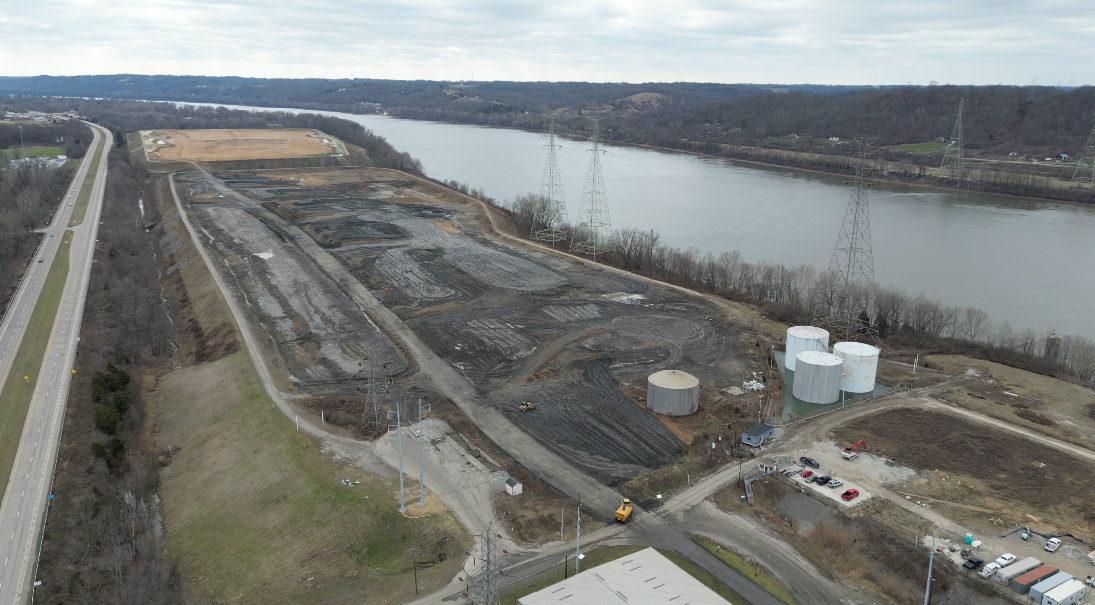
A. That’s something that we’re very concerned about. We want to watch that. The same location where we had the diesel fuel spill from, that’s where the ash ponds are, too. So we’re very concerned about that. If something like that were to spill, we have contingency plans in place to increase our treatment. First of all, we would shut down for as long as we could. Let that stuff go. But if we had to bring anything in, we’re developing treatment methods to make sure that we could treat it effectively.
Q. How much lead time would you need if there were an ash spill?
A. If it were a very fast river and the river was high and a lot was coming to us, maybe we would get a 10-hour notice or so. That would be enough time where we could shut down, take invasive action and be able to deal with that.
Q. Why are you concerned about the coal ash?
A. Well, a couple of reasons. One, it’s a lot of dirt. It’s a lot of the solids and particulates … but also, along with those solids, there’s a lot of metals and contaminants that are in that kind of ash. That’s the ash ... left over after the coal is burnt.

Q. As you retire, what is the next generation here going to look like? What are the changes coming to this place?
A. I’ve been really excited about the use of technology ... to help us treat water better … it’s really exciting to see that newer generations are coming in and starting to ... bring that into the treatment process. We have all sorts of A.I. and ... we’re just starting to scratch the surface on how we can use it to make the water better.
Q. When you are just randomly testing the river water … how often do you actually find something, and what would it be?
A. Several times a year, we’ll detect some low-level organic chemical. It’s usually something to do with a petroleum type of thing or maybe a gasoline by-product … We’ll then immediately shut down and try to figure out what’s going on before we open back up … We also do a lot of monitoring for bacteria and algae in the river too ... so we know that we need to adjust our treatment to address that.
Q. Are you able to figure out where those spills come from?
A. If it’s something that we’re detecting for a bit, we can ... go upriver and take samples ... to try and figure out exactly where it's coming from. We’ve done that a couple of times, and we found the polluter. The polluter has been fined, and we’ve been able to recover all of our costs.
Q. Are you going to miss it here when you retire?
A. Absolutely. I’m going to miss the day-to-day challenges, the accomplishments and working with the people here … and feeling like I’m part of the community and contributing to the community. Drinking water is so important. Without drinking water, the city wouldn’t exist.
Note: Historical tours of the old river station are offered to the public on the first Saturday of each month from 9:30 a.m. to noon. The world’s largest triple-expansion steam engines are housed here. They were built to pump water from the Ohio River. You can register for a tour at https://cincinnatitriplesteam.org
Tours of the GCWW History Museum and treatment process are offered on the first Thursday of each month by appointment, from 9:30 a.m. to 11:30 a.m. The public can see how water from the Ohio River is treated to produce safe drinking water. Tour request forms and waivers can be found here: https://www.cincinnati-oh.gov/water/about/tours/
