



CINCINNATI — With Election Day just eight days away, two local political experts gave their predictions on turnout, the big races and levies, and what issues are driving voters to the polls.
University of Cincinnati political science professor David Niven said the big issues for Ohio voters this year are the economy, data centers and their opinion of President Donald Trump.
“I would say those are the big three, and they have a lot in common,” Niven said. “It’s been an interesting dynamic in 2026, that lack of connection with what a regular Ohioan is going through.”
Every midterm is a reaction to the president; that’s why the party in power historically performs poorly in those elections, Niven said.
WATCH: Election Day predictions
“This one is particularly acute though, given the president’s job approval ratings. These are really historically low job approval ratings,” Niven said. “That has a major motivating factor. That can touch every race ... really the entirety of the ballot from top to bottom.”
Turnout is always lower in a midterm than for a presidential-year election, but competitive races in Ohio for governor and U.S. Senator could boost turnout, Niven said.
“We’re seeing a pretty significant enthusiasm gap in the polls with Democrats more excited to vote,” Niven said. “Democrats are more confident that they know who they want and what they want.”
Niven and Northern Kentucky University political science professor Shauna Reilly both predicted that more people will vote in person on Election Day this year, instead of voting early or by mail.
“It’s going to be interesting to see what turnout is, and what the lines look like early in the day, versus later in the day,” Reilly said. “We see more Republican voters first thing in the morning and more Democratic voters later in the afternoon.”
Whatever the outcome of the election, it will reveal how the nation feels collectively. The result will heavily impact the rest of Trump’s presidency, depending on who controls the U.S. House of Representatives and the U.S. Senate, Reilly said.
“We’re going to see what kinds of legislation will be able to pass, if they choose to give him a little bit more free rein or if he gets reined in,” Reilly said.
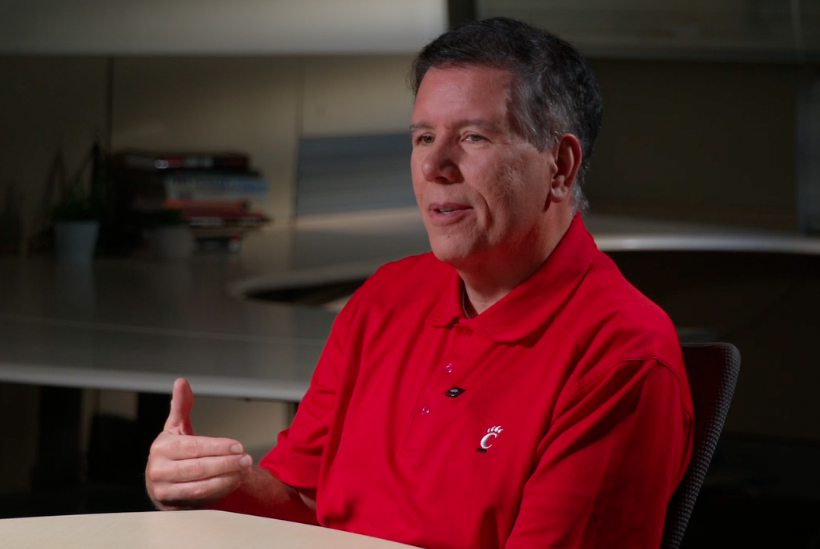
What are you hearing from your students?
Niven: They have a pretty clear-eyed sense of the economy, the cost of things. Ohio has been hit particularly hard by a combination of the war and Trump’s tariffs. It’s not been a particularly great time.
Housing costs are something every student thinks about. Am I going to be able to get a job and afford a place of my own? Am I going to be able to afford anything that looks like the lifestyle that my parents had? The kind of American expectation is that children will eventually outshine the parents economically, and it’s harder for them to see that right now. Things like AI loom over them. Are there jobs that would have been available to me five years ago that are going to go out of existence?
They want an economic message. It is striking how little of the campaign has been directly about that. Republicans are a little bit hamstrung because they don’t have an answer. They’re in charge, and people aren’t happy. It’s hard to offer them much of a solution when you were in charge and set in motion some of the policies that got us to this moment.
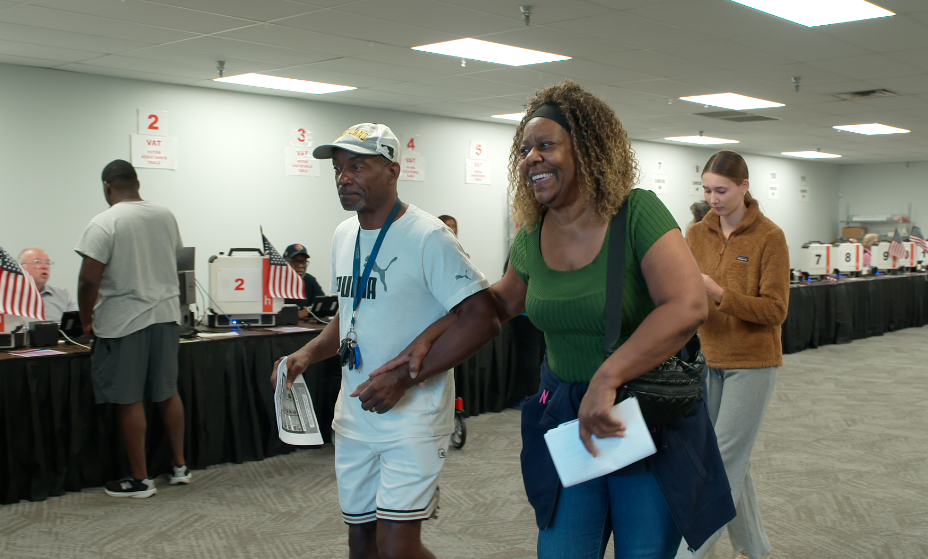
Are you seeing any apathy from students about not voting?
Niven: I don’t see apathy; I see more opportunity.
A lot of folks want to use this election as an opportunity to send a message to Trump. There are Trump supporters out there who really want to vote and reaffirm their commitment to Trump. But a larger group of folks are tired of everything Trump and really want to register that.
I don’t think it helps the Republican campaign that there are so few Republicans who have created any distance between themselves and Trump. So, it really does directly tie them to the fortunes of Trump. If he’s high, they’re high. But if he’s low, they’re stuck in the muck.
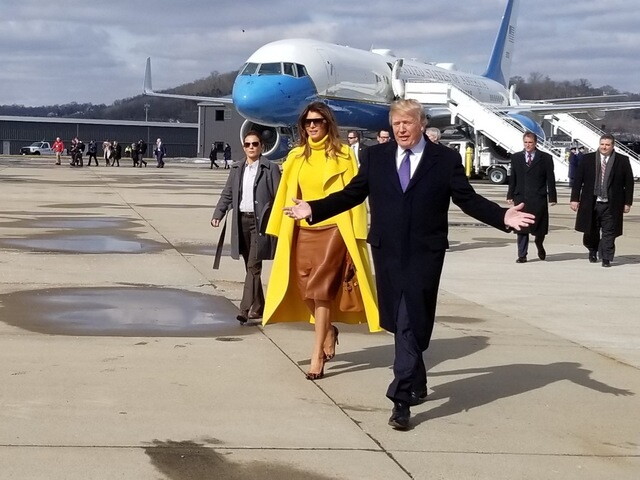
Trump has visited the region several times recently. Have those visits been helpful?
Niven: Normally in this situation … a president is very selective about where they go in a midterm … We have the opposite dynamic in 2026 where Trump is going places where he is objectively unpopular.
We have seen poll after poll in Ohio; Trump is about 20 points underwater. Which is to say every time he opens his mouth, there are more people unhappy with what he’s saying than happy. It really does put the Republican candidates in a box … it’s hard for them to communicate a message, to communicate an image that isn’t Trump-based.
That’s part one. Part two is: he says such odd things about the candidates he supports. In the first Ohio rally, he said you may hate Jon Husted, you may hate Vivek Ramaswamy, but I want you to vote for them. Well, that’s not the most ringing endorsement in the world. His endorsements have been, in many cases, lackluster.
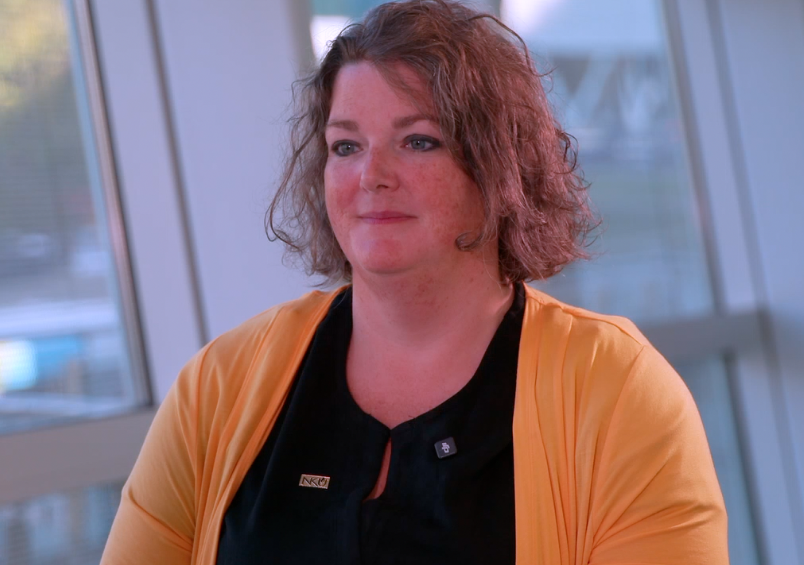
Trump held a campaign rally at NKU on Oct. 17; what was that like?
Reilly: We had candidates not come up to see him that were in Kentucky … Now there’s lots of reasons why they may not have been there. But the distancing of candidates from President Trump: it may help them, it may hinder them.
It’s a smaller venue, and perhaps that’s why it was selected. Northern Kentucky doesn’t usually get presidential visits; they usually come to Cincinnati or Lexington or Louisville. It was a surprise to have him on campus.
I know the numbers show less than 3,000 folks showed up to attend the rally. I don’t think that’s probably what they were hoping for.
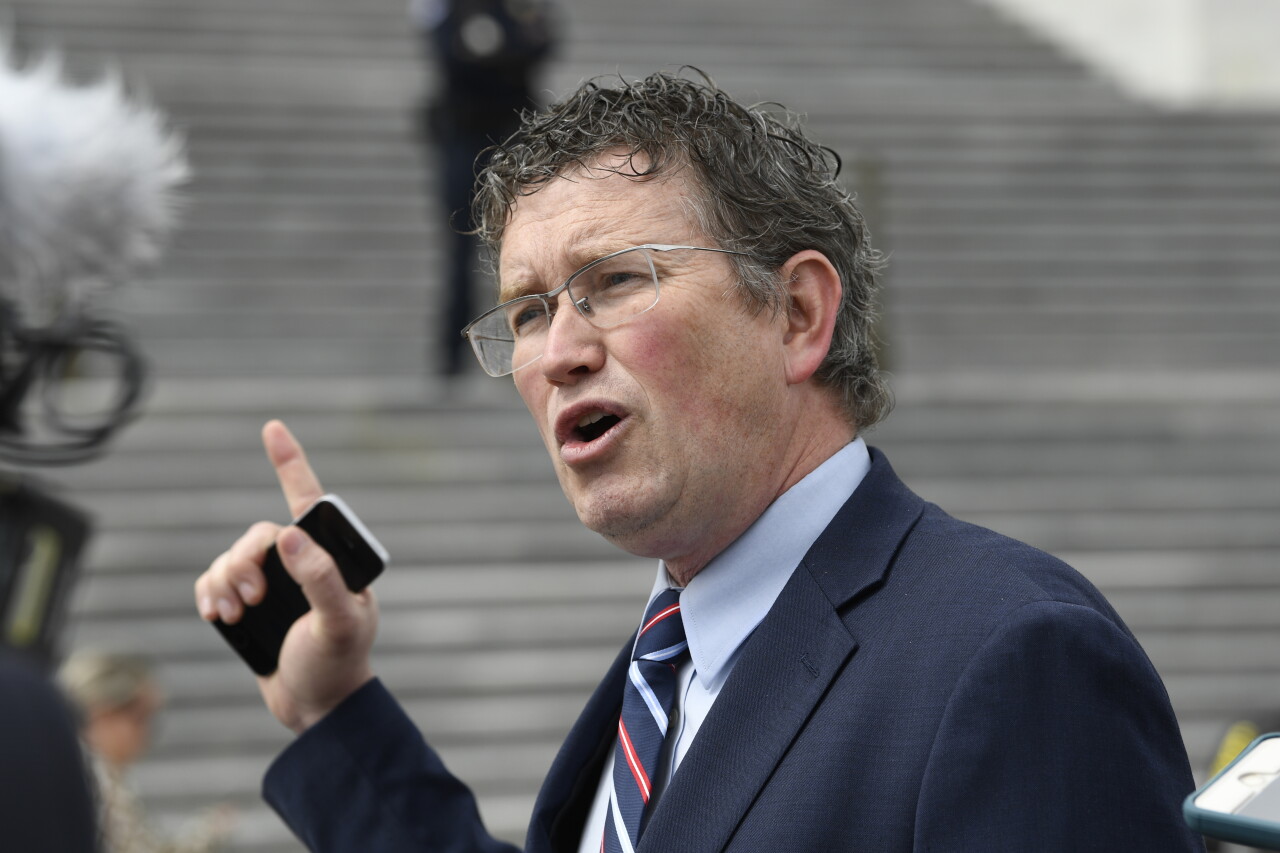
Let’s talk about the race in Kentucky’s 4th Congressional District for Thomas Massie’s old seat. He lost in the primary to Republican Ed Gallrein.
Reilly: I think both the Democratic and Libertarian candidates that are running are hoping for disaffected Massie voters … Certainly a strong Libertarian candidate can split off some of the Republican vote for Gallrein, so it will be interesting to see how that turns out. Polling seems to indicate that it will still stay Republican, but when folks are motivated to participate for a variety of reasons, that may contribute to maybe a lower percentage of the vote.
Is that race still about Massie even though he’s not on the ballot?
Reilly: You certainly can’t take him out of this, right? He’s still looming. He’s filed to fundraise for 2028, so there is certainly that looming in the background. Whether or not he runs again, or whether he runs for a different office, certainly the aura of Massie continues.
What’s your prediction for the U.S. Senate race in Kentucky?
The polling seems to indicate that Andy Barr will pull it out, but Charles Booker is out there hoping for a change. His campaign saw the visit of Trump as a sign that might be a race he’s concerned about; he was here to help shore up Barr’s support. I think that’s probably reading a little too much into the tea leaves, but it is probably more competitive than it was under Mitch McConnell at any point ... I still think we’ll probably see a Republican Senate seat.

The Ohio governor’s race, what do you think will happen?
Niven: I think every race in Ohio is fundamentally shaped by Trump. Trump as a motivator for participation. Trump as a defining force in who these people are. Trump has a lot to do with Vivek Ramaswamy being the candidate. His endorsement of Ramaswamy helped to sort of steal the Republicans’ notion that they should come around Ramaswamy and push anybody else out.
I think the Democrats have an advantage in the governor’s race. They have the advantage that it’s a bad year for Republicans and Trump is unpopular. The advantage is that the other candidate is a biotech billionaire; he doesn’t necessarily connect well with the average Ohioan.
The Ramaswamy campaign ran a controversial ad with Dr. Amy Acton’s mother. Do these deeply personal attack ads work?
Reilly: They can. But they have to read the room. Sometimes the ad can actually have more of a backlash, which is what we’re seeing right now. Given the context of the Cornell University issue, we’re certainly seeing a backlash to this particular campaign ad, and how it connects to sexual abuse.

What’s your prediction for the U.S. Senate race in Ohio?
Niven: I think Sherrod Brown wins a seat again in the Senate. Again, Trump is a major force in that.
Former Senator Brown’s clarity on data centers has served him really well. An awful lot of politicians in Ohio took very fuzzy positions on data centers. They didn’t want to offend either the corporate interests or the union interests in data centers, and so they fuzzied up their positions even as people were clearly upset …
Husted was stuck with the reality that as lieutenant governor it was more or less his day job to go out to groundbreakings and celebrate them. There’s an awful lot of footage of Jon Husted with a shovel at the groundbreaking of a data center. It’s turned out to be a very politically toxic position to hold.
Since his data center ads came out, Brown has been in the lead in every single poll that’s been taken. And the national Republican Party literally called data centers the anchor around Jon Husted’s neck. It’s fascinating how hard it is to get that anchor off your neck.
What is your prediction for Ohio's 1st Congressional District? Did redistricting have any impact on Democratic incumbent Greg Landsman possibly losing his seat to Republican Eric Conroy?
Niven: Greg Landsman is sitting on a massive campaign treasury that they’re not even spending because they didn’t see any need to. I think it’s really fascinating the Republicans went through the trouble of redrawing the First District to make it more Republican, and then they didn’t go through the trouble of finding a candidate with the stature to be competitive … You can redraw a district, but if you don’t actually draw a quality candidate, you haven’t accomplished anything.
Reilly: It’s somewhat surprising the way it was redistricted; the expectation was that it would be a lot closer. And certainly, the polling is showing that it's close, but it’s clear that Landsman will probably win.
For Landsman to keep his seat, I think it speaks to how we draw lines. That it doesn’t always matter. That a political leader has the support regardless of whether you shave off this piece and add this piece, that the base is still going to show up.
Will the Cincinnati Public Schools levy pass?
Niven: People like schools, and I think they’re going to survive on the strength of who is voting in 2026. Even as, obviously, they’ll be folks who say I can’t afford it.
Reilly: It’s difficult because voters may absolutely support education and may absolutely support additional funding for child and family services. The problem is you’re asking them when their pocketbook is being directly affected, to add more money to government. That’s where the challenge is. When the economy is not doing well, voters are not likely to spend more money on those levies, so they are more likely to fail.

Will the Hamilton County Children Services levy pass?
Niven: I think most of these levies are going to pass.
If you’re talking about Hamilton County, you’re starting with a blue county, and then you’re going to get a bluer shade of it in 2026. That’s going to help a lot of these. Having said that, there’s still inherently the pressure of asking people for money in the economy of 2026.
Many rural communities have public safety levies on the ballot; how will they do?
Niven: You’re asking people for more money in an economy that is strained. You’re asking people for more money in an electorate that isn’t really feeling that great … People, of course, are for public safety and want to see public safety provided for. So, you have the collisions of realities.
On the one hand, I don’t want to spend an extra dollar on anything. I’ve already spent all my extra dollars on gas. Versus, well, I want there to be a police officer if I need one, and I want there to be a fire truck with professionals to help me if I need one.
Reilly: Public safety is important, but we’re also asking the government to shift the cost from them to us in those levies. I think voters are going to struggle with some of those, but ultimately I think the pocketbook will have a larger impact on their vote. Just simply because the paycheck you got last week isn’t going as far as it used to.
Is there anything else of interest on the ballot in Kentucky?
Reilly: There is a ballot measure to restrict the pardoning power of the governor. It is not getting any advertisements; it is funded by a Kentucky senator who has a personal stake … because of a pardon that came from Matt Bevin when he was governor that has a personal chord for him. Essentially, it is to restrict pardoning within 60 days of an election ... so they can be held accountable.
The sponsors seem to think it will be successful. They’re doing small gatherings across the state. Senator McDaniel was just on campus to talk about it, so that’s why it's fresh in my mind.
What about some of the other Ohio statewide races, like the race for treasurer and secretary of state?
Niven: What we’ve seen over the last 20 years, those races have gotten more and more tightly packed with the governor’s race … If a Republican won the governor’s race, then Republicans swept all of those seats. It might not hold this year with respect to just how close the top could be. Those races could be very close … I would be surprised if we got a definitive knockout across those four races.
