



Millions of Americans store irreplaceable belongings in self-storage facilities — and most don't know that when something goes wrong, the facility may owe them nothing. Find out where you stand before it's too late.
Angela Clark opened her storage unit expecting to retrieve her belongings. What she found instead was the smell of mold, ruined furniture, and keepsakes from her late parents that can never be replaced. Her storage company's response? Check the lease.
Her story is a warning every storage renter in America needs to hear. Take two minutes to find out whether your belongings are actually protected — or whether you're one roof leak away from losing everything.
- Millions — Americans use self-storage
- 0 — Guaranteed facility liability
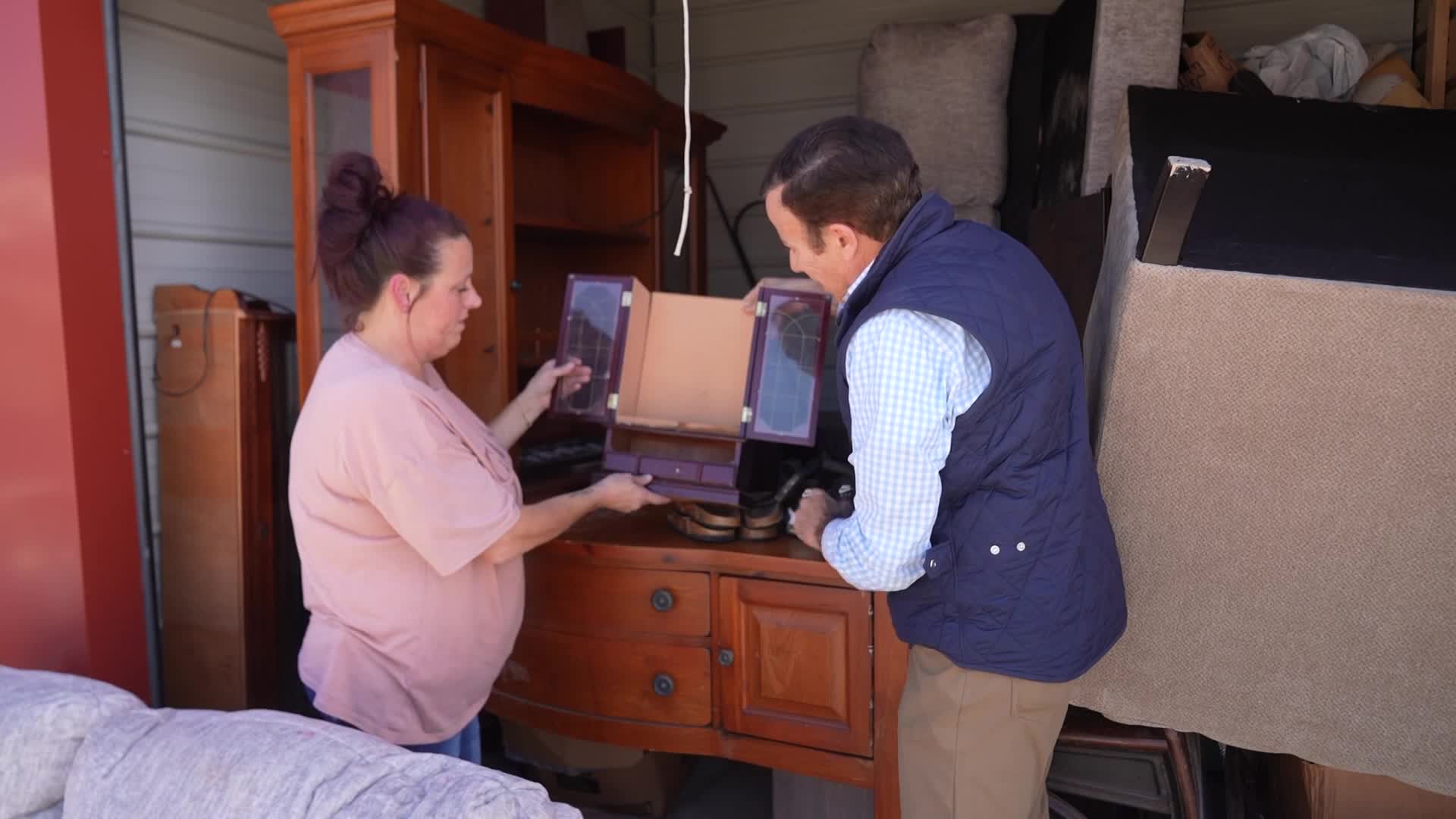
Angela Clark thought she was doing everything right. She rented a storage unit, moved in her furniture, keepsakes from her late parents — a jewelry box, her mother's purse — and a brand-new couch she'd bought just weeks before. Then a leaky roof changed everything.
When she opened the unit, the mold hit her immediately. Her dressers, her nightstand, her couch — all ruined. The items she could never replace were gone too. And when she turned to the facility for answers, she got one: read the lease.
There's things in here that belonged to my mother and my father who have both passed away nowAngela Clark, Storage unit renter
Here is the reality most storage renters don't learn until it's too late: the storage facility is often not on the hook when your belongings are damaged. According to SpareFoot, coverage for items in a self-storage unit typically comes through the renter's own homeowner's or renter's insurance policy — not through the facility itself.
Clark's facility manager made that clear, pointing to the lease agreement, which explicitly placed the responsibility for obtaining insurance on the tenant. Consumer advocates say this clause appears in lease after lease across the country — and most renters sign without reading it.
Ask directly who is financially responsible if something is damaged, and you should get that answer in writingJosh Planos, Better Business Bureau
What to Do Before You Sign a Storage Lease
- Ask who pays if your belongings are damaged — Don't assume. Ask the facility manager directly and get their answer in writing before you sign anything. The Better Business Bureau calls this the single most important question renters skip.
- Inspect the unit thoroughly before move-in — Walk every inch of the unit. Look for water stains, rust on the door, cracks in the ceiling, signs of pests, and whether the lock functions properly. Photograph everything on your phone and timestamp the images.
- Check your homeowner's or renter's insurance — Call your insurer and ask specifically whether your policy covers belongings stored off-site in a self-storage unit. If it does, confirm the coverage limits in writing.
- Decide whether you need climate control — For furniture, family keepsakes, electronics, documents, or anything sensitive to humidity, experts say you should ask whether a climate-controlled unit is the right fit for what you're storing.
- Review the facility's own insurance carefully — Some storage companies offer in-house insurance policies. Read the details and exclusions closely — coverage limits may be modest and may not cover the full value of what you're storing.
- Report problems immediately and in writing — If you ever spot a leak, broken lock, pest sign, or maintenance issue, photograph it on the spot and report it to the facility in writing the same day. Your documentation is your evidence.
Storage Unit Myths — Checked
The storage facility is responsible if my belongings are damaged.
Verdict: mostly false
Lease agreements at many facilities explicitly make it the tenant's responsibility to obtain insurance for stored property. The facility manager in Angela Clark's case pointed directly to that clause when her belongings were damaged by water.
My homeowner's or renter's insurance covers items I keep in storage.
Verdict: mixed
It may — but you need to confirm it. According to SpareFoot, coverage for stored belongings often comes through a homeowner's or renter's insurance policy, but coverage limits and terms vary widely. Never assume — call your insurer and ask specifically.
The storage facility's in-house insurance policy is enough protection.
Verdict: mixed
Some facilities do offer their own insurance policies, but consumer experts caution that coverage limits may be relatively modest. Renters should review all policy details and exclusions before relying on that coverage alone, especially for high-value or irreplaceable items.
If I report damage verbally, that's sufficient documentation.
Verdict: false
Consumer advocates recommend keeping written records — including photos and written communications — whenever a problem is reported. A verbal complaint is nearly impossible to prove later if a dispute arises.
What makes Clark's story cut so deep isn't just the financial loss — it's what the water destroyed that no dollar amount can restore. A jewelry box. Her mother's purse. Objects that outlasted their owners and carried the weight of memory. 'I can never replace any of that,' she said.
Her hope now is that her experience keeps someone else from facing the same devastation. A little research before signing a lease — asking the right questions, reading the fine print, confirming your insurance — could save you thousands of dollars and prevent losses that no settlement check can undo.
How do you tell someone that they're just out of luck?Angela Clark, Storage unit renter
Protect Your Storage Unit — Take Action Now
- Confirm Your Insurance Coverage: Call your homeowner's or renter's insurance provider and ask specifically whether items stored off-site in a self-storage facility are covered — and at what limit.
- Read the Better Business Bureau's Storage Rental Guide: The BBB offers guidance on what to ask before renting a storage unit, including how to get liability answers in writing.
- Check SpareFoot's Insurance Overview: SpareFoot explains how homeowner's and renter's insurance typically intersects with self-storage coverage — and what gaps to watch for.
- Document Your Unit on Move-In Day: Before you carry a single box in, photograph the ceiling, walls, floor, and door. Timestamp your photos. These images are your evidence if something goes wrong later.
What to Ask the Facility Before You Sign
Consumer experts say renters should arrive at a storage facility with a checklist of questions before committing to a lease. Key questions include: Is climate-controlled storage available and necessary for the items you're storing? What security measures — cameras, gated access, individual alarms — are in place at the facility? What types of damage, if any, does the facility's own insurance cover? Does the facility offer its own storage insurance policy, and if so, what are the coverage limits and exclusions? Who is financially responsible if your belongings are damaged while in storage — and can you get that answer in writing?
The Better Business Bureau also recommends inspecting the unit itself before signing any contract. Look for water stains on the walls or ceiling, rust on the door or frame, gaps where pests could enter, and whether the locking mechanism works properly. If you notice any problems, document them immediately with photos and ask the facility to acknowledge them in writing before you move in.
Sources & References
- Primary source: Scripps News — John Matarese
- SpareFoot — Coverage for items in self-storage units typically comes through homeowner's or renter's insurance, not the facility
- Better Business Bureau — Recommendations for inspecting units and getting liability answers in writing before signing a storage lease
